The Madrid train bombings of 11 March 2004: what is known today
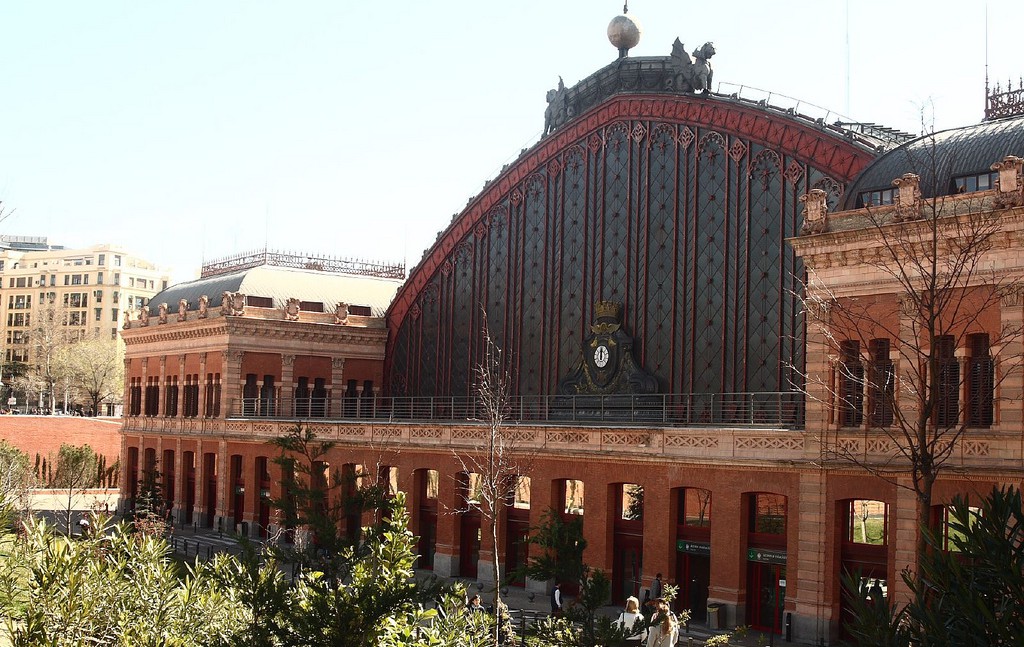
On 11 March 2004 ten bombs exploded on four commuter trains in Madrid during the morning rush hour. It remains the deadliest terrorist attack in the history of Spain. An earlier version of this post, written 28 months after the attack, listed doubts that were circulating before the trial. This version sets out what the courts established afterwards, what happened to the people convicted, and how and where Madrid remembers the victims today. In Spain the attack is known as “11-M”.
What happened on 11 March 2004
The bombs went off almost at the same time at four points of the Cercanías commuter network: inside Atocha station, beside Calle Téllez just outside it, and at the stations of El Pozo and Santa Eugenia. The trains were carrying workers and students into the city. The public broadcaster RTVE gives these figures for each place:
- El Pozo: 65 people killed on a double-decker train
- Calle Téllez: 63 people killed
- Atocha station: 34 people killed
- Santa Eugenia: 14 people killed
In total 192 people died as a result of the train bombings, and almost 2,000 were injured. The victims were identified at the IFEMA exhibition centre, where the autopsies were carried out. The count usually given today is 193, because it includes a police officer of the GEO special unit who was killed when several of the terrorists blew themselves up in a flat in Leganés, south of Madrid.
From ETA to a jihadist cell: the first days
During the first hours almost everyone looked to the Basque terrorist group ETA. The attack came three days before the general election of 14 March 2004, and the government of José María Aznar kept to the ETA theory in its public statements. The evidence pointed elsewhere within a day. On 11 March the police found a tape with verses of the Koran in the van the terrorists had used. A mobile phone in a backpack bomb that had not exploded then led the police to a phone shop in the Lavapiés district of Madrid. Three Moroccan citizens were arrested on 12 March, and on 13 March a spokesman of Al Qaeda in Europe claimed the attack.
A retired officer of the forensic police told RTVE that the investigation rested on three leads: the Kangoo van in which the terrorists drove to Alcalá de Henares, the unexploded backpack bomb from El Pozo that was found in the early hours of 12 March at the Puente de Vallecas police station, and the country house where the bombs were made.
What the courts established
The trial was held at the Audiencia Nacional between 15 February and 2 July 2007, with 29 people accused. The legal news service Noticias Jurídicas reported at the time that the case file ran to 93,000 pages and that 600 witnesses and more than 90 experts took part. The court of three judges, presided by Javier Gómez Bermúdez, made its judgment public on 31 October 2007.
- The Audiencia Nacional convicted 21 of the accused.
- A year later the Tribunal Supremo confirmed prison sentences for 17 of them, acquitted four, and convicted one man who had been acquitted, which left 18 people convicted.
- The judgment found it proven that the attack was the work of a jihadist cell. It names Jamal Zougam as a member of that cell who placed a bomb on one of the trains.
- Jamal Zougam and Otman el Gnaoui were sentenced as perpetrators to 42,922 and 42,924 years in prison for 191 murders, the official death toll at the time of the trial, and 1,856 attempted murders.
- José Emilio Suárez Trashorras, a former miner from Asturias, was sentenced to 34,715 years for supplying the explosives, which he obtained from the Mina Conchita mine.
- A man who was a minor in 2004 was tried separately and sentenced to six years of internment for transporting explosives.
The proven facts attribute the attack to that jihadist cell. The backpack bomb found at the police station and the explosives from Mina Conchita, two of the points questioned in 2006, belong to the account on which the convictions rest.
Where the convicted are now
Spanish law limits the time actually served to 40 years, whatever the length of the sentence. According to RTVE, in March 2024 only three of the convicted were still in prison: Zougam, El Gnaoui and Suárez Trashorras, who are due to remain there until 2044. The other 15 had left prison by then after serving their sentences. Eight of them were expelled to their country of origin and a ninth was extradited to Morocco.
What is still debated
The judicial account is settled, but the attack still divides Spanish politics. The doubts about the evidence and the authorship became known as the “conspiracy theory”. The courts did not adopt them, and at the twentieth anniversary the president of the Asociación 11M Afectados por el Terrorismo spoke of the harm they had caused to the victims. The chief prosecutor at the trial, Javier Zaragoza, has said that one can always think something remains to be known. Victims’ associations still hold separate ceremonies each year, and politicians still exchange reproaches on the anniversary about how the government of the time handled information.
Memorials and remembrance in Madrid
11 March is also the European Day of Remembrance of Victims of Terrorism. Each year tributes take place at the sites of the bombings and at other points of the city:
- Atocha station: a floral tribute and a minute of silence. The outdoor monument that stood beside the station is no longer there. In March 2025 the association of people affected announced that a new monument would be finished by the end of 2027 on the site of the former petrol station at the Atocha roundabout, which was demolished for the works on metro line 11.
- Calle Téllez, El Pozo and Santa Eugenia: an act at the memorial and plaque in Calle Téllez, and acts of remembrance at the two stations.
- Puerta del Sol: the regional government and the city council lay a wreath at the plaque on the Real Casa de Correos.
- Bosque del Recuerdo: a memorial grove in the Retiro park, where the Asociación Víctimas del Terrorismo holds its act.
Atocha is the station most international students and visitors pass through on arrival in Madrid, and the Retiro park is a short walk away.
Learning more
Outside Madrid, the Centro Memorial de las Víctimas del Terrorismo in Vitoria-Gasteiz opened its museum in 2021. Its six rooms cover the history of terrorism, the response to it and the voices of the victims. Admission is free. It opens from Tuesday to Saturday from 12:00 to 19:00 and on Sundays from 11:00 to 14:00, and closes on Mondays that are not public holidays.
RTVE published the documentary “11M, 20 años” for the twentieth anniversary, with testimonies of survivors, the presiding judge and the prosecutor. For background on the city itself, see Madrid, the capital of Spain and the Madrid city page for students.
More about: History of Spain · All blog posts