The Roman Legacy of Spain
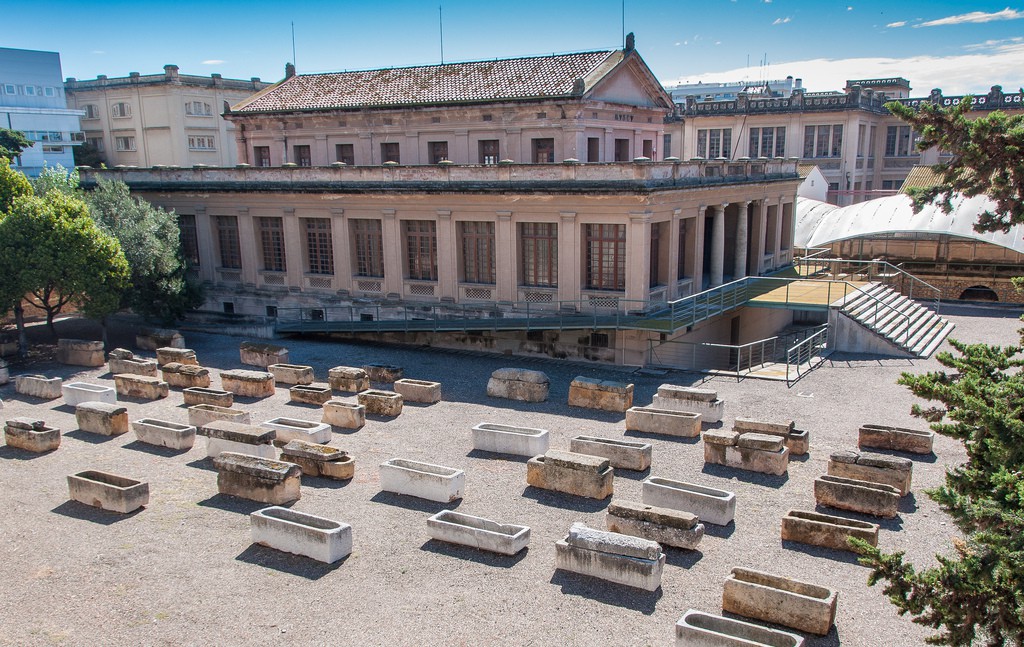
The Romans called the Iberian Peninsula Hispania and left more visible traces there than any other ancient people: cities, theatres, aqueducts, roads, walls and mines. Many of them are still standing, and several are UNESCO World Heritage Sites. This post describes what the Romans built in Spain and where to see it today, with practical details for the main sites.
Cities and places of entertainment
Roman rule was organised around cities, each with a forum, temples, baths and buildings for public shows. The best place to see a whole Roman city is Mérida, in Extremadura, once capital of the province of Lusitania. Spain’s official tourism website lists a theatre, an amphitheatre, a circus, two aqueducts, several temples and a number of Roman houses there.
The theatre was built under the patronage of Agrippa, son-in-law of the emperor Augustus, between 16 and 15 BC. According to Mérida’s tourist office it held approximately six thousand spectators. It is still used: the International Classical Theatre Festival is held there in July and August. The Museo Nacional de Arte Romano, close to the theatre, was designed by Rafael Moneo and opened in 1986.
Tarragona, in Catalonia, was Roman Tarraco. Its amphitheatre was built in the 2nd century AD on the shore of the Mediterranean and was used for gladiator fights. The Tarraco Viva festival of historical re-enactment is held every year in May.
Segóbriga, in the province of Cuenca, began as a Celtiberian hill fort and was conquered by Rome at the start of the 2nd century BC. It grew rich from mining lapis specularis, a translucent gypsum used to close windows. Its theatre, amphitheatre, forum, baths, walls and aqueduct can be visited. Near Seville, Itálica was the birthplace of two Roman emperors.
Engineering: aqueducts, walls and a lighthouse
The Aqueduct of Segovia is thought to have been built between the second half of the 1st century and the early 2nd century AD. It has 167 arches and reaches a height of 28.10 metres at the Plaza del Azoguejo. Its 20,400 blocks of stone are held together without mortar or cement. It was declared a World Heritage Site in 1985. More on the city is in the post on Segovia.
The walls of Lugo, in Galicia, date from the end of the 3rd century and defended the Roman city of Lucus Augusti. They have a perimeter of approximately 2,120 metres, a height of 8 to 12 metres and ten gates. According to Spain’s tourism website, it is the only Roman wall that keeps its entire perimeter intact. Visitors can walk along the top.
In A Coruña, the Tower of Hercules is the oldest Roman lighthouse and still works about 2,000 years after it was first lit.
Roads and mines
Rome tied Hispania together with roads. The Vía Augusta, the longest, ran from the Pyrenees to Cádiz along the Mediterranean coast. The Vía de la Plata (Silver Way) crossed the west of the peninsula through what are now Andalusia, Extremadura, Castile and León and Asturias.
Hispania also supplied Rome with metals. At Las Médulas, in the Bierzo district of León, the Romans worked an open-cast gold mine for centuries using water power. A system of canals brought the water from rivers over 100 kilometres away. The red hills that were left are about 20 km from Ponferrada and have been a World Heritage Site since 1997.
Practical details
- Mérida: check the linked pages before a visit, as hours and prices change. The theatre and amphitheatre open every day, from 9:00 to 18:30 between 1 October and 31 March and from 9:00 to 21:00 between 1 April and 30 September. The tourist office lists the ticket for both at €12 (reduced €6) and the ticket for the full monumental complex at €15 (reduced €7.50). The reduced price applies to students up to 25. Trains from Madrid take from 3 hours 50 minutes
- Segovia: the aqueduct stands in the street and is free to see. The high-speed train from Madrid-Chamartín takes about half an hour to Segovia-Guiomar station, about 6 kilometres from the centre
- Segóbriga: open Tuesday to Sunday, from 10:00 to 18:00 between 1 October and 31 March and until 19:30 for most of the summer season. In 2026 the regional culture department lists general admission at €6 and reduced admission at €3, which covers students up to 25. Allow about two hours. The park is 4 km from the village of Saelices and about an hour from Madrid by car
For students
Several of these places are university or language-school cities. See the schools in Tarragona, Segovia and Lugo, or the full list of schools in Spain.
More about: History of Spain · All blog posts