Museums of Madrid
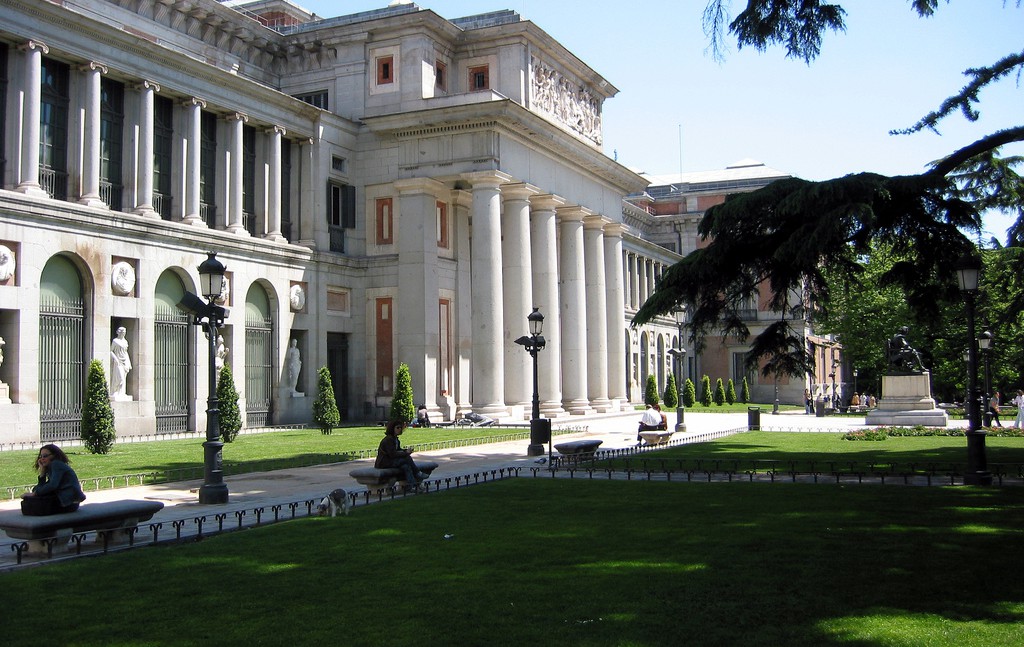
Madrid has three large art museums within walking distance of each other on the Paseo del Arte (Art Walk): the Museo del Prado, the Museo Reina Sofía and the Museo Nacional Thyssen-Bornemisza. Around them are smaller state and foundation museums that cost little or nothing to enter. This guide covers eight museums, with what each one holds and the opening hours and ticket prices published in 2026 by the museums and by the city’s tourist board. Hours change on public holidays, so check the linked pages before a visit.
The three museums of the Paseo del Arte
A combined ticket, the Paseo del Arte Pass, covers all three museums for €32.80. According to the Thyssen-Bornemisza, it is valid for one visit to each museum within one year of purchase. All three also have free hours every week, listed below.
Museo del Prado
The Museo del Prado opened on 19 November 1819 in a building designed by Juan de Villanueva. It was first planned as a house of science, and King Ferdinand VII decided to use it for the royal paintings. The collection comprises 8,600 paintings and over 700 sculptures, and the tourist board describes it as the most comprehensive collection of Spanish painting in the world.
The best-known works are Las Meninas by Velázquez, Goya’s Third of May, 1808 and his Black Paintings, and The Garden of Earthly Delights by Hieronymus Bosch. El Greco, Ribera, Zurbarán and Murillo are also on show. The Italian and Flemish schools are represented by Fra Angelico, Raphael, Titian, Rubens and Van der Weyden. An extension by the architect Rafael Moneo, next to the Cloister of Los Jerónimos, holds the temporary exhibitions. The museum suggests three routes of one, two and three hours for visitors who are short of time.
- Address: Paseo del Prado. Metro: Banco de España (line 2) or Estación del Arte (line 1)
- Hours: Monday to Saturday 10:00 to 20:00; Sundays and public holidays 10:00 to 19:00. Closed on 1 January, 1 May and 25 December
- Tickets: general admission €15, concessions €7.50
- Free entry: Monday to Saturday 18:00 to 20:00; Sundays and public holidays 17:00 to 19:00
More about the building and its collection is in the post on the Prado Museum.
Museo Reina Sofía
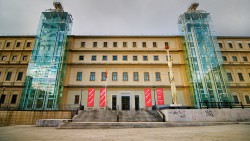
The Reina Sofia in Madrid
The Museo Nacional Centro de Arte Reina Sofía is the national museum of modern and contemporary art, mainly Spanish. Its best-known work is Guernica by Pablo Picasso, painted after the bombing of the Basque town on 27 April 1937 during the Spanish Civil War. The museum also shows Dalí, Miró and Juan Gris, and later artists such as Antoni Tàpies, Eduardo Chillida, Louise Bourgeois and Francis Bacon.
The main building was a hospital, enlarged in the 18th century under Charles III by the architects José de Hermosilla and Francisco Sabatini. The hospital closed in 1965, the art centre opened in 1986 and the permanent collection was inaugurated on 10 September 1992. The architect Jean Nouvel added a second building between 2001 and 2005. The museum also runs two exhibition spaces in El Retiro Park, the Velázquez Palace and the Glass Palace; entry to both is free, and in 2026 the Glass Palace is closed for renovation.
- Address: Calle de Santa Isabel, 52. Metro: Estación del Arte or Atocha (line 1), Lavapiés (line 3)
- Hours: Monday and Wednesday to Saturday 10:00 to 21:00; Sunday 10:00 to 14:30. Closed on Tuesdays
- Tickets: general admission €12; a ticket for two visits within one year costs €18
- Free entry: Monday and Wednesday to Saturday 19:00 to 21:00; Sunday 12:30 to 14:30. A ticket is still needed and can be booked online. Under-18s, over-65s and students enter free at the ticket office
The museum says the busiest times are from 10:00 to 12:00 and when free access begins, and recommends 14:00 to 18:00 for a quieter visit.
Museo Nacional Thyssen-Bornemisza
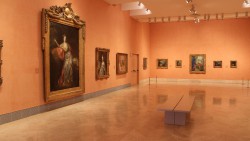
The Thyssen-Bornemisza Museum in Madrid
The Museo Nacional Thyssen-Bornemisza traces European painting from the Middle Ages to the late 20th century in over 1,000 works. It is strongest where the other Spanish museums have little: Italian primitives, the German Renaissance, 17th-century Dutch painting, 19th-century American art, Impressionism, German Expressionism and Russian Constructivism. Works on show include paintings by Duccio, Jan van Eyck, Ghirlandaio, Caravaggio, Monet, Van Gogh, Kandinsky, Hopper and Lichtenstein.
The collection was built by Baron Heinrich Thyssen-Bornemisza, who started collecting in the 1920s, and by his son Hans Heinrich. It was first lent to Spain, and the Spanish state bought it in 1993. The Old Masters hang on the second floor, the modern works on the first, and the ground floor shows 180 works from the Carmen Thyssen collection.
- Address: Paseo del Prado, 8. Metro: Banco de España or Sevilla (line 2)
- Hours: Monday 12:00 to 16:00; Tuesday to Friday and Sunday 10:00 to 19:00; Saturday 10:00 to 23:00. In July and August the museum stays open until 21:00 from Tuesday to Friday. Closed on 1 January, 1 May and 25 December
- Tickets: general €14; students, over-65s and pensioners €10; under-18s free
- Free entry: Mondays 12:00 to 16:00 for the collection; Saturdays 21:00 to 23:00 for the temporary exhibitions
The museum estimates about 2 hours and 30 minutes for a visit.
Museo Arqueológico Nacional
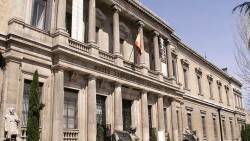
The Archaeological Museum of Madrid
The Museo Arqueológico Nacional (MAN) was founded in 1867 and reopened in 2014 after a six-year remodelling. Its exhibits run from prehistory to the 19th century and cover subjects that the Art Walk museums do not, such as Greek ceramics, Visigothic votive crowns and Spanish Islamic ivories. The displays include models and replicas that visitors may touch.
The best-known piece is the Lady of Elche, an Iberian bust with a cavity in the back that is believed to have held relics. Other highlights are the Treasure of Guarrazar, a set of Visigothic goldwork, the ivory Pot from Zamora and a large collection of Greek vases. A replica of the painted ceiling of the Altamira Cave, inaugurated in October 1964, is in an underground room in the garden and opens during museum hours.
- Address: Calle de Serrano, 13. Metro: Serrano or Colón (line 4), Retiro (line 2)
- Hours: Tuesday to Saturday 9:30 to 20:00; Sundays and public holidays 9:30 to 15:00. Closed on Mondays
- Tickets: general admission €3, reduced €1.50
- Free entry: Saturdays from 14:00 and Sunday mornings; under-18s and over-65s at any time
A guided tour in English takes place every Saturday at 10:00. It lasts 90 minutes and is included in the ticket price; visitors sign up at the ticket office on the day.
Museo Lázaro Galdiano
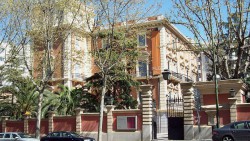
Museo Lázaro Galdiano in Madrid
The Museo Lázaro Galdiano shows the private collection of José Lázaro Galdiano, a businessman and publisher who launched the literary magazine La España Moderna in the late 19th century. The museum occupies his former home, the Parque Florido mansion in the Salamanca district, where writers such as Emilia Pardo Bazán, Miguel de Unamuno and Rubén Darío attended gatherings.
The four floors display 4,820 pieces: paintings by Goya, El Greco, Zurbarán and Bosch, together with bronzes, ceramics, glass, textiles, medals and weapons. Three paintings stand out: St. John the Baptist in Meditation by Bosch, Goya’s Witches’ Sabbath, and the Adolescent Saviour, attributed to a pupil of Leonardo da Vinci. Photography is not allowed inside. The garden is open free of charge during museum hours.
- Address: Calle de Serrano, 122. Metro: Rubén Darío (line 5), Gregorio Marañón (lines 7 and 10)
- Hours: Tuesday to Friday 9:30 to 15:00 and 16:30 to 19:30; Saturdays and Sundays 9:30 to 15:00. Closed on Mondays
- Tickets: general admission €8; reduced €5 for students with a valid student card and visitors over 65
- Free entry: Tuesday to Friday 14:00 to 15:00
Museo Naval
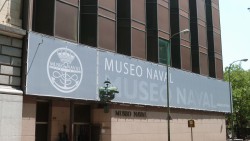
Naval Museum in Madrid
The Museo Naval is run by the Spanish Ministry of Defence and occupies part of the Navy Headquarters on the Paseo del Prado. It presents Spain’s naval history from the Middle Ages to the present day. The idea of a naval museum dates back to 1792, the museum came into being in 1842, and it opened at its present site in 1932. The latest refurbishment was completed in 2020.
More than 12,000 pieces are displayed in chronological order: ship models, maps, navigation and astronomical instruments, weapons, flags, uniforms and the personal belongings of sailors. The best-known object is the parchment chart drawn in 1500 by Juan de la Cosa, who had sailed to America with Christopher Columbus. The tourist board describes it as the first map to show the American continent.
- Address: Paseo del Prado, 3. Metro: Banco de España (line 2)
- Hours: Tuesday to Sunday 10:00 to 19:00. Closed on Mondays and for the whole of August
- Tickets: entry is free; a voluntary donation is requested for the upkeep of the museum
Museo Nacional de Artes Decorativas
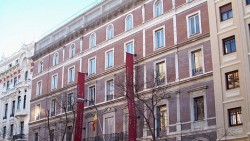
Museo Nacional de Artes Decorativas in Madrid
The Museo Nacional de Artes Decorativas was created in 1912 as the Museo Nacional de Artes Industriales, on the model of the South Kensington Museum in London, now the Victoria and Albert Museum. In the early 1930s it moved from a flat in Calle Sacramento to the 19th-century mansion it occupies today, a short walk from the Museo Naval.
The collection follows everyday life from the 14th century to the present through objects in use: their materials, techniques, forms and functions. The museum holds more than 70,000 items, some of them on deposit in other institutions.
- Address: Calle Montalbán, 12. Metro: Banco de España or Retiro (line 2)
- Hours: Tuesday to Saturday 9:30 to 15:00; Sundays and public holidays 10:00 to 15:00; Thursday afternoons 17:00 to 20:00, except in July and August. Closed on Mondays
- Tickets: general admission €3, reduced €1.50
- Free entry: Sundays, Thursday afternoons and Saturdays 14:00 to 15:00. Temporary exhibitions are always free
Museo Nacional de Antropología
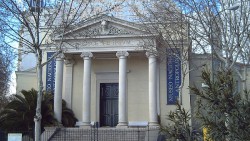
Museo Nacional de Antropología in Madrid
The Museo Nacional de Antropología celebrated its 150th anniversary on 29 April 2025, which makes it one of the oldest museums in Madrid and, according to the museum, the first in Spain devoted to anthropology. The building was put up between 1873 and 1875 for Doctor Pedro González Velasco to a design by the architect Francisco de Cubas, and the State bought it in 1887.
The permanent exhibition is arranged in rooms on the Philippines, Eastern religions, Africa and America. A plan available at the museum marks 10 key pieces, and a virtual visit on the museum’s website shows every room. The museum stands on the corner of Paseo de la Infanta Isabel and Calle Alfonso XII, between Atocha station and El Retiro Park.
- Address: Calle Alfonso XII, 68. Metro: Atocha (line 1)
- Hours: Tuesday to Saturday 9:30 to 20:00; Sundays and public holidays 10:00 to 15:00. Closed on Mondays
- Tickets: general admission €3
- Free entry: Saturdays from 14:00 and all day on Sundays; under-18s, over-65s and students aged 18 to 25 at any time, with proof
Tips for students
A student on a budget can see all eight museums for very little. The Museo Naval is free. The state museums charge €3 and open free on four dates each year: 18 April, 18 May, 12 October and 6 December. The Reina Sofía admits students free at the ticket office, and the Thyssen-Bornemisza and the Lázaro Galdiano have reduced student tickets, so a valid student card is worth carrying. An annual pass for Spain’s state museums costs €36.06 and is sold at the ticket offices.
For more about the city, see Madrid, the capital of Spain and the post on the Museo Sorolla. Students who plan a longer stay can compare schools and universities in Madrid or browse all schools in Spain.
More about: Tourism in Spain · All blog posts