Oropesa, Toledo, Spain
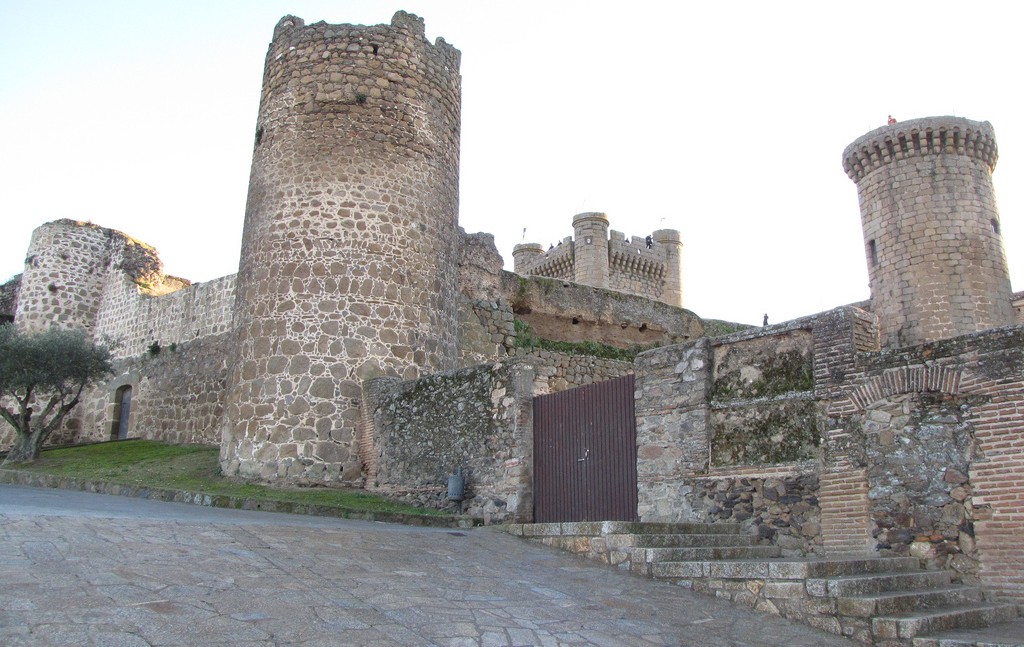
Oropesa is a small walled town in the west of the province of Toledo, known for its castle and for the palace of the Counts of Oropesa, which is now a Parador hotel. This guide covers the town’s history, how to visit the castle, the main festivals and two trips in the surrounding area: the abandoned Islamic city of Vascos and the Cuevas del Águila caves.
The town and its history
The town council describes Oropesa as a town on a hill between the Tagus and Tiétar rivers, in the district of Campo Arañuelo. It grew up as a watchtower over the route from the Sierra de Gredos to Extremadura. Local legend says that a Greek captain founded it as Orospeda around 1716 BC; this is tradition, not documented history. What is documented is a long line of medieval charters. Alfonso X granted the first one on 25 August 1274, inviting settlers to live around the castle.
In 1366 Enrique II gave the lordship of Oropesa to García Álvarez de Toledo. His family built their residence here and lived in it until the 19th century. One member of the family, Francisco de Toledo, was Viceroy of Peru. The town has also served as a film set, for example for The Pride and the Passion with Frank Sinatra.
The castle
According to the council’s page on the castle, the Romans built a fort here to control the road between Toledo and Mérida, and a fortress was raised on its remains in the period of the Caliphate of Córdoba. The new castle and the Old Palace were rebuilt by the son of García Álvarez de Toledo, and in 1459 his grandson opened the palace gallery that looks towards the Sierra de Gredos. Spain’s official tourism site describes the Christian castle as a four-sided stone building with four circular towers, two of which are still standing.
Opening hours and prices published by the council in September 2026:
- Tuesday to Saturday: 10:00 to 14:00 and 16:00 to 18:00
- Sundays and public holidays: 11:00 to 14:00
- Closed on Mondays
- The ticket office closes 30 minutes before closing time
- Entry: €3 from the age of 8; younger children do not pay
On summer weekends in July and August the castle is also the venue for concerts, theatre and folk dance.
The Counts’ palace and the old town
The Palacio Condal, next to the castle, was the home of the Álvarez de Toledo family. In 1931 it became a Parador, the first to be set up in a historic building, according to the council. It keeps an original 15th-century coffered ceiling. The hotel’s address is Plaza Palacio 1.
Other sights listed by the council include the parish church of Nuestra Señora de la Asunción, which keeps a Romanesque front and a crossing finished in 1613, the Hospital de San Juan Bautista, which houses the tourist office and a local museum and the gates of the town wall. A covered passage links the palace with the church. Many interiors are closed to individual visitors. The council’s guided tour, the Ruta Monumental, is the only way to see them.
Festivals
- Jornadas Medievales, in April. The medieval festival started in 1999 and recalls the market privilege granted by Alfonso XI. It has regional tourist-interest status, relies on more than 300 volunteers and has drawn over forty thousand visitors in some years.
- Noctívagos, in July: an international festival of street theatre held at night.
- Patron saint festivals in September: Nuestra Señora de las Peñitas from 8 to 10 September and San Alonso de Orozco on 18 and 19 September.
- Winter market in the castle during the long weekend of early December.
Trips from Oropesa
Ciudad de Vascos
Vascos is an abandoned city of Al-Andalus in the municipality of Navalmoralejo, also in the west of Toledo province. According to the regional culture department it was founded between about 930 and 950, under Abd al-Rahman III, and was inhabited from the 9th to the 12th century. The city wall encloses 8 hectares. A citadel stands on a granite hill in the north, and outside the walls are two cemeteries and, beside the Arroyo de la Mora, the remains of a suburb and a bath house.
Entry is free and without a guide. The regional culture portal gives the opening time as Saturdays from 9:00 to 14:00, between 16 May and 31 January. Access is by a dirt track from the CM-4100 road and is not suitable for coaches, so a car is needed. The interpretation centre in Navalmoralejo, 7 km from the site, opens by appointment with the village council.
Cuevas del Águila
The Cuevas del Águila are not in Toledo but across the regional border, in Arenas de San Pedro in the south of the province of Ávila. Five young people found the cave by chance on 24 December 1963, and it has been open to the public since 18 July 1964. The limestone dates from the Lower Cambrian, 500 to 540 million years ago. The route is about 1,000 metres long on a paved path with steps, and the visit takes around 40 minutes. The temperature inside stays at about 17 °C all year and humidity is close to 100%.
The cave opens every day of the year. From 22 September to 20 March the hours are 10:30 to 13:00 and 15:00 to 18:00; from 21 March to 21 September, 10:30 to 14:00 and 16:00 to 19:00. Tickets cost €12 for adults and €8 for children aged 6 to 10. No booking is needed.
For students
Oropesa suits a day trip or an overnight stop. The castle is cheap to visit, and the guided town tour adds the interiors. Read more in The City of Oropesa and Its Castles and in Towns and villages near Toledo, or see the study options in Toledo.
More about: Toledo · All blog posts