Puerto de Navacerrada, Madrid, Spain
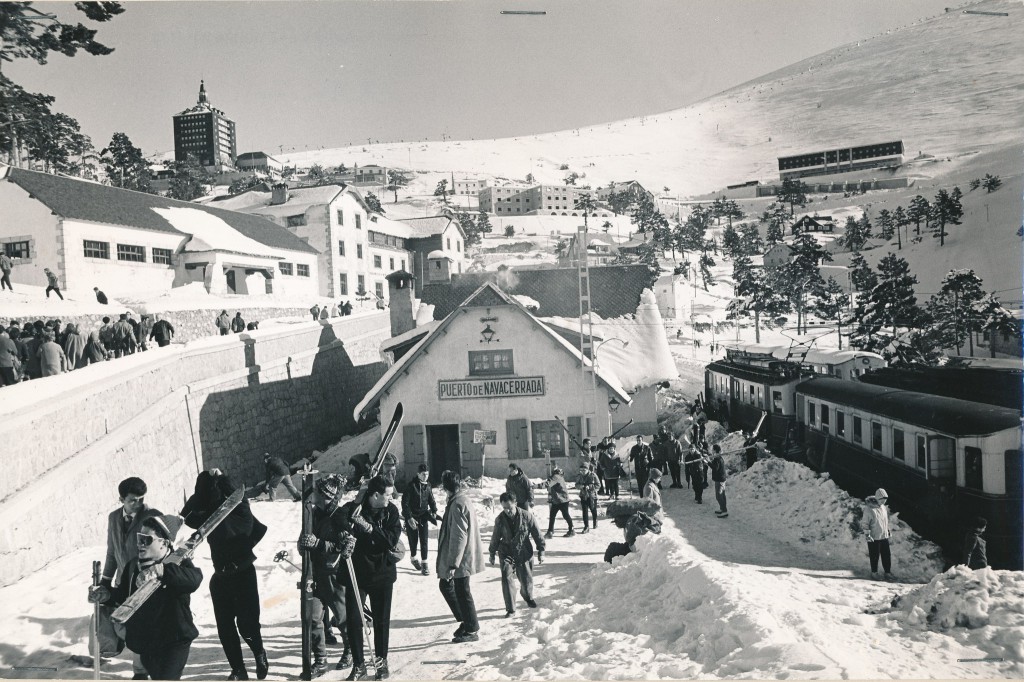
Puerto de Navacerrada is a mountain pass in the Sierra de Guadarrama, on the border between the Madrid region and the province of Segovia, with a small ski resort beside the road. This post describes the pass and the resort, what a day of skiing costs, what to expect from the weather, and how to get there from Madrid in 2026.
Where it is
The pass is crossed by the M-601 road, which climbs from Collado Villalba on the Madrid side. On the Segovia side the road continues as the CL-601 through the Real Sitio de San Ildefonso. The ski area lies in three municipalities: Cercedilla and Navacerrada in the Madrid region, and La Granja de San Ildefonso in Castile and León. The weather station of the Spanish meteorological agency AEMET at the pass, in the municipality of Cercedilla, stands at 1,892 metres.
The mountains around the pass belong to the Parque Nacional de la Sierra de Guadarrama, which was declared in June 2013 and covers 33,960 hectares in Madrid and Segovia. The ski resort states that the range is about 45 minutes from Madrid. More about the range is in the post on the Sierra de Guadarrama.
A short history of skiing at the pass
According to the resort, winter sports began at Puerto de Navacerrada in 1903 and the first ski club was founded in 1907. The ski resort itself dates from the late 1940s and is one of the oldest in Spain. The first chairlift, Guarramillas, was installed in 1955, and in 1960 the first snow-making system in the country was tested here.
In the early 1970s the resort had 10 lifts and 13 runs, with more than 12 kilometres of pistes. Its own history page explains that lifts and runs were gradually lost in later decades and that the Madrid regional government, which owned the resort, decided to privatise it after the 2005-06 season. It is run today by the company Puerto de Navacerrada Estación de Esquí.
The ski resort today
The resort has two sectors. The upper sector has the Guarramillas, Pala de Montañeros and Pluviómetro runs. The lower sector has the El Bosque run and the Escaparate and Telégrafo areas, with views over the national park. The resort’s table of runs and lifts lists nine runs. The upper runs are between 1,100 and 1,200 metres long, drop a little over 300 metres and are graded difficult. The lower sector has the easy Escaparate and Telégrafo runs and two short beginners’ slopes.
The table lists four chairlifts, one drag lift and two conveyor belts. The lifts work between 1,760 metres, at the foot of the Bosque chairlift, and 2,177 metres, at the top of the Guarramillas chairlift. The resort’s opening hours are 9:00 to 17:00.
The season depends on snow. As an example, in the 2025-26 season the Bosque run opened on 8 January 2026 and the resort closed for the season on 25 March 2026. The resort publishes a daily snow report, and it is worth reading it before travelling.
Lift pass and hire prices
These are the prices on the resort’s price page in October 2026. The page does not name the season they apply to, so check it again before going.
- Day pass, low season (Tuesday to Friday on working days): €28 for adults, €22 for children
- Day pass, high season (Saturdays, Sundays and public holidays): €32 for adults, €28 for children
- Half-day pass, sold from 13:00: €19 in low season and €24 in high season for adults
- Day pass with the Carné Joven youth card: €24 in low season, €28 in high season
- Hire of a full ski pack (boots, poles and skis): €17
The children’s price applies up to the age of 13. All passes include insurance and rescue cover on the pistes.
Weather
The pass has a mountain climate that is much colder than Madrid’s. AEMET’s climate normals for its Puerto de Navacerrada station (1981-2010) give an average annual temperature of 6.9 °C, with −0.4 °C in January and 17.0 °C in July. Average precipitation is 1,223 mm a year. The station records snow on 71 days and frost on 136 days in an average year. Warm and waterproof clothing is needed in winter, and it can be cool even in midsummer.
Walking and the national park
Outside the ski season the pass is a starting point for walks. The national park’s route finder has Puerto Navacerrada as one of its areas and lets visitors filter routes by length, time and difficulty. The park’s visitor centres give advice on routes and conditions.
The park’s rules apply to visitors at the pass as well. One that often surprises day trippers in winter is that the national park has no areas set aside for sledging.
Getting there
- Bus: line 691 runs every day from the Moncloa interchange in Madrid and continues to the Valdesquí ski resort.
- Train: the usual route is a Cercanías train on line C-8 from Madrid to Cercedilla and then line C-9, the mountain line from Cercedilla to Puerto de Navacerrada and Puerto de Los Cotos. The national park’s website states in October 2026 that line C-9 has been closed since May 2024 for renovation work and that a special bus service covers the route, with a stop at the pass. Check with Renfe before planning a trip by train.
- Car: from Madrid, take the A-6 to Collado Villalba (km 40) and then the M-601 up to the pass, or take the M-607 through Colmenar Viejo. From Segovia, take the CL-601.
The resort states that the pass is less than an hour from both Madrid and Segovia. Expect crowds on snowy weekends: the national park reports that the car park at the neighbouring Los Cotos pass usually fills between 9:00 and 11:00 at weekends and on public holidays, and before 8:00 when there is snow.
For students
Puerto de Navacerrada works well as a day trip for students in Madrid or Segovia: it can be reached by public bus and skiing equipment can be hired at the resort. Holders of the Carné Joven pay a reduced price for the day pass. The nearest town with a railway station is Cercedilla.
More about: Madrid · All blog posts