Traditions of Madrid, Spain
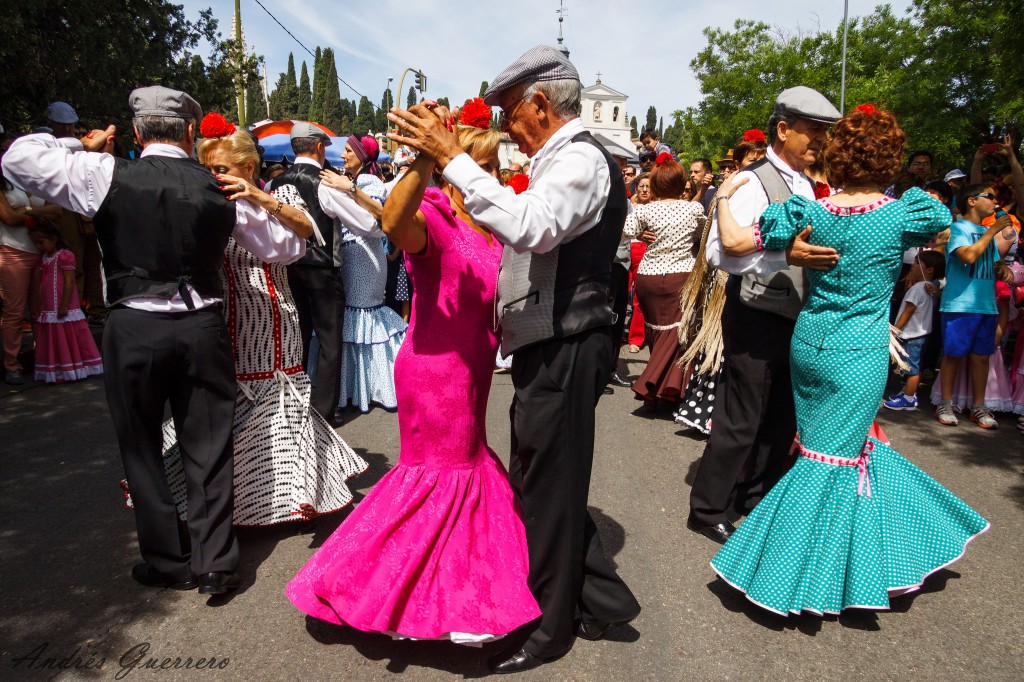
Madrid keeps a full calendar of traditions, from the patron saint’s festival in May to the twelve grapes eaten in Puerta del Sol at midnight on New Year’s Eve. This guide goes through the main ones in the order of the year, with the usual dates and places, so that a visitor or a student spending a term in the city knows what to expect and when.
San Isidro, the patron saint’s festival
Every year on and around 15 May, Madrid honours its patron saint, San Isidro Labrador, with a week of concerts, shows and free activities. The San Isidro festivities are the best moment to see the city’s own customs:
- Locals dress as chulapos and chulapas and dance the chotis in the street.
- Families and friends picnic in the Pradera de San Isidro, a park that also appears in paintings by Goya.
- People drink the saint’s water from the spring next to the Chapel of San Isidro.
- The typical food is rosquillas, ring-shaped doughnuts sold plain (tontas) or glazed (listas), and limonada, a drink made with wine, lemon, sugar and chopped fruit.
Events take place in the Plaza Mayor, the Las Vistillas gardens and the Pradera, and include the parade of giants and big heads. The religious ceremonies, among them a mass at the Collegiate Church of San Isidro and the romería service in the Pradera, run from 6 to 15 May.
Bullfighting at Las Ventas
Around the feast of San Isidro, and for about a month, the Las Ventas bullring hosts the San Isidro Fair, which the city’s tourist board describes as the most prestigious bullfighting event on the international calendar. It usually runs from early May to mid June. The bullring is at Calle de Alcalá 237, by Ventas metro station (lines 2 and 5). The building itself is described in the post on the Plaza de Toros de Las Ventas.
Flamenco
Flamenco comes from the south of Spain, but Madrid is where many of its artists work and record. The art form had its high point in the capital in the 19th century, with the rise of the cafés cantantes. Today the tradition is carried on by the tablaos, venues that offer a flamenco show every evening together with dinner or a drink. Among them are Corral de la Morería, one of the oldest in the city, and Tablao Flamenco 1911 on Plaza de Santa Ana, formerly called Villa Rosa. The city’s theatres also programme larger flamenco productions.
El Rastro on Sunday morning
El Rastro is Madrid’s open-air flea market, and documents mention it as early as 1740. It is held on Sundays and public holidays from 9am to 3pm, along Calle de la Ribera de Curtidores and the streets and squares around it, starting at Plaza de Cascorro. Stalls sell clothes, crafts, kitchenware, second-hand records and magazines, and objects of all ages; the shops and galleries on the same street specialise in antiques. The custom is to finish with a vermouth and a tapa in one of the bars nearby. The nearest metro stations are La Latina (line 5), Embajadores (lines 3 and 5) and Puerta de Toledo (line 5).
Carnival and the summer verbenas
Carnival is celebrated from the weekend before Shrove Tuesday until Ash Wednesday; in 2027 that is 6 to 10 February. In recent years the centre of the programme has been Matadero Madrid and the Madrid Río park. It ends with the Burial of the Sardine, a mock funeral procession that Goya also painted.
In August, three neighbourhood street festivals, or verbenas, follow one another in the old districts: San Cayetano in the Rastro and Embajadores area around 7 August, San Lorenzo in Lavapiés, whose main day is 10 August, and La Paloma in La Latina, the largest of the three. The streets are hung with lanterns and embroidered shawls, and there is music and dancing in the open air.
Christmas, New Year and the Three Kings
From the end of November to the beginning of January the streets are lit with Christmas lights. The Plaza Mayor hosts the city’s best-known Christmas market, where people buy decorations and figures for their nativity scenes. On the morning of 22 December the Christmas Lottery is drawn at the Teatro Real, with pupils of the San Ildefonso school singing out the numbers; the public can attend free of charge.
On 31 December thousands of people fill the Puerta del Sol to eat twelve grapes, one for each of the twelve chimes of the clock on the Real Casa de Correos at midnight. A rehearsal is held at the same time and place on 30 December, which is a calmer way to see it.
The season ends with the Three Kings Parade (Cabalgata de Reyes) on the evening of 5 January, not on the 6th. It runs down the Paseo de la Castellana from Nuevos Ministerios to the Plaza de Cibeles, from about 6.30pm to 9pm, and is free. On 6 January families eat roscón de Reyes, a large ring-shaped cake.
For students
Most of these events take place in the street and many are free. Anyone choosing when to come can use the calendar above: May for San Isidro, August for the verbenas, December for the Christmas season. Information on studying in the city is on the Madrid city page, and Spanish courses are listed under language courses in Spain.
More about: Madrid, Tourism in Spain · All blog posts