Escalona, Toledo, Spain
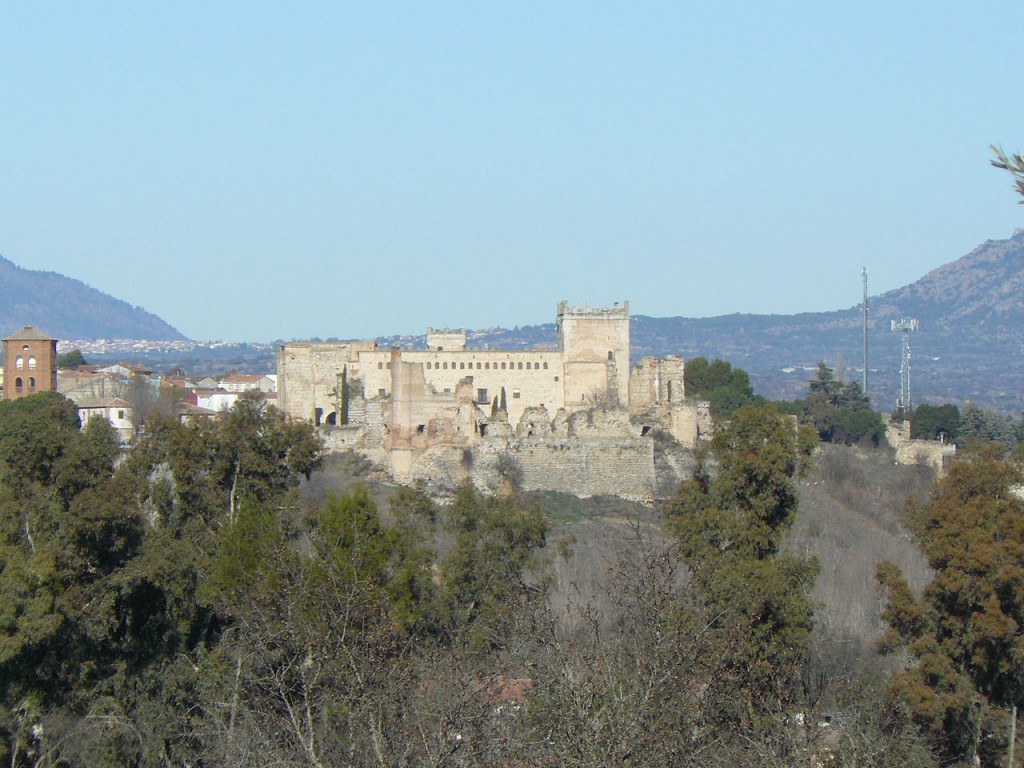
Escalona is a small walled town in the north of the province of Toledo, in Castilla-La Mancha, set above the river Alberche. It is known for its 15th-century castle, its arcaded main square and the sandy banks of the river. This post covers its history, what can be visited in 2026 and how the regulated access to the river works.
Where Escalona is
The town stands on a plateau above a steep slope on the right bank of the Alberche. According to Spain’s official tourism website, its origins go back more than 2,500 years, and the town council reports Celtic, Roman and Visigothic archaeological finds. In 2026 the council put the registered population at about 4,000, and notes that the number of people in town multiplies at certain times of year.
The Alberche rises in the Sierra de Gredos and flows into the Tagus. Near Escalona it splits into several arms among islands of sand and riverside woodland, and at the foot of the castle and the town it opens into a wide sandy stretch.
A short history
Alfonso VI took Escalona from Muslim rule on his way to Toledo, perhaps in the campaign of 1083, and ordered the hill above the river to be fortified. In 1118 Alfonso VII granted the town a royal charter. In 1281 it passed to the infante Don Manuel, brother of Alfonso X. His son, the writer Don Juan Manuel, author of El Conde Lucanor, was born here.
In the 15th century Juan II gave the town to his favourite, Álvaro de Luna, who built a palace inside the castle. After his fall the fortress was besieged by the king’s troops in 1453. In 1472 Juan Pacheco received the title of Duke of Escalona. The town also appears in literature: the anonymous novel Lazarillo de Tormes, published in 1554, sets one of its best-known episodes in Escalona. During the Peninsular War, Marshal Soult ruined much of the palace to reuse its timber for a bridge over the Alberche.
The castle
The castle is the town’s main monument. It was built by Álvaro de Luna in the 15th century, has a perimeter of 420 metres and is divided into two areas: the parade ground to the north and the fortress to the south. Moats, walls, towers and walkways survive. It is a listed Property of Cultural Interest (Bien de Interés Cultural).
After more than sixty years in the same private hands, the castle was bought by the town council for its cadastral value of €800,000, about 18 months before March 2026, and visits were authorised in December 2024. In mid-March 2026 part of one of the flanking towers (torre albarrana) collapsed; nobody was hurt. In May 2026 the council announced that the heritage authorities had approved the removal of the rubble and that consolidation work on three towers, with an initial cost that could exceed €400,000, might begin in the summer. In autumn 2026 the town’s tourism website shows castle visits as closed. The council is also working on a public-private project to restore the complex and build a hotel there. Until visits resume, the castle can be seen from outside, and the tourism website suggests a walk around its exterior.
The walled town
The old town lies inside a walled enclosure of which more than 70 per cent survives. The layout of the streets dates from the end of the Middle Ages, and crossing the walled town from end to end takes less than ten minutes on foot. Points of interest:
- Plaza del Infante don Juan Manuel, known simply as “La Plaza”, created in the 15th century and lined with porches
- The Gothic arch beside the church of San Miguel, the former north gate of the town
- The convent of La Encarnación, from the 16th century, just outside the gate
- The long bridge over the Alberche
- Traditional houses with rows of balconies and porches
The tourist office gives out a leaflet with a map of the historical route, and the town has a route of street murals. Medieval days (Jornadas Medievales) are held in autumn; the fifth edition was scheduled for 16 to 18 October 2026.
The river Alberche: access rules since 2026
The riverbanks are the town’s main leisure area and draw many day visitors in summer. To reduce overcrowding, the council introduced regulated vehicle access to the river areas of La Tenería, Calicantón and El Prado on 19 June 2026. Access on foot is not affected. The published fees per vehicle are:
- Mopeds: €2
- Cars: €5
- Camper vans and vans: €20
- Coaches: €150
Passes are sold online and, for cash, at the tourist office; at the access points only bank cards are accepted. Holders of the Vive Escalona card, issued to registered residents and property owners, enter free, and vehicle access to Calicantón is reserved for card holders. A riverside path runs along the right bank below the town.
Getting there
The council’s transport page lists bus connections with Madrid (Estación Sur, Calle Méndez Álvaro), Toledo (bus station) and Talavera de la Reina, and notes that the companies may change their timetables, so check with the operator before travelling. Escalona fits into a day trip from Toledo or Madrid; half a day is enough for the town, more with time at the river.
Other places in the province are described in Towns and Villages near Toledo and in the post on Talavera de la Reina. Students looking for a base in the area can start with the page on studying in Toledo.
More about: Toledo · All blog posts