Telecommunications Schools and Programs in Germany
1 school in Germany teaches Telecommunications.
Universität Ulm
University Ulm, Germany In an official register
Universität Ulm (Ulm University) is a young research university in Ulm, Germany, which describes itself as the highest-situated university in the country. It focuses on medicine and STEM subjects (mathematics, computer science, natural sciences and engineering) and has about…
Telecommunications Studies in Germany
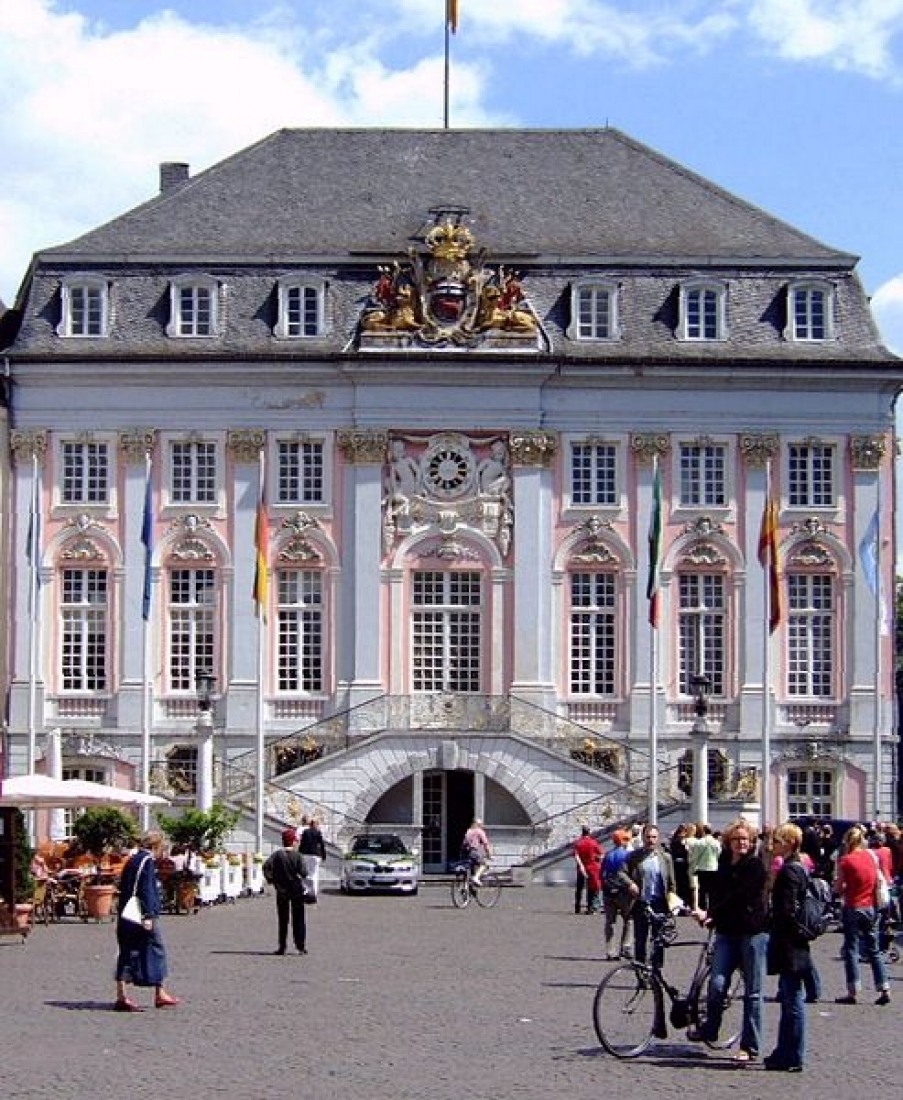 Altes Rathaus at Marktplatz, Bonn, Germany
In Germany, telecommunications is usually not a degree of its own. The subject is taught as communications engineering (Nachrichtentechnik) inside the broader degree in electrical engineering and information technology (Elektrotechnik und Informationstechnik), and as a specialisation at master's level. Students who look for it should therefore search for electrical engineering, information technology and communications engineering programmes.
On SpainExchange the subject is represented in Germany by the Universität Ulm, a state university in Baden-Württemberg. Its programmes show how the route works in practice, from a German-taught bachelor's degree to a master's degree taught entirely in English.
How the degree is organised
Studies follow the bachelor's and master's structure. At the Universität Ulm the first step is the Bachelor of Science in Electrical Engineering and Information Technology:
- 180 ECTS credits and a standard period of study of six semesters
- taught in German, starting each winter semester
- no admission restriction
The university lists telecommunications engineering and information theory among the classic areas of electrical engineering, next to energy technology, automation and control, measurement technology, microwave and high-frequency engineering and electronics. The bachelor's degree qualifies for a master's programme and for work on the design and development of complex electrotechnical systems.
Three master's degrees at Ulm continue in this field. Each has 120 ECTS credits and a standard period of four semesters:
- Communication and Information Technology: taught fully in English, starting each summer semester
- Communications and Computer Engineering: taught in German and English, starting in the summer and the winter semester
- Electrical Engineering and Information Technology: taught in German and English, with communications engineering as one of the areas of concentration
The Master of Science in Communication and Information Technology is the programme aimed at international students. According to the university, it covers mixed-signal and RF circuits, radar design, wireless and optical communication, signal processing and machine learning. Students choose one of four specialisations: Communications Engineering, Communications Circuits and Systems, Intelligent Systems, or Sensor Circuits and Systems. The programme ends with a six-month master's thesis, and German language classes are part of the curriculum. The university states that students from over 50 countries have graduated since 1998.
Admission and language
For the English-taught master's degree, the Universität Ulm asks for a bachelor's or comparable degree in electrical engineering, communications engineering, electronics or a closely related field with a significantly above-average grade, and fluent English. Applicants with a foreign degree apply through uni-assist; the application period shown on the programme page in October 2026 is 15 August to 30 September.
For a German-taught bachelor's degree the rules of the German Academic Exchange Service (DAAD) apply. A school-leaving certificate from an EU or EEA country or Switzerland that gives access to university there is usually accepted; other applicants may first need a Studienkolleg, a preparatory course. Most institutions require German at B2 level of the CEFR or above, proven with a test such as TestDaF, which is offered in around 100 countries. International programmes taught in English are exempt and ask for proof of English instead.
Costs and visa
State universities in Germany generally charge no tuition fees for bachelor's degrees and most master's degrees, according to DAAD. Baden-Württemberg is an exception: international students from outside the EU pay €1,500 per semester at the Universität Ulm. The university also mentions administrative fees of about €182 per semester and rooms in student dormitories from €285 to €477 per month. DAAD estimates total living costs in Germany at between €900 and €1,200 per month.
Citizens of EU member states, Iceland, Liechtenstein, Norway and Switzerland only need a valid identity card. Other students usually need a visa from the German embassy or consulate in their home country. According to DAAD, applicants had to prove funds of €992 per month as of 1 January 2025, and a visa can take months to be issued.
Recognition and careers
The Bachelor of Science and Master of Science are academic degrees awarded by a state university and measured in ECTS credits, the credit system used across the European Higher Education Area. Graduates in communications engineering work on communication networks, circuits, sensors and signal processing. The Universität Ulm describes its master's degree as research-oriented, with the thesis carried out inside its research groups.
Frequently asked questions
Can I study Telecommunications in Germany in English?
Yes, at master's level. The Master of Science in Communication and Information Technology at the Universität Ulm is taught fully in English. The bachelor's degree in Electrical Engineering and Information Technology is taught in German.
How long does the degree take?
At the Universität Ulm the bachelor's degree takes six semesters (180 ECTS credits) and the master's degree four semesters (120 ECTS credits).
How much does it cost for students from outside the EU?
At the Universität Ulm, non-EU students pay a tuition fee of €1,500 per semester plus administrative fees of about €182 per semester. Citizens of EU member states are not charged this tuition fee.