Finance Schools and Programs in Belgium
2 schools in Belgium teach Finance.

International Management Institute
University Brussels, Belgium
The International Management Institute (TIMI) is a business and management school in the Brussels area, Belgium, whose roots go back to 1973. Its contact address is in Diegem Business Park (Grensstraat 7, Diegem). The institute states that it is a private, unaccredited…
Vlerick Business School
University Ghent, Belgium
Vlerick Business School is a Belgian business school based in Brussels, with further campuses in Ghent (Reep 1) and Leuven. It is accredited by the three main international business-school accreditation bodies: EQUIS, AMBA and AACSB. According to the school, it has 590 MBA…
Finance Studies in Belgium
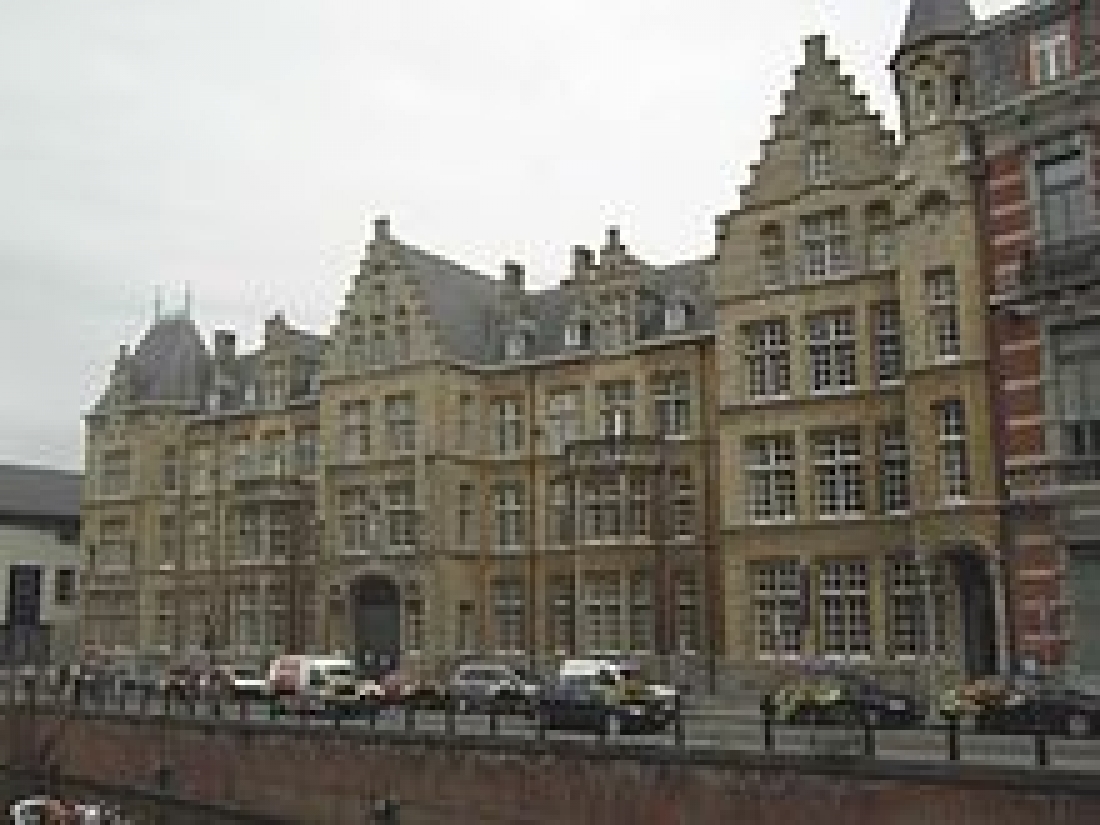 Vlerick Leuven Gent Management School in Gent
Finance students learn how companies, banks and investors raise, value and manage money: financial statements, corporate finance and valuation, financial markets and instruments, risk, banking and, increasingly, data and AI tools. In Belgium, finance is mostly studied at master's level, either as a specialisation within an economics or business degree at a university or as a one-year postgraduate programme at a business school. Brussels, with the EU institutions and many international companies, is the main base for English-taught programmes.
SpainExchange lists two schools in Belgium in this field: Vlerick Business School, which has campuses in Ghent, Brussels and Leuven, and the International Management Institute (TIMI) in the Brussels area.
How finance degrees are organised in Belgium
Belgian higher education follows the Bologna structure of bachelor's, master's and PhD, measured in ECTS credits; a full-time year is generally worth 60 credits. In Flanders, universities offer academic bachelor's degrees (180 ECTS) and master's degrees (60 to 120 ECTS), and most English-taught programmes are at master's level. Degree programmes are accredited, that is officially recognised, by the Accreditation Organisation of the Netherlands and Flanders (NVAO). Besides the universities and universities of applied sciences, Study in Flanders lists other higher education institutions, among them Vlerick Business School.
Typical routes for an international student are:
- A bachelor's degree in economics or business, taught mainly in Dutch or French, followed by a master's with a finance specialisation
- A one-year master's in finance for recent graduates, often taught in English
- An advanced master's (60 to 120 ECTS) for students who already hold a master's degree
Example programmes
Vlerick Business School runs a Masters in Financial Management in Brussels: a full-time programme of 60 ECTS credits taught in English from early September to the end of June. It covers financial management essentials, corporate finance, financial markets and instruments, and finance with AI, with study tours to London and Amsterdam and a two-month in-company consultancy project. Students can add an internship of up to six months or choose a double degree with a partner school. The programme is part of the CFA Institute University Affiliation programme. Vlerick states that it is triple accredited and that 98% of the programme's graduates are employed within three months.
TIMI offers undergraduate and postgraduate degrees and diplomas in management. The institute states that it is a private, unaccredited institute established under Belgian law and that students looking for accredited or government-recognised programmes should not apply there. Applicants who need a recognised degree, for example for further study or a visa, should take this into account.
Admission and language
Each institution sets its own admission rules. For Vlerick's Masters in Financial Management, applicants from outside Belgium need a master's or a 3- to 4-year bachelor's degree from a recognised institution; a background in finance or economics is common but not required. Applicants take an admissions test (Vlerick's own online test, the GMAT with a minimum of 555, the GRE, or a CFA qualification) and an online interview. Applicants who need a visa must apply by 30 April 2027 for the September 2027 intake.
For English-taught programmes in Flanders, English at level B2 is required in most cases, for example an IELTS score of 6.0.
Costs and visa
At public institutions, fees are regulated. In Flanders, the guideline for a full-time year (60 ECTS) in 2026-27 is €1,181.40 for EU/EEA students and €5,300 to €12,000 for others. In French-speaking Belgium, EU students pay at most €1,194 a year in 2025-26 and most non-EU students €5,369. Business-school programmes cost more: Vlerick's Masters in Financial Management costs €23,500, with scholarships of up to 50% of the fee for some applicants.
Most non-EEA students need a long-stay (type D) student visa from the Belgian embassy or consulate and must show at least €1,062 a month for 2026-27, for example through a blocked account.
Frequently asked questions
Can I study finance in Belgium in English?
Yes, mainly at master's level. Most English-taught programmes in Flanders are master's degrees, and Vlerick's Masters in Financial Management in Brussels is taught in English. Bachelor's degrees are mostly taught in Dutch or French.
How much does a finance master's cost in Belgium?
At a public university in Flanders, a full-time year costs €1,181.40 for EU/EEA students and €5,300 to €12,000 for others in 2026-27. At a business school the fee is higher: €23,500 for Vlerick's Masters in Financial Management.
Do I need a finance degree to apply for a master's in finance?
Not always. Vlerick accepts graduates from other fields for its Masters in Financial Management, but applicants must pass an admissions test and an interview.
Are all business schools in Belgium accredited?
No. Check the status before applying. Flemish degree programmes are accredited by the NVAO, while TIMI, for example, states that it is a private, unaccredited institute.