Fashion Schools and Programs in Canada
1 school in Canada teaches Fashion.
LaSalle College Vancouver
Vocational school Vancouver, Canada In an official register
LaSalle College Vancouver is a private applied arts and design college in Vancouver, British Columbia, Canada. It traces its origins to 1979, became The Art Institute of Vancouver in 2002 and took its current name in 2017, when it joined the LCI Education network. The college…
Fashion Studies in Canada
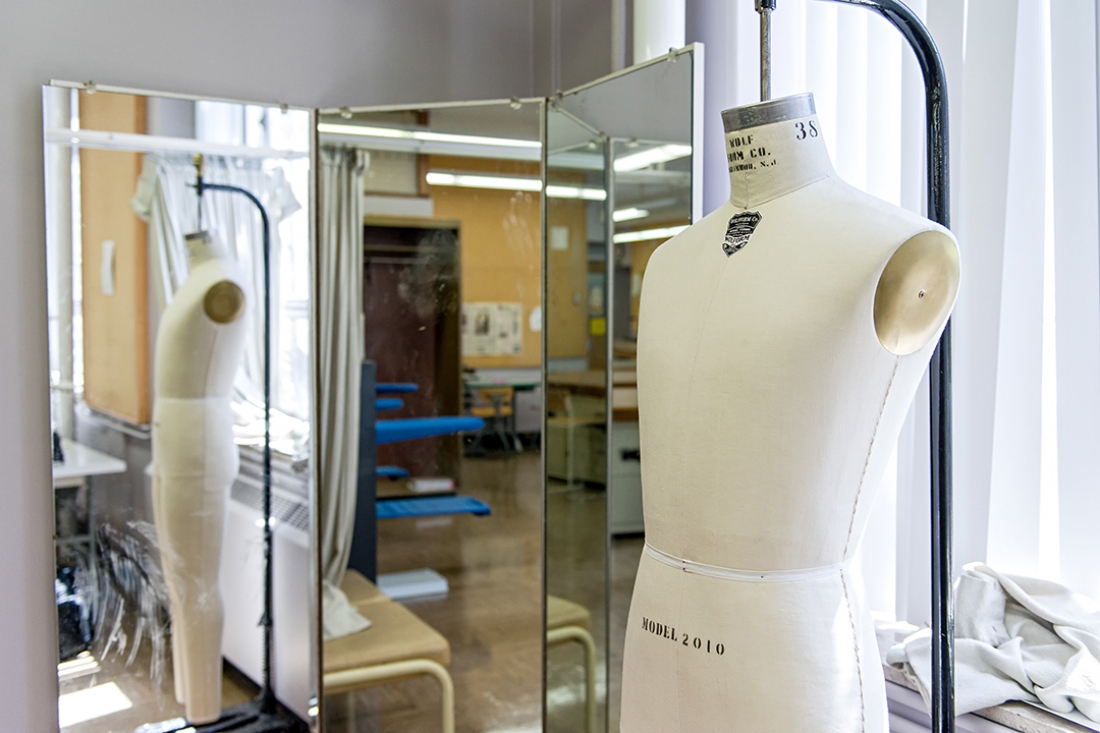 Fashion Design Studio at The Ryerson School of Fashion in Toronto
Fashion in Canada is taught in two kinds of institution. Universities offer four-year design degrees that combine studio work with fashion theory, communication and business. Public colleges and polytechnics, and private career colleges, offer shorter, practical diplomas in design, pattern making and garment construction, or in fashion marketing. Education is the responsibility of the provinces, so each institution designs its own programme and sets its own entry requirements.
SpainExchange lists three schools in Canada under fashion, in Vancouver, Abbotsford and Lethbridge. LaSalle College Vancouver is a private applied arts and design college; its current fashion programmes, their length and their fees should be checked on the college's website. The programme lists of the University of the Fraser Valley and of Lethbridge Polytechnic (formerly Lethbridge College), consulted in October 2026, do not show a fashion programme, so applicants should confirm with those schools before planning around them. The rest of this page describes how fashion studies work in Canada, with examples from the institutions' own programme pages.
Degrees and diplomas
According to the Canadian Information Centre for International Credentials (CICIC), a bachelor's degree normally takes three or four years of full-time study, depending on the province. College diplomas are shorter.
- Bachelor of Design. Toronto Metropolitan University (TMU) offers a four-year Bachelor of Design in Fashion with five concentrations: design leadership, fashion communication, fashion design, fashion studies, and textile and material practices. The degree includes 250 hours of mandatory internship.
- Design schools within polytechnic universities. The Wilson School of Design of Kwantlen Polytechnic University (KPU), in Richmond, British Columbia, offers four Bachelor of Design degrees, three diplomas and one certificate. Its programmes include Fashion & Technology, Fashion Marketing and Technical Apparel Design.
- College diplomas. Seneca Polytechnic in Toronto has a three-year advanced diploma in Fashion Arts covering illustration, 3D computer-aided design, sewing, pattern making, textiles and clothing construction. A field placement is required for graduation.
The first choice is between design and the business side. Design programmes are built around studio work in construction, pattern making and textiles. Fashion marketing and communication programmes concentrate on the commercial side and lead to different jobs.
Admission and portfolio
Each institution sets its own admission requirements and assesses foreign school certificates itself. Design degrees usually ask for more than grades. TMU, for example, bases its decision on academic results plus a portfolio of four pieces and a statement of intent of about 500 words; for entry in autumn 2027 these are due by 1 February 2027. TMU states that the portfolio does not need to show professional-level fashion skills, and it accepts work such as garments, textile design, illustration, photography and writing.
Applicants whose first language is not English or French have to prove their level with a recognised test, at the score set by each institution. The programmes named here are taught in English.
Costs
Tuition fees vary by region, programme and school. EduCanada puts average university tuition for international undergraduate students at $41,746 per year (Statistics Canada, 2026), and tuition for international students in college diploma programmes at approximately $16,000 to $25,000 per year. Fabrics, tools and other materials come on top; the schools consulted do not quantify them. Private colleges set their own fees.
Study permit
Most foreign nationals need a study permit, which costs CAN$150. It is issued for study at a designated learning institution (DLI), so applicants to a private college should check the school's status first. The application normally requires a letter of acceptance, a provincial or territorial attestation letter obtained through the school and proof of funds. For applications from 1 September 2026, a single student outside Quebec must show CAN$23,448 for a year of living costs, on top of tuition and travel. Eligible students can work off campus up to 24 hours per week during term.
Careers
The schools describe two groups of jobs. On the technical side, Seneca lists designer, product developer, technical designer, pattern maker, sample maker and production co-ordinator. On the creative and business side, TMU lists art director, brand strategist, editorial designer, fashion designer and social media strategist. No official employment figures were used for this page.
Frequently asked questions
How long does it take to study fashion in Canada?
It depends on the qualification. The Bachelor of Design in Fashion at Toronto Metropolitan University takes four years, and the Fashion Arts advanced diploma at Seneca Polytechnic takes three.
Do I need to know how to sew to be admitted to a fashion degree?
Not necessarily. TMU states that the admission portfolio does not need to show professional-level fashion skills or technical expertise. Other schools set their own requirements.
Do fashion programmes in Canada include work experience?
Often. TMU's degree includes 250 hours of mandatory internship, and Seneca's diploma requires a field placement to graduate.
Can I get a study permit for a private fashion college?
A study permit is issued for study at a designated learning institution. Whether a particular private college qualifies must be checked before applying.