Psychology Schools and Programs in Italy
2 schools in Italy teach Psychology.
ISI Florence
Higher education centre Florence, Italy
The International Studies Institute (ISI Florence) is an independent private institution in Florence, Italy, founded in 2001 as an American centre for higher education. Classes take place in two historic buildings, Palazzo Rucellai (Via della Vigna Nuova 18) and Palazzo…
Pontificia Università Gregoriana
University Rome, Italy
The Pontificia Università Gregoriana (Pontifical Gregorian University) is a pontifical university of ecclesiastical studies in Rome, entrusted by the Holy See to the Society of Jesus (Jesuits). Its origins go back to 1551, when Saint Ignatius of Loyola founded a school that…
Psychology Studies in Italy
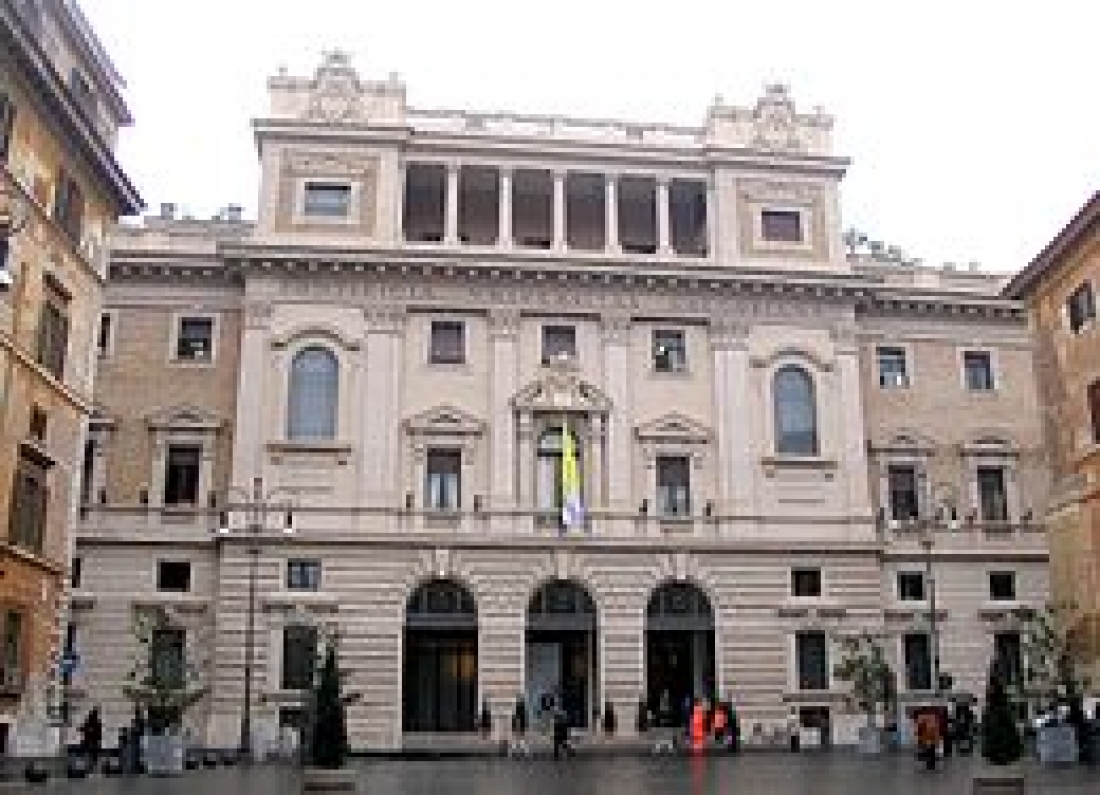 Pontificia Università Gregoriana offers psychology studies in Italy.
Psychology in Italy is a university subject with a clear, state-regulated path: a three-year bachelor's degree followed by a two-year master's degree. Since a 2021 law, the master's degree in psychology is itself the qualification to practise as a psychologist, so the degree and the professional licence now come together. Our directory lists two institutions in Italy for this subject, one in Rome and one in Florence, both with a strongly international student body.
How psychology degrees are organised
Italian universities use CFU credits, and 1 CFU corresponds to 1 ECTS credit. The first cycle is the laurea, a three-year bachelor's degree worth 180 credits; in psychology it belongs to the degree class L-24, Scienze e tecniche psicologiche. The second cycle is the laurea magistrale, a two-year master's degree worth 120 credits, in the class LM-51, Psicologia. A research doctorate (dottorato di ricerca) follows and lasts at least three years.
Qualifying as a psychologist
Law no. 163 of 8 November 2021 on qualifying degrees states that the final exam of the master's degree in psychology (class LM-51) qualifies graduates to practise the profession of psychologist. At least 30 credits of the master's must come from a practical, assessed internship (tirocinio pratico-valutativo) inside the degree programme, and part of this training can already take place during the L-24 bachelor's. Older guides describe a separate year of practice and a state exam after graduation; for current students the qualifying step is built into the master's.
The profession itself is regulated by Law 56/1989, and the national council of the order of psychologists (CNOP) represents the profession. If you hold a psychology degree from another country and want to work in Italy, ask about the recognition of your professional qualification before you plan your move. For admission to study, foreign qualifications are assessed by the Italian institution; CIMEA, the Italian ENIC-NARIC centre, gives information on recognition.
Admission and language
According to Universitaly, the Ministry of University and Research portal, most undergraduate programmes in Italy are taught in Italian, while several graduate programmes are taught in English. Each institution sets its own entry requirements, which may include an admission test or an interview, and tests the Italian of students who choose a course taught in Italian. The academic year starts in the autumn.
Students from outside the EU apply through a pre-enrolment application on the Universitaly portal, which is the only route to the institution's letter needed for a study visa. For the 2026-27 academic year, visa applications for bachelor's and master's programmes must reach the Italian embassy or consulate by 30 November 2026 at the latest, and universities may set earlier dates. After arrival on a study visa, you have eight working days to apply for a residence permit for study. EU citizens do not need a visa.
Where to study psychology in Italy
In Rome, the Pontificia Università Gregoriana has an Institute of Psychology founded in 1971. It prepares specialists who combine psychology with the spiritual dimension, for work as spiritual directors in seminaries, vocational formators and educators. Its offer includes a propaedeutic year, a licentiate, a practical internship and a doctorate. These are pontifical degrees for a specific audience, not the L-24 and LM-51 degrees of the state system.
In Florence, ISI Florence was established in 2001 as an American centre for higher education. Its Multi-Cultural Psychology courses look at human development across cultures. They are designed for study abroad semesters: students take 12 to 17 credits per semester, including one Italian language course.
For a full degree, the main route is a public or private Italian university. Many offer psychology at both levels; the School of Psychology at the Università di Padova, for example, lists courses taught in English. Compare the degree class, the language of instruction, the internship arrangements and the admission test before you apply.
Careers
Under Law 56/1989, the work of a psychologist covers prevention, diagnosis, rehabilitation and support for individuals, groups and communities, as well as research and teaching. According to the CNOP, psychologists work in the private sector, as self-employed professionals or in private and contracted facilities, and in the public sector, for example in local health authorities and municipal social services. A study abroad semester in psychology is a useful base for later work in counselling, education, research or social work, but it does not give a professional qualification on its own.
Frequently asked questions
Can I study psychology in Italy in English?
Partly. Most bachelor's programmes are taught in Italian, but several master's programmes are taught in English, and study abroad institutes such as ISI Florence teach in English.
How long does it take to become a psychologist in Italy?
Usually five years: a three-year L-24 bachelor's degree and a two-year LM-51 master's degree. Under Law 163/2021 the final exam of the master's degree qualifies you to practise.
Do I need a visa to study psychology in Italy?
Students from outside the EU need a study visa. They pre-enrol through Universitaly and, for the 2026-27 academic year, must apply for the visa by 30 November 2026 at the latest.
Is a pontifical degree in psychology the same as an Italian state degree?
No. The licentiate and doctorate of the Pontificia Università Gregoriana are pontifical degrees with their own purpose; the Italian state route to the profession is the LM-51 master's degree.