Segovia, Spain
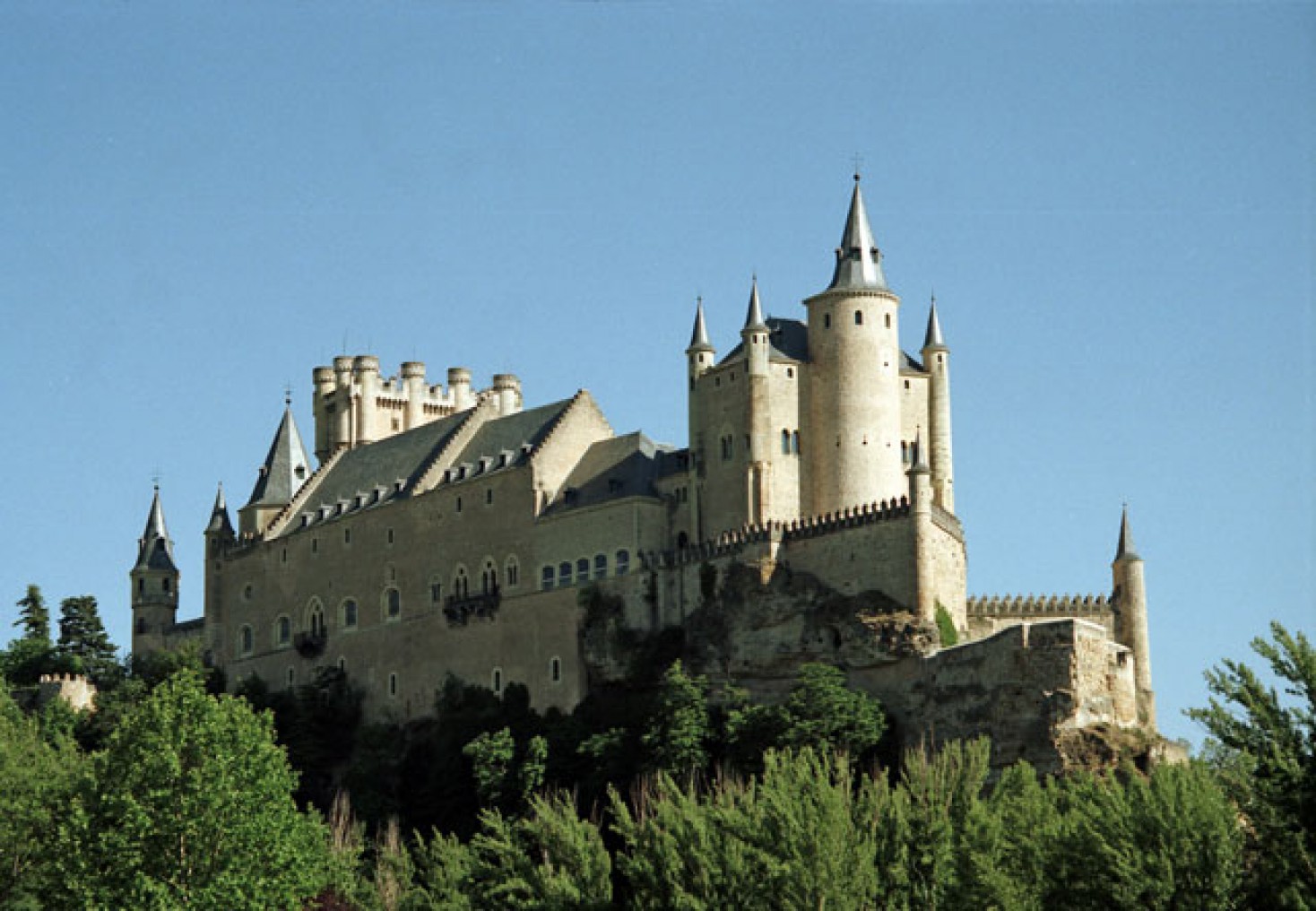
Segovia is a small city in Castile and León, north-west of Madrid, known for three monuments that stand within walking distance of each other: the Roman aqueduct, the Alcázar and the late Gothic cathedral. This post describes each of them, gives the 2026 opening hours and prices that the monuments publish, and explains how to get there from Madrid.
A World Heritage city
In December 1985 UNESCO added “the old town of Segovia and its Roman aqueduct” to the World Heritage list. The old town sits on a rock between the valleys of the rivers Eresma and Clamores, with the aqueduct at one end and the Alcázar at the other. Between them lie the Plaza Mayor and the cathedral, Romanesque churches such as San Martín, the former Jewish quarter and the city walls. Segovia is also the city where Isabella I of Castile was proclaimed queen: she left the Alcázar for the ceremony on 13 December 1474. The city is compact and is best visited on foot.
The Roman aqueduct
The aqueduct is among the best-preserved works of Roman civil engineering. Its exact date is unknown; specialists place it in the 2nd century AD, after the year 112, at the end of Trajan’s rule or under Hadrian. The city tourist office gives these figures:
- 167 arches and 120 pillars
- a maximum height of 28.10 metres, at the Plaza del Azoguejo
- 20,400 granite blocks, joined without mortar and held in place by the balance of forces
It carried water to the city until the last third of the 20th century. It was declared a historic monument on 11 October 1884. The aqueduct stands in the open street and can be seen at any time free of charge. The Aqueduct Interpretation Centre, in the Real Casa de Moneda (the old royal mint), explains how it was built.
The Alcázar
The Alcázar stands at the western tip of the rock. The words “castle of Segovia” and “Alcaçar” appear in documents between 1124 and 1139. Alfonso X held the first Cortes there in 1256, and rebuilding and decoration under the Trastámara kings, from 1412 onwards, turned the fortress into a royal palace. Philip II married Anne of Austria there in 1570. In 1762 Charles III founded the Royal Artillery College, which occupied the Alcázar from 1764 until 6 March 1862, when a fire destroyed the roofs and the interior. Today the visit covers the palace rooms, an artillery museum and the Tower of Juan II.
In 2026 the Alcázar opens every day: from 10:00 to 18:00 between 1 November and 31 March, and from 10:00 to 19:30 between 1 April and 31 October. Ticket sales and entry end 30 minutes before closing, and it is closed on 25 December. The visit to the palace and museum takes 40 to 45 minutes. The Tower of Juan II has 152 steps in a spiral staircase and is not accessible to people with reduced mobility. Tickets often sell out at weekends and on public holidays, so the Alcázar recommends buying them in advance on its website, where the current prices are listed. Citizens of the European Union enter the palace and museum free on Tuesdays from 14:00 to 16:00, except on public holidays, with tickets collected individually at the ticket office.
The cathedral
Segovia’s first cathedral stood opposite the Alcázar. The present one, facing the Plaza Mayor, was built between 1525 and 1768 and is one of the last Gothic cathedrals in Spain and Europe, with Renaissance features. It is known as the “Lady of Cathedrals”.
According to the cathedral’s timetable page, in 2026 the general visit, which includes the Episcopal Palace, runs from Monday to Saturday from 09:30 to 18:30 and on Sunday from 13:30 to 18:30. The general ticket costs €4 and the reduced ticket €3, which applies among others to students under 25 and people over 65. Children under 8 enter free. A combined guided visit to the cathedral and its tower costs €10. Times change when services are held, so check the page before going.
Getting there from Madrid
- High-speed train. Trains on the Madrid (Chamartín) to Valladolid line stop at Segovia-Guiomar and take a little under 30 minutes. The station is 6 km from the centre; city bus line 11 runs to the aqueduct and line 12 to the centre.
- Bus. Coaches leave from the Moncloa interchange in Madrid and take about an hour, depending on traffic and stops. The Segovia bus station is a five-minute walk from the aqueduct.
- Car. About 80 km, around an hour by motorway. There is no car park at the Alcázar and driving in the old town is restricted, so it is easier to use the car parks near the aqueduct.
The conventional train through the Sierra de Guadarrama takes more than two hours and often requires a change.
For students
Segovia is an easy day trip for anyone studying in Madrid, and student tickets reduce the cost of the cathedral. The aqueduct is one of the works described in the post on the Roman legacy of Spain. Schools and courses in the city are listed on the Segovia city page.
More about: Tourism in Spain · All blog posts