Cordoba, Spain
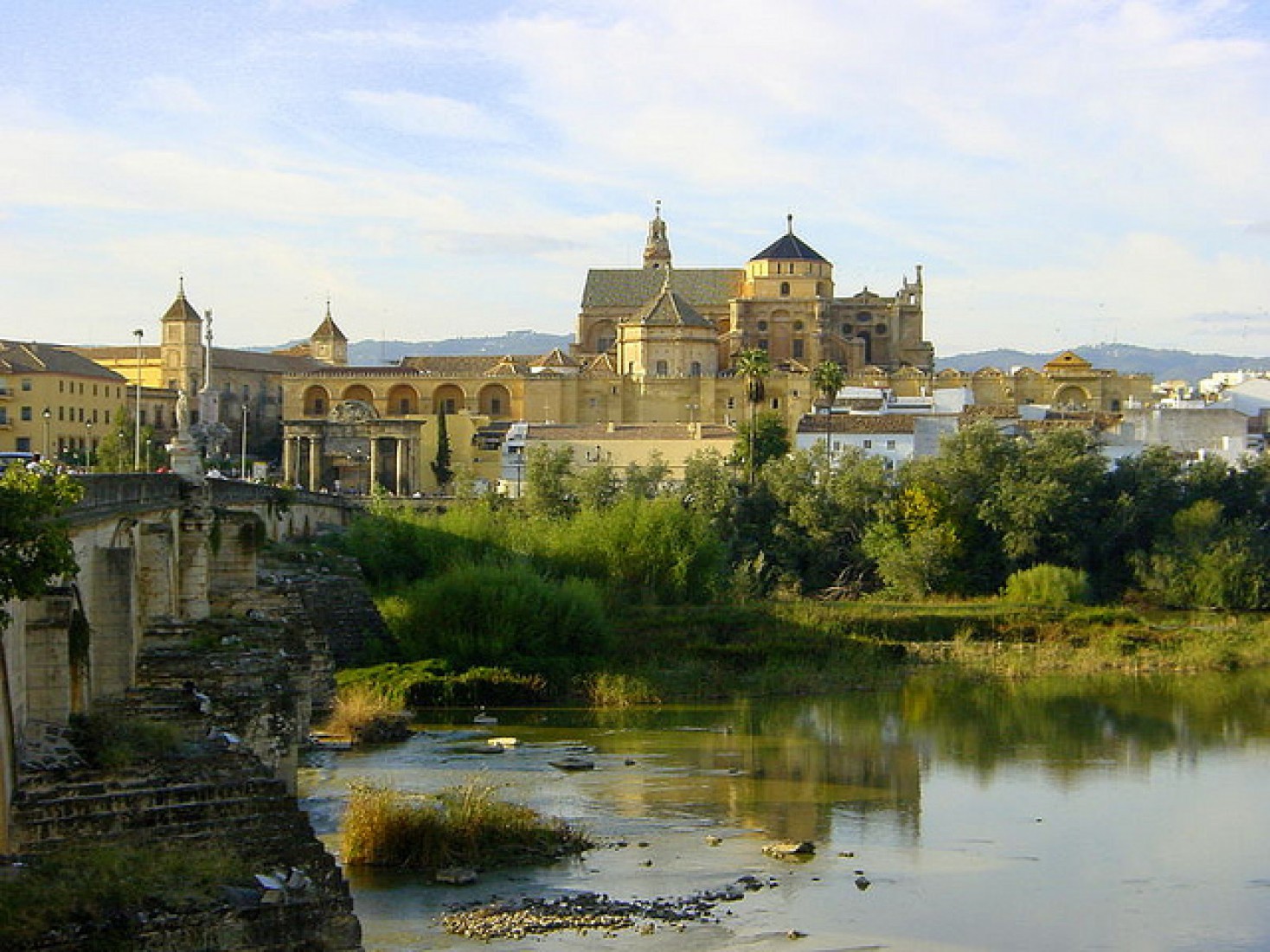
Córdoba is a city in Andalusia, in the south of Spain, known above all for its Mosque-Cathedral and for an old town of narrow streets and flower-filled courtyards. This post covers the city’s history in brief, its three main sights, the May festivals and how to get there, with ticket prices and times checked in October 2026.
From caliphate capital to World Heritage city
Córdoba keeps traces of Roman, Islamic, Jewish and Christian rule. Abd al-Rahman I, a member of the Umayyad dynasty, ruled from 756 to 788 and founded the main mosque. In 929 Abd al-Rahman III proclaimed himself caliph and created the Caliphate of Córdoba, the period in which the city reached its height. In 1236 King Fernando III of Castile conquered the city and the mosque was consecrated as a cathedral. The Mosque-Cathedral has been a World Heritage Site since 1984, and the listing was extended to the surrounding historic centre in 1994.
What to see
The Mosque-Cathedral (Mezquita)
The first mosque was built between 786 and 788 on the site of the Visigothic basilica of San Vicente and was enlarged several times. The prayer hall is a forest of columns carrying red and white arches. Outside lies the Orange-tree Courtyard, where the old minaret is encased in the Renaissance bell tower. Work on the cathedral’s main chapel in the middle of the building began in 1523.
According to the monument’s official site, general admission costs €15 in 2026. The reduced ticket for students aged 15 to 26 and visitors over 65 costs €12, and children under 10 enter free. The bell tower has a separate ticket of €4. In October 2026 the building is open to visitors from 10:00 to 19:00, and ticket sales stop thirty minutes before closing. Entry is free from Monday to Saturday between 8:30 and 9:30, except on days with special services. Hours change with the season and with religious celebrations, so check the date on the site before going. The address is Calle Cardenal Herrero 1, and city bus lines 3 and 12 stop at Puerta del Puente.
Alcázar de los Reyes Cristianos
This fortress and palace stands on a site used by Roman, Visigothic and Islamic rulers. After the conquest of 1236 the building was in ruins. Alfonso X began to restore it and the work was completed under Alfonso XI. Later it served as the seat of the Inquisition and as a prison. The building is almost rectangular with four corner towers, among them the Torre de los Leones. Inside are a Roman sarcophagus from the early 3rd century, a hall of Roman mosaics, baths of Arab inspiration, the Mudéjar courtyard and large gardens with pools. Entry is allowed only during the 30 minutes after the time printed on the ticket. Current opening hours are in the list published by the Córdoba tourist board.
The Jewish Quarter (Judería)
The Jewish Quarter stretches from the Puerta de Almodóvar to the Mosque-Cathedral. It keeps the street plan of a medieval Islamic city, with small streets that often end in dead ends. On Calle Judíos stands the Synagogue, built between 1314 and 1315 according to its inscriptions. The tourist board describes it as one of the three best preserved medieval synagogues in Spain. Its main hall is decorated with Mudéjar plasterwork.
May festivals and food
Spain’s official tourism website recommends spring, and May in particular. That month brings the Courtyards Festival, the May Crosses, the Battle of Flowers and, at the end of the month, the Córdoba Fair. Local dishes include salmorejo (a cold tomato soup), flamenquín (a pork roll fried in breadcrumbs) and aubergines with honey, served with wine from Montilla-Moriles. The old quarter and the neighbourhoods of San Lorenzo, San Andrés and Santa Marina are the usual areas for tapas.
Getting there
According to Spain’s official tourism website, high-speed trains take about 1 hour 50 minutes from Madrid, 40 minutes from Seville, 50 minutes from Málaga and 1 hour 30 minutes from Granada. The railway station and the bus station are next to each other, less than two kilometres from the Mosque-Cathedral, a walk of just over 20 minutes. The old town is easy to explore on foot. A bus runs from Tuesday to Sunday to Medina Azahara, the ruined caliphal city 10 kilometres away.
For students
Córdoba works well as a day trip or weekend from Seville, Málaga, Granada or Madrid, and the reduced student ticket applies at the Mosque-Cathedral with a valid card. Students who want to stay longer can look at the schools in Córdoba, the language courses in Spain or all schools in Spain.
More about: Tourism in Spain · All blog posts