Medicine Schools and Programs in France
6 schools in France teach Medicine.

Université d'Angers
University Angers, France In an official register
The Université d'Angers (UA) is a university in Angers, France, with its head office at 40 rue de Rennes; its president is Françoise Grolleau. Teaching and research are organised in faculties, institutes and a school: Faculté de santé (health: medicine and pharmacy) Faculté…

Université de La Réunion
University Saint-Denis, France In an official register
The Université de La Réunion (University of Reunion) is the university of Reunion Island, the French territory in the Indian Ocean, and the only university on the island. Higher education there began in 1963 with an institute of legal, economic and political studies; it…

Université de Nantes
University Nantes, France In an official register
Nantes Université is a university in Nantes, France, with further university centres in Saint-Nazaire and La Roche-sur-Yon. According to the university, it has 42,000 students, including 5,500 international students, 5,680 staff and 42 research laboratories. Its research…

Université de Poitiers
University Poitiers, France In an official register
The Université de Poitiers (University of Poitiers) is a university in the city of Poitiers, France. It was founded in 1431 by Pope Eugene IV, a foundation later confirmed by letters patent of King Charles VII, and originally had five colleges: theology, canon law, civil law…

Université de Rennes
University Rennes, France In an official register
The Université de Rennes is a university in Rennes, France. Teaching and international relations are organised across several sites: Campus Beaulieu, for sciences and technology Campus Centre, for humanities and social sciences Campus Santé, for health University institutes…

Universite Paris-Saclay
University Paris, France In an official register
The Université Paris-Sud 11 is an institution of higher education of international character, since it welcomes about 5,000 foreign students, from more than 130 countries. It is composed of 5 campuses, 3 institutes of technology and one of engineering and is considered one of…
Medicine Studies in France
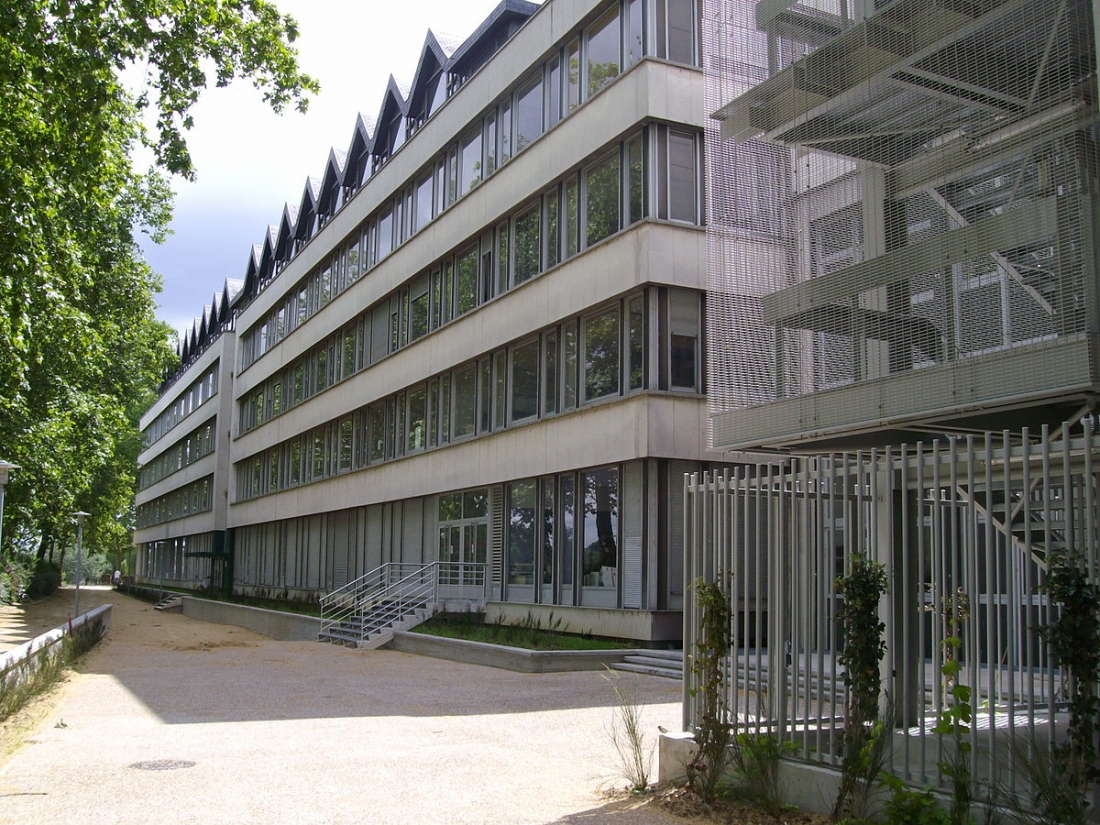 You can study medicine in France at the Université Francois Rabelais.
Medicine in France is taught only in the health faculties of universities, in French, and leads to a state diploma, the diplôme de docteur en médecine. The studies are long, between 9 and 12 years depending on the specialty, and entry to the second year is selective. SpainExchange lists 6 universities in France with medical studies: the Université d'Angers, Nantes Université, the Université de Rennes, the Université de Poitiers, the Université Paris-Saclay and the Université de La Réunion.
How medical studies are organised
According to the medical faculty of Nantes Université, the studies have three cycles:
- First cycle (3 years): a first year shared with the other health courses, then two pre-clinical years. It ends with the diplôme de formation générale en sciences médicales (DFGSM), which the Université Paris-Saclay describes as bachelor's level (grade de licence).
- Second cycle (3 years): three clinical years in which students, known as externes, alternate university courses and hospital placements. It ends with the diplôme de formation approfondie en sciences médicales (DFASM), at master's level.
- Third cycle (4 to 6 years): the specialty training (internat). National exams at the end of the second cycle rank the students, and the rank decides the choice of specialty and university hospital. After the thesis, students receive the specialty diploma (DES) and the diploma of doctor of medicine.
The first year: PASS and L.AS
Since 2020 there have been two ways into the second year of medicine, midwifery, dentistry, pharmacy and physiotherapy:
- PASS (parcours accès spécifique santé): a health-focused first year with an option in another discipline.
- L.AS (licence accès santé): a bachelor's degree in another subject with a health minor.
The year cannot be repeated. A student who passes the 60 ECTS credits but is not admitted to the second year continues in the second year of the bachelor's degree and can apply once more from there; the Université d'Angers states that a candidate cannot apply more than twice. Admission is decided by a jury on grades: at Rennes, candidates are admitted directly, called to an oral exam or not admitted.
Each university organises this year in its own way. Angers calls its PASS PluriPASS and runs it with Le Mans Université. Rennes teaches the PASS in Rennes, Lorient, Pontivy, Saint-Brieuc and Vannes.
Admission for international students
European students apply for the first year through Parcoursup, the national platform. For non-European students, Angers explains that a preliminary request for admission (DAP) is compulsory for the first year of health studies; for entry in 2027, applications run from 1 October 2026 to 15 December 2026.
The language requirement is higher than for most degrees. Angers asks for certified French at level B2, with an overall score of at least 475 in the TCF DAP; holders of the DELF B2 with at least 75 out of 100 are exempt from the test.
Students who began or completed health studies outside the European Union have two options at Angers:
- start again in the first year, with no exemption from any part of the course;
- apply under a specific procedure for holders of non-EU health qualifications, at a single university. The places are very few: Angers offered 3 in medicine for 2026.
There is also a bridge procedure (passerelle) into the second or third year for holders of certain diplomas, such as a master's degree or doctorate obtained in France or an engineering diploma. Students must be up to date with their vaccinations, including hepatitis B, before hospital placements.
Tuition fees
Fees at public universities are set nationally. For the 2026-27 academic year, according to Campus France, students from the EU, the EEA and Switzerland pay €178 per year at bachelor's level and €255 per year at master's level. Students from other countries pay €2,902 and €3,950 per year, unless an exemption applies.
Qualification and careers
The diploma of doctor of medicine is a French state diploma, awarded with a specialty diploma, including for general practice. Graduates who plan to work in another country should check the recognition rules there. Doctors who qualified outside the European Union (known as PADHUE) follow a separate procedure before they can practise in France; the medical faculties handle part of it within the third cycle.
Frequently asked questions
How many years does it take to study medicine in France?
Between 9 and 12 years: three years of first cycle, three clinical years and 4 to 6 years of specialty training, depending on the specialty.
Can I study medicine in France in English?
No. Medical studies at the universities are taught in French, and non-European applicants must certify level B2; Angers asks for at least 475 points in the TCF DAP.
Can I transfer to France after starting medicine in another country?
Students from outside the EU either start again in the first year without exemptions or apply under a specific procedure with very few places (3 in medicine at Angers for 2026). An application can be made at one university only.
What happens if I am not admitted to the second year?
The first year cannot be repeated. Students who passed their 60 ECTS credits continue in the second year of a bachelor's degree and can apply a second time from there.