Medicine Schools and Programs in Ghana
1 school in Ghana teaches Medicine.
University of Ghana
University Legon, Ghana
The University of Ghana was founded on 11 August 1948 as the University College of the Gold Coast. It is organised in a collegiate system with four colleges (Basic and Applied Sciences, Education, Health Sciences and Humanities), and its central administration includes a…
Medicine Studies in Ghana
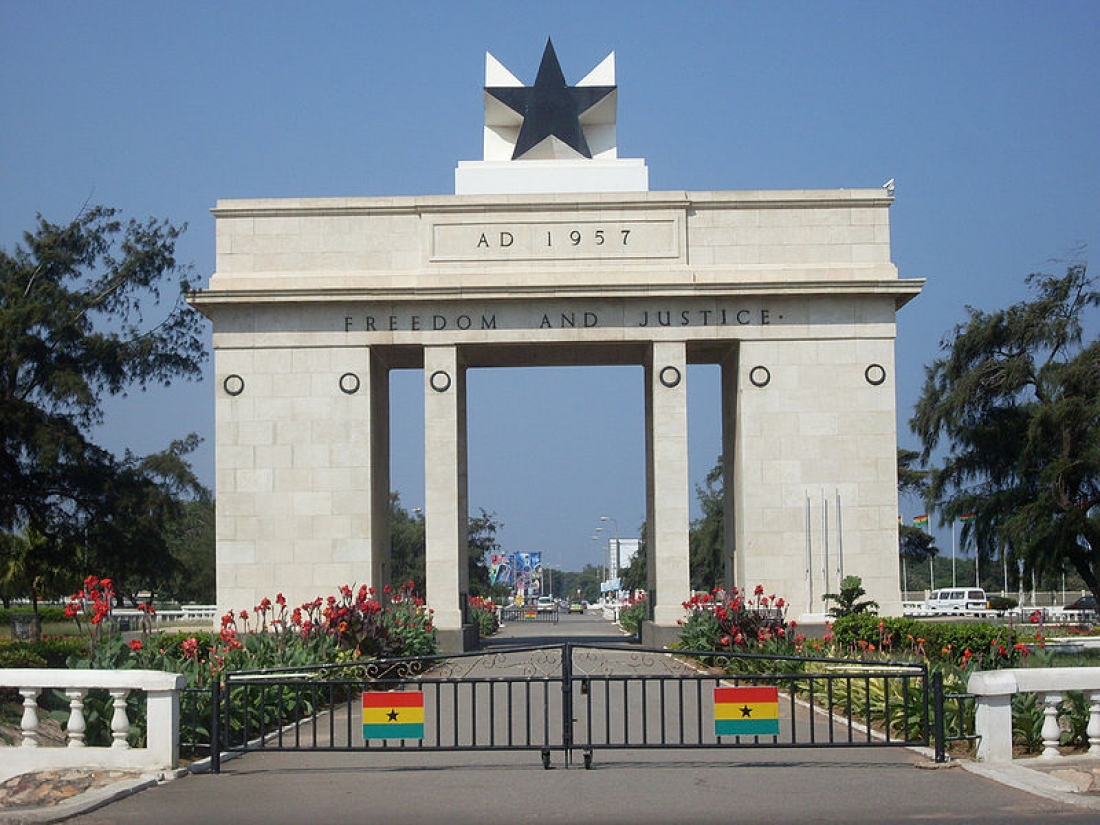 Independence Arch, Accra, Ghana
Medicine in Ghana is taught in English at medical schools accredited by the Medical and Dental Council (MDC), the statutory body that regulates the training and practice of doctors and dentists. The medical degree is the Bachelor of Medicine and Bachelor of Surgery (MB ChB). After the degree, every graduate has to pass the Council's registration examination and complete housemanship, the supervised internship in an accredited hospital.
SpainExchange lists 1 school in Ghana with medicine programmes: the University of Ghana, in Legon, Accra. Its medical school is the University of Ghana Medical School (UGMS), part of the College of Health Sciences.
How medical training is organised
The MDC publishes the list of institutions that are accredited and recognised to train doctors and dentists. The list dated September 2025 has 12 institutions. Two kinds of medical programme appear on it: the regular medical programme, for school leavers, and the Graduate Entry Medical Programme (GEMP), for applicants who already hold a degree. The University of Ghana Medical School is accredited for both.
The Council states that it does not register graduates of institutions it has not accredited, and that it does not grant accreditation retrospectively. Checking the current MDC list before applying to any medical school in Ghana is therefore essential.
The University of Ghana describes the MB ChB as the degree that trains physicians and surgeons to diagnose illnesses and to prescribe and administer treatment. Graduates can continue with master's and PhD programmes through the university's School of Graduate Studies, or with specialist training.
The University of Ghana Medical School
Medical sciences entered the University of Ghana's programmes in 1962, when the first students were admitted to study for a degree in medicine. The school was first housed at Korle Bu Hospital in Accra, which became its teaching hospital. In 1969 it was formally incorporated into the university as the University of Ghana Medical School, and that year its first 39 graduates received University of Ghana degrees. The College of Health Sciences, which groups the medical school with dentistry, nursing, pharmacy, public health and allied health sciences, was approved by the University Council in December 1999.
UGMS has departments for the basic sciences, such as anatomy, physiology, medical biochemistry and medical microbiology, and for the clinical disciplines, among them medicine and therapeutics, surgery, child health, obstetrics and gynaecology, psychiatry and community health.
Admission and language
Applicants with Ghanaian or West African school certificates need credits in the four core subjects (English, core mathematics, integrated science and social studies) and in three elective subjects. Medicine is one of the programmes that the University of Ghana accepts only as a first choice, and shortlisted candidates are called for interview.
The university publishes separate entry requirements for international applicants:
- Cambridge A levels: chemistry and two subjects from physics, biology and mathematics, plus O level passes in English language and mathematics
- International Baccalaureate: at least grade 5 in higher level chemistry, and two of biology, mathematics and physics, one at higher and one at standard level
International undergraduate applicants pay a non-refundable application fee of US$55. Tuition fees differ for Ghanaian and international students and are published by the university for each academic year. Teaching and examinations are in English, and the MDC asks for all documents in other languages to be translated into English.
Registration and recognition
From February 2026 the MDC applies a common licensing examination to locally trained and foreign-trained doctors and dentists. The examination for general duty practitioners has two stages:
- Stage 1: a theory examination of 200 multiple-choice questions in two papers
- Stage 2: a clinical examination in OSCE format (objective structured clinical examination)
The pass mark is an average of 50% in each stage, and a candidate must pass both stages before applying for a licence. Doctors trained abroad must first complete a clinical attachment of at least six months in an accredited facility in Ghana.
The Council points out that passing the examination gives legal permission to practise in Ghana but does not guarantee a job. New doctors do their housemanship in hospitals on the Council's list of accredited institutions, which includes Korle Bu Teaching Hospital in Accra.
Careers
After housemanship and full registration, doctors in Ghana work as general duty medical officers or enter specialist training. Anyone who intends to practise in another country should ask that country's medical regulator how a Ghanaian degree is assessed.
Frequently asked questions
What is the medical degree in Ghana called?
It is the Bachelor of Medicine and Bachelor of Surgery, written MB ChB. It is awarded by medical schools accredited by the Medical and Dental Council.
Is medicine taught in English in Ghana?
Yes. The University of Ghana teaches in English, and the Medical and Dental Council requires English translations of all documents in other languages.
Can a doctor trained abroad practise in Ghana?
Yes, after passing the registration examination of the Medical and Dental Council. Foreign-trained doctors first complete a clinical attachment of at least six months in Ghana and then sit the two-stage examination.
Which medical schools in Ghana are recognised?
Only those on the list of accredited institutions published by the Medical and Dental Council. The September 2025 list has 12 institutions, including the University of Ghana Medical School.