Medicine Schools and Programs in Norway
1 school in Norway teaches Medicine.
UiT The Arctic University of Norway
University Tromsø, Norway
UiT The Arctic University of Norway (in Norwegian, UiT Norges arktiske universitet) is a university in Northern Norway, with its main postal address in Tromsø. It offers education at eleven study sites across the region: Tromsø Alta, Hammerfest and Kirkenes Bodø, Narvik and…
Medicine Studies in Norway
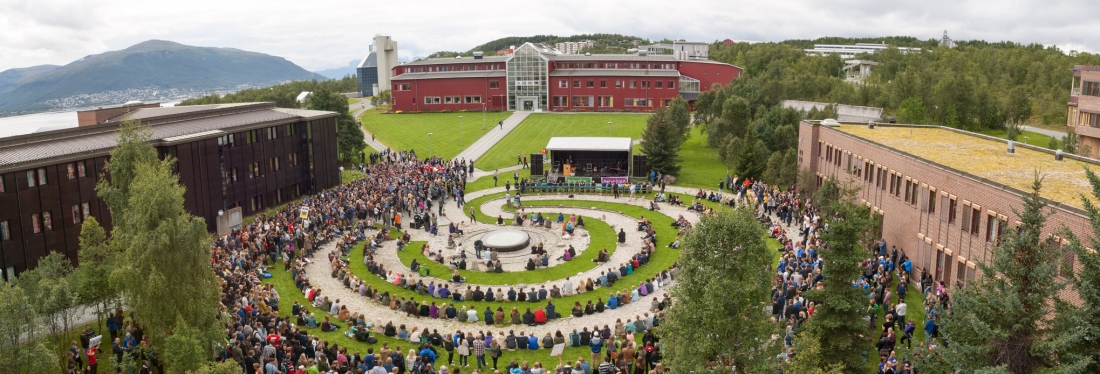 Study medicine in Norway at the University of Tromsø
In Norway, medicine is a six-year professional degree (profesjonsstudium) taught at universities. It leads to the degree of candidatus/candidata medicinae (cand.med.), and graduates obtain authorisation as a doctor (lege). There is no separate bachelor's stage: students enter medicine directly after secondary school, through the national admissions service Samordna opptak.
SpainExchange lists 1 school in Norway that teaches medicine: UiT The Arctic University of Norway, based in Tromsø. UiT describes itself as the northernmost university in the world and has about 15,500 students. Its medical programme aims to train doctors who can work globally, with a particular focus on the High North.
How the medical degree is organised
The medical degree at UiT is worth 360 ECTS credits over 6 years. The main stages are:
- Years 1 to 4: the structure and function of the human body, then the most common and most dangerous diseases, with a large share of practical teaching in hospitals and GP surgeries from the start
- Year 5: 18 weeks in hospital (somatic medicine and psychiatry) and 8 weeks with a general practitioner, followed by a 20-credit research thesis
- Year 6: clinical teaching at the University Hospital of North Norway, Nordland Hospital in Bodø or Finnmark Hospital in Hammerfest, ending with a theoretical and practical final exam
Teaching combines lectures, laboratory work, skills training, simulation, case groups and placements. Students with an interest in research can join a research track (forskerlinje) after the first year, which adds a research year and can count towards a later PhD.
Admission and language
Admission requires the general university admission certificate (generell studiekompetanse, GSU) plus specific subjects: mathematics (R1 or S1+S2), physics 1 and chemistry 1 and 2, or their equivalents. Applicants with foreign diplomas must meet the requirements of the GSU list for their country. The application deadline is 15 April.
Competition is strong. UiT has 151 places, and the cut-off for autumn 2025 was 66 points in the ordinary quota and 59.9 in the quota for applicants with ties to Northern Norway. There is also a separate quota for applicants who can document Sami language skills. Admitted students must present a police certificate at the start of the programme.
The programme is taught mainly in Norwegian. Study in Norway, the official portal, notes that Norwegian-taught programmes require documented proficiency in a Nordic language. The seventh semester is an international semester taught and examined in English, designed for exchange students. UiT's own students can study abroad in the autumn of the fourth year at partner universities in the Nordic countries, Europe, the USA, Australia and South Africa.
Costs and permit
Students from the EU/EEA and Switzerland pay no tuition fees at public institutions. Degree students from other countries must normally pay tuition fees, which vary by institution and programme. Study in Norway estimates student living costs at NOK 15,488 per month, or NOK 170,368 per year, for 2026-27.
Students from outside the EU/EEA need a study permit, which requires admission as a full-time student and proof of funds. The permit allows work of up to 20 hours a week during term and full-time in holidays.
Recognition and careers
After graduating, doctors can apply for a post as a doctor in specialist training (LIS-lege). Many work in general practice, hospitals or municipal health services; others work for humanitarian organisations, the armed forces or in medical research.
Within the EU/EEA, medical training is harmonised, so a degree that gives the right to practise in one country generally gives it in Norway too. For doctors trained outside the EU/EEA, the Norwegian Directorate of Health (Helsedirektoratet) requires extra steps within three years: Norwegian at level B2, a course on the Norwegian health system with a medication management course, and a two-day professional test at the University of Oslo. Helsedirektoratet never pre-approves foreign studies.
Frequently asked questions
How long does it take to study medicine in Norway?
Six years. At UiT the programme is worth 360 ECTS credits and leads to the cand.med. degree and authorisation as a doctor.
Can I study medicine in English in Norway?
Not the full degree at UiT, which is taught mainly in Norwegian. Only the seventh semester is taught in English, as an international semester for exchange students.
Is medicine free in Norway?
For students from the EU/EEA and Switzerland, public universities charge no tuition fees. Students from other countries must normally pay tuition fees, and everyone needs to cover living costs of about NOK 15,488 a month (2026-27 estimate).
How hard is it to get into medicine at UiT?
There are 151 places. In autumn 2025 the cut-off in the ordinary quota was 66 points, and applicants also need mathematics, physics and chemistry.