Architecture Schools and Programs in Bosnia and Herzegovina
2 schools in Bosnia and Herzegovina teach Architecture.
University of Banja Luka
University Banja Luka, Bosnia and Herzegovina
The University of Banja Luka (UNIBL) is a public university in Banja Luka, in the Republic of Srpska, Bosnia and Herzegovina. It was established on 7 November 1975 and describes itself as the second largest university in the country. It has 16 faculties, the Academy of Arts…
University of Sarajevo
University Sarajevo, Bosnia and Herzegovina
The Univerzitet u Sarajevu (University of Sarajevo, UNSA) is a university in Sarajevo, Bosnia and Herzegovina. Its faculties include the faculty of science and mathematics (Prirodno-matematički fakultet), the faculty of education (Pedagoški fakultet), the faculty of Islamic…
Architecture Studies in Bosnia and Herzegovina
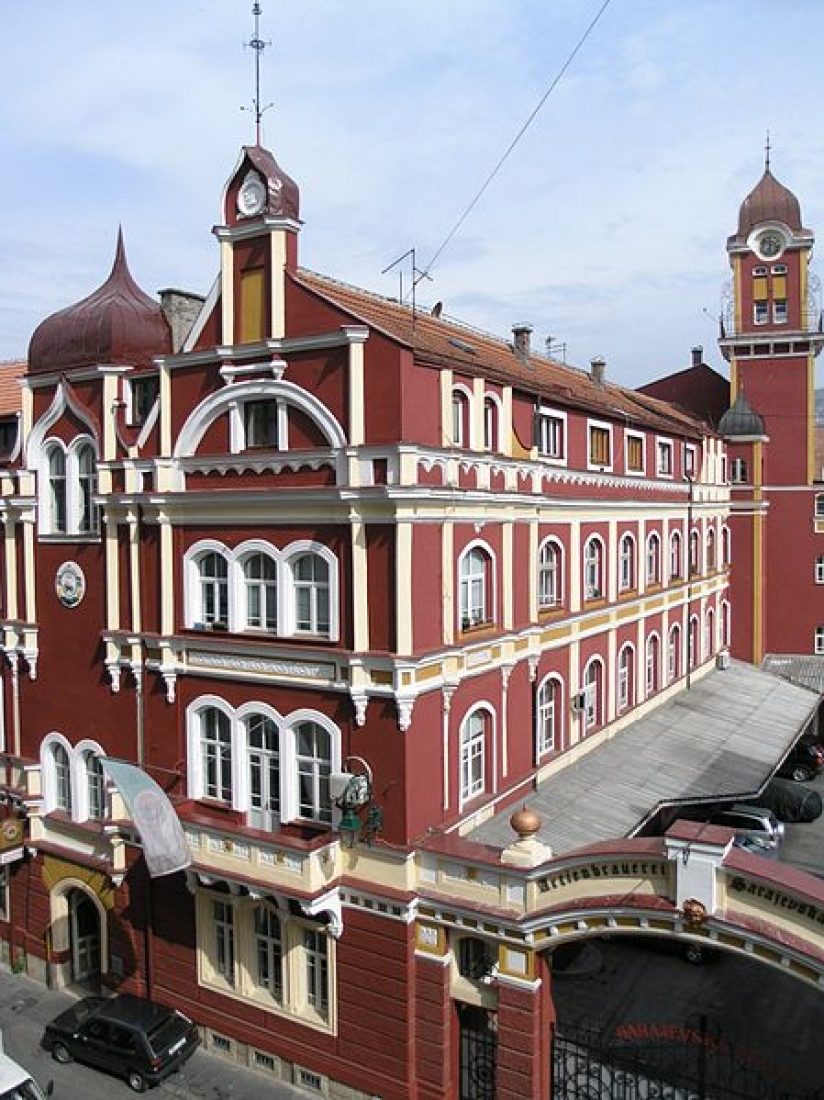 A brewery in Saravejo, Bosnia
Architecture in Bosnia and Herzegovina is taught at public universities under the Bologna system, with ECTS credits and three cycles: bachelor's, master's and doctorate. Teaching is mainly in the local languages (Bosnian, Croatian and Serbian). SpainExchange lists two universities in the country that teach architecture: the University of Sarajevo (Univerzitet u Sarajevu), whose Faculty of Architecture was founded in 1949, and the University of Banja Luka (UNIBL) in the Republic of Srpska, whose Faculty of Architecture, Civil Engineering and Geodesy was established in 1995.
How the degree is organised
The two universities follow different models, so it is worth comparing them before applying:
- University of Sarajevo, Faculty of Architecture: a 3 + 2 + 3 model. The three-year first cycle (180 ECTS) leads to the title of architectural engineer, bachelor of architecture; the two-year second cycle (120 ECTS) to master of architecture; and a three-year doctorate (180 ECTS) to doctor of technical sciences in architecture and urbanism.
- University of Banja Luka, Faculty of Architecture, Civil Engineering and Geodesy: a 4 + 1 model. The four-year Architecture programme (240 ECTS) leads to a Bachelor of Science in Architecture, followed by the one-year master's programme Architecture and Urbanism (60 ECTS), which focuses on sustainability and resilience in the built environment.
The Sarajevo faculty has trained more than 4,500 architects and is associated with the "Sarajevo school of architecture", which draws on local heritage, housing traditions and the relationship with nature. It describes its curriculum as compatible with most European architecture faculties. In Banja Luka, the first architecture students were admitted in 1997/98, and the faculty took its current name in 2014.
From degree to profession
According to the Sarajevo faculty, the bachelor's degree prepares graduates to work as associates in design offices and on construction sites. Graduates of the second cycle who also pass the state professional exam, which covers legislation on architecture and urban planning, can design independently, manage construction sites and act as responsible engineers. Typical careers are therefore in architecture and design practices, construction and urban and spatial planning; the Sarajevo faculty also runs an institute for architecture, urbanism and spatial planning.
Admission for international students
Foreign citizens can apply for the first cycle at both universities. At the University of Sarajevo, the call for first-year admission is published in early June and applications are made online. Applicants who completed secondary school abroad can enrol only after their certificate has been recognised (nostrifikacija or equivalence), at the latest by the start of the academic year, which normally begins on 1 October. Foreign applicants to programmes taught in the local language must prove their knowledge of Bosnian, Croatian or Serbian.
The Sarajevo Faculty of Architecture holds an entrance exam in early July. It is worth 40 points: 16 for artistic and graphic ability, 14 for spatial perception, 6 for general culture and 4 for mathematics. Candidates need at least 51% of the total points to enrol. At the University of Banja Luka, applicants take an entrance exam or aptitude test worth up to 50 points, and anyone scoring below 15 points cannot enrol.
Fees, residence and student life
Foreign students pay study fees at both universities. The amounts are set by official decisions (in Sarajevo by the cantonal government and the university, in Banja Luka by the university's management board), so check the current price list before applying. The University of Banja Luka has around 15,000 students, and places in its student residence, the Nikola Tesla Student Centre, are allocated through a call published in September.
Students from abroad need a temporary residence permit for education from the Service for Foreigners' Affairs (Služba za poslove sa strancima). As a rule, the first application is submitted in person at an embassy or consulate of Bosnia and Herzegovina before arrival. The permit is issued for up to one year, and foreigners must register their address after they arrive. To have a foreign degree recognised for further study at the University of Sarajevo, applicants apply to the faculty that teaches the matching programme.
Frequently asked questions
How long does it take to study architecture in Bosnia and Herzegovina?
Five years in total for a master's degree: 3 + 2 years at the University of Sarajevo, or 4 + 1 years at the University of Banja Luka.
Is there an entrance exam for architecture?
Yes. The Sarajevo Faculty of Architecture tests artistic and graphic ability, spatial perception, general culture and mathematics in early July. The University of Banja Luka also uses an entrance exam or aptitude test.
Can I study architecture in Bosnia and Herzegovina in English?
Architecture is taught in the local languages, and foreign applicants must prove their knowledge of Bosnian, Croatian or Serbian. The University of Sarajevo offers nine programmes in English, but architecture is not listed among them on the sources checked.
Do I need a residence permit to study in Bosnia and Herzegovina?
Yes. Education is one of the grounds for a temporary residence permit, which is normally applied for at a Bosnian embassy or consulate before travelling.