Architecture Schools and Programs in Costa Rica
1 school in Costa Rica teaches Architecture.
Universidad de Costa Rica
University San José, Costa Rica
The Universidad de Costa Rica (UCR) is a university whose main campus, the Sede Rodrigo Facio Brenes, is in Montes de Oca, San José, Costa Rica; some degree programmes are taught at regional campuses (Sedes Regionales). It describes itself as a "meritorious institution of…
Architecture Studies in Costa Rica
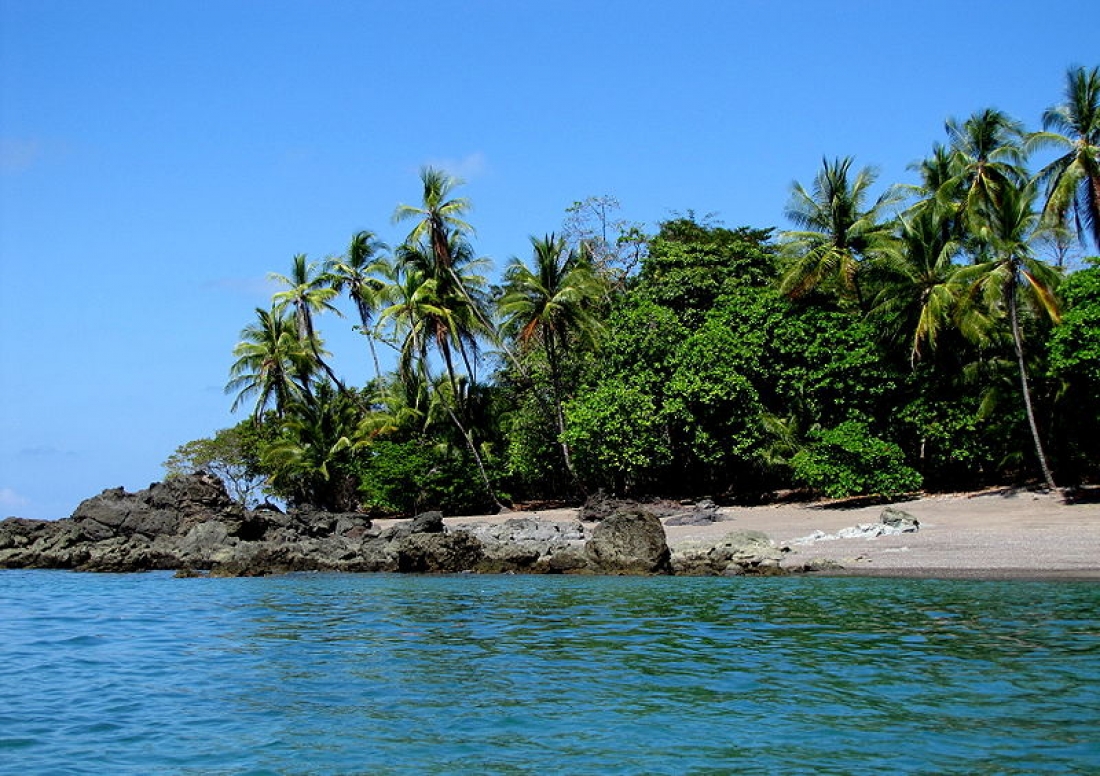 Corcovado National Park in the Península de Osa, Costa Rica
In Costa Rica, architecture is a five-year university degree that leads to the professional title of licenciado or licenciada. SpainExchange lists one school in Costa Rica for this subject: the Universidad de Costa Rica (UCR), a public university in San José. Its Escuela de Arquitectura teaches the Licenciatura en Arquitectura in Spanish.
The UCR approved the creation of the architecture degree on 2 December 1968 and the first classes began in August 1971. According to the school, the first cohort that completed the study plan became the first architects to graduate in Costa Rica.
How the degree is organised
The school describes the licenciatura as training professionals in the design, evaluation and construction of buildings and urban spaces. The current study plan has 170 credits and 54 courses, organised in 10 regular terms of 16 weeks over five years. These are the university's own credits, not ECTS credits. On top of the courses, students complete 300 hours of university community work (Trabajo Comunal Universitario) and a final graduation project in one of four modalities.
The design studios (Talleres de Diseño) are the backbone of the curriculum. Around them, the plan has a theory area with history, theory and planning, and two further areas for complementary and humanistic subjects.
A reformed study plan was approved in March 2026 and takes effect in March 2027. Students who enter in 2027 are registered in the new plan, and a transition plan runs until 2030 for those who stay in the current one. The new plan adds the option of leaving with a Bachillerato en Arquitectura after four years, and it brings in topics such as the climate emergency, sustainability, digital culture and artificial intelligence.
Accreditation
The degree was accredited by SINAES, the national accreditation system, from 2008 to 2012. The school then chose international accreditation, first with the Central American agency ACAAI from 2015. In December 2024 it obtained accreditation from ANPADEH (Acreditadora Nacional de Programas de Arquitectura y Disciplinas del Espacio Habitable), valid from 6 December 2024 to 5 December 2029. According to the school, this helps graduates arrange professional practice in the countries that have signed the Canberra Accord.
Admission and language
The school has 110 places per year, of which 90 are for ordinary admission of first-time students. Applicants must have finished secondary education and sit the UCR academic aptitude test (Prueba de Aptitud Académica), which has verbal and mathematical reasoning items. Places go to the applicants with the highest admission averages. The school used to hold its own skills test; its admission page states that this test was not held for entry in 2025, so check the current rule before applying.
The state universities UCR, UNA, TEC and UNED share one registration process for the test. Students from abroad who want the full degree follow the same route. Applicants who have studied at another institution can request recognition of courses (equiparación de materias).
Exchange students apply through UCR's international office and do not sit the test. They need at least three completed semesters at home and, if they are not native speakers, Spanish at CEFR level B2 or higher.
Costs
UCR charges tuition per credit. In the 2026 fee table, the full undergraduate rate for foreign students is ₡58,410 per credit, with a ceiling of ₡700,920 (12 credits); scholarship categories reduce the amount.
Postgraduate study
The school's postgraduate programme has professional master's degrees in urban design, housing and social facilities, architecture and construction, landscape and site design, and tropical architecture. Admission goes through UCR's Sistema de Estudios de Posgrado.
Recognition and careers
The degree's stated aims include designing, executing and evaluating architectural works and handling the basics of urbanism and regional planning, in both urban and rural areas.
People with an architecture degree obtained outside Costa Rica who want to practise in the country must have it recognised through the Oficina de Reconocimiento y Equiparación (ORE) of CONARE and the state universities. Graduates who plan to work elsewhere should check the recognition rules of that country.
Frequently asked questions
How long does it take to study architecture in Costa Rica?
The Licenciatura en Arquitectura at the Universidad de Costa Rica takes five years (10 terms), plus 300 hours of community work and a final graduation project.
Is there an entrance exam?
Yes. Applicants sit the UCR academic aptitude test and compete for one of 90 ordinary-admission places with their admission average.
Is the degree accredited?
The school reports accreditation by ANPADEH from 6 December 2024 to 5 December 2029. Earlier it was accredited by SINAES (2008 to 2012) and by ACAAI.
Can I study architecture in Costa Rica in English?
The UCR degree is taught in Spanish. Non-native exchange students need at least a B2 level of Spanish.