Psychology Schools and Programs in Belgium
4 schools in Belgium teach Psychology.
Université catholique de Louvain
University Louvain-la-Neuve, Belgium In an official register
The Université catholique de Louvain (UCLouvain) is a French-speaking university in Belgium whose main address is in Louvain-la-Neuve. Its history goes back to 9 December 1425, when Pope Martin V signed the bull creating the University of Louvain, and it celebrated its 600th…

Vrije Universiteit Brussel
University Elsene, Belgium In an official register
The Vrije Universiteit Brussel (VUB) is a university in Brussels, Belgium, which officially exists since 1970 and has the ULB as its sister university. VUB states that it works according to the principles of the Enlightenment: critical thinking, free enquiry and humanism. It…

Ghent University
University Ghent, Belgium
Ghent University is a university in Belgium, founded in 1817. It is located in and around Ghent, Kortrijk (Courtrai), Bruges and Ostend, and it also runs Ghent University Global Campus (GUGC) in Songdo, South Korea. The university is organised into eleven faculties, offers…

University of Leuven
University Leuven, Belgium
KU Leuven is a university in Leuven, Belgium, with its central address at Oude Markt 13. In 2025 it marked 600 years of existence. Its activity is organised around research and innovation on the one hand and education on the other. Study programmes, with information on…
Psychology Studies in Belgium
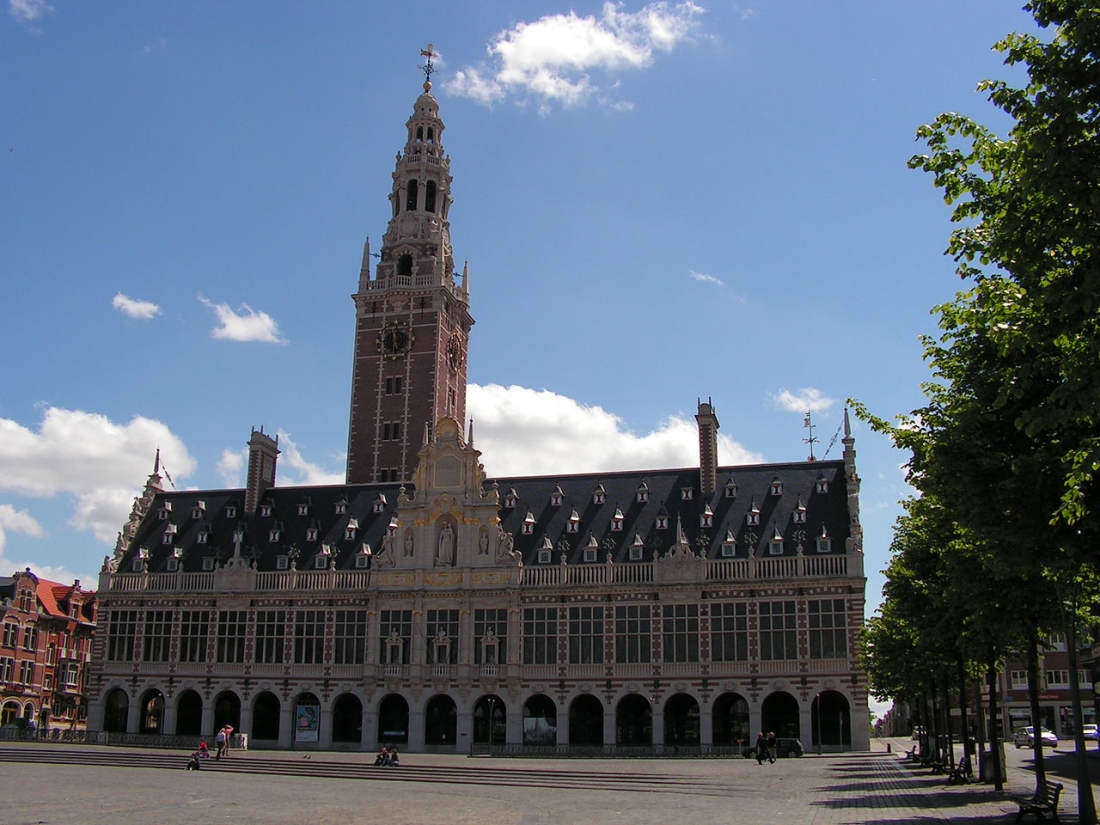 Espace Leopold, Brussels
Psychology in Belgium is a five-year university path: a three-year academic bachelor's degree followed by a two-year master's degree. Only the master's leads to the protected title of psychologist. Programmes are taught in Dutch in Flanders and in French in the Wallonia-Brussels Federation, with some master's degrees in English. SpainExchange lists four universities with psychology: Ghent University, KU Leuven and the Vrije Universiteit Brussel (VUB) in Flanders, and the Université catholique de Louvain (UCLouvain) in Louvain-la-Neuve.
How psychology degrees are organised
In Flanders, an academic bachelor's degree carries 180 ECTS credits and prepares students for a master's; master's degrees carry 60 to 120 credits, and in psychology the master's is the longer, two-year version. UCLouvain follows the same pattern in French: the bachelier en sciences psychologiques et de l'éducation, orientation générale (180 credits), followed by the master en sciences psychologiques (120 credits), which has a research-oriented and a specialised track.
The first years give a broad scientific base. At the VUB, for example, psychology students also take sociology, logic, human biology, statistics and education, and learn research through practical classes, experiments and psychological tests. Specialisation follows in the master's, where students choose a field such as clinical psychology or work and organisational psychology, and complete a placement. VUB students can do their master's placement in Belgium or abroad.
Language and admission
Most programmes in Flanders are taught in Dutch, and most Dutch-taught bachelor's programmes require level B2. English-taught options are more common at master's level. KU Leuven, for example, offers the Master of Psychology: Theory and Research (120 ECTS) in English, a research master with a 30-credit internship.
In the Wallonia-Brussels Federation, a French language test is not required for bachelor's programmes other than three teacher-training paths, but the teaching and exams are in French, so a good level is needed in practice. Psychology has no entrance exam in either community. Students apply to the university with their secondary school diploma, and students from outside the EU follow the university's application procedure for international students.
Costs
- Flanders, 2026-27: €1,181.40 a year for EU/EEA nationals; €5,300 to €12,000 a year for non-EU/EEA nationals, depending on the institution
- Wallonia-Brussels Federation: a maximum of €1,194 a year for EU nationals (from 2025-26); €5,369 a year for most non-EU students, including an additional contribution of €4,175
The title of psychologist and careers
Since 1993, the title of psychologist has been protected by law in Belgium. Only people with the required diploma who are registered with the Commission of Psychologists may use it, and registration must be renewed every year. The Commission states that more than 19,000 psychologists are registered. Holders of a Belgian master's in psychology can apply for registration directly; foreign degrees are assessed under EU Directive 2005/36/EC, and documents must be in Dutch, French, German or English.
Clinical psychology is also a healthcare profession, since 1 September 2016. To practise it, psychologists need a visa from the federal public health service (SPF Santé Publique) in addition to their registration. For students who started in 2017-18 or later and graduate from 2025-26, UCLouvain notes that both the visa and an approval (agrément) from the community are required.
According to the VUB, clinical psychologists mainly work in hospitals, pupil guidance centres and, increasingly, in private practice. Work and organisational psychologists work in companies, for example in human resources, career guidance, market research or consultancy.
Frequently asked questions
How long does it take to become a psychologist in Belgium?
Five years: a three-year bachelor's (180 credits) and a two-year master's (120 credits). Clinical psychologists also need a visa and, for recent graduates, an approval before they can practise.
Can I study psychology in Belgium in English?
Bachelor's programmes are taught in Dutch or French. Some master's degrees are in English, such as KU Leuven's Master of Psychology: Theory and Research.
Is there an entrance exam for psychology in Belgium?
No. Unlike medicine, psychology has no entrance exam, but the bachelor's programmes require a good command of Dutch or French.
Can I work as a psychologist in Belgium with a foreign degree?
Possibly. The Commission of Psychologists assesses foreign degrees under EU Directive 2005/36/EC, and you need to be registered before you can use the title.