The Different Types of Architecture in Spain
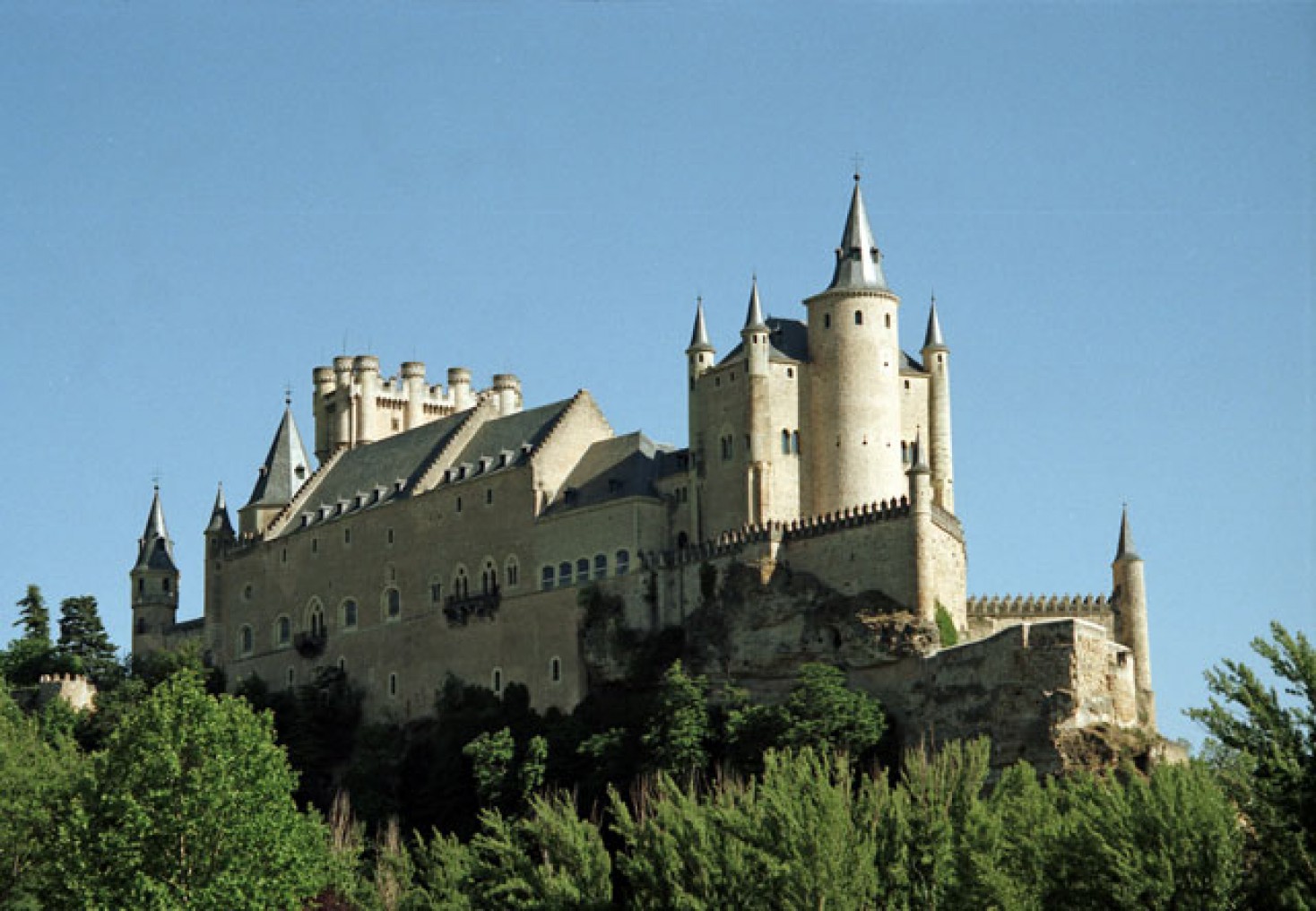
Each period of Spanish history left its own buildings. The Romans built aqueducts, theatres and bridges. The Muslim rulers of Al-Andalus, often called the Moors, built fortresses and palaces around courtyards with water. The Christian kingdoms built castles, some of them in a style that mixes both traditions. In the late 19th and 20th centuries Antoni Gaudí and later architects added buildings that are now among the most visited in the country. This guide describes one or two examples of each type, with the facts and visitor details published by the monuments and by Spain’s tourist board in 2026.
Roman architecture
The Aqueduct of Segovia
The Aqueduct of Segovia crosses the centre of the city, north-west of Madrid. According to Spain’s tourist board, it is thought to have been built between the second half of the 1st century and the early 2nd century CE, under the emperors Vespasian and Trajan, to carry water from the River Acebeda to the city. The best-known section is the double row of arches. It has 167 arches in total and reaches its highest point, 28.10 metres, at Plaza del Azoguejo.
The Roman builders used no mortar or cement. The 20,400 blocks of stone stay in place through the balance of forces between them. The aqueduct has been a UNESCO World Heritage site since 1985. An Aqueduct Interpretation Centre in the Royal Segovia Mint follows the 15-kilometre route of the water. The arches stand in a public square and can be seen at any time without a ticket. More about the city is in the post on Segovia.
The theatre and amphitheatre of Mérida
Mérida, in Extremadura in the south-west of Spain, keeps a Roman theatre and an amphitheatre side by side on the hill of San Albín. The tourist board states that the theatre was built by General Agrippa in 16 or 15 B.C. and can seat up to 3,000 people. The slope of the hill was used to improve the acoustics. The stage has three access doors and a podium more than two and a half metres high.
The amphitheatre next to it was opened in 8 B.C. Gladiator contests took place in its arena, which has a cross-shaped pit in the centre. The National Museum of Roman Art is a few minutes’ walk away. The post on Mérida describes the rest of the city.
Islamic architecture: the Alhambra
Buildings from the centuries of Muslim rule survive mainly in the south of Spain, in cities such as Granada, Córdoba and Seville, and also in Toledo. Typical features are horseshoe arches, walls covered with carved plaster and tiles in geometric patterns, and rooms arranged around courtyards with pools and fountains. The walls give shade and the water cools the air.
The largest example is the Alhambra, on the hill of Sabika above Granada. Its governing body, the Patronato de la Alhambra y Generalife, records that there were constructions on the hill as early as the 9th century. The Alhambra known today was begun in the 13th century by Al-Ahmar, the founder of the Nasrid dynasty, who moved his court there. It was a palace, a citadel and a fortress at the same time. It reached its full splendour in the second half of the 14th century, under Yusuf I (1333-1354) and during the second reign of Muhammad V (1362-1391).
The oldest part is the Alcazaba, the citadel, with the La Vela tower and its view over the city. The Nasrid Palaces are built around rectangular courtyards with fountains, among them the Courtyard of the Lions. After 1492 the Alhambra became a residence of the Christian monarchs, and in 1526 Emperor Carlos V decided to build the Renaissance palace that bears his name inside the walls.
Visiting the Alhambra
- Day visits run every day from 08:30 to 18:00 between 15 October and 31 March, and from 08:30 to 20:00 between 1 April and 14 October. The complex closes on 25 December and 1 January.
- In 2026 the general day ticket costs €22.27, according to the Patronato’s price list.
- The Nasrid Palaces can only be entered at the time printed on the ticket. The rest of the complex can be seen at any point during opening hours.
- Demand is high and the Patronato recommends buying tickets in advance.
Granada is also a university city; see the Granada city page for schools and courses there.
Castles of Castile
The region of Castilla y León, in the north-west of the central plateau, has many castles from the late Middle Ages. Two of them show how different these buildings can be.
Coca Castle, in the province of Segovia, was built, according to the tourist board, by the Archbishop of Seville and Don Alonso de Fonseca, lord of Coca and Alaejos. It is made of brick and is one of the main works of the military Mudéjar style, a mixture of western and Moorish military architecture. It has a square ground plan, a moat and two walled enclosures, with the keep in the second one. The interior keeps its Mudéjar decoration, and the tourist board notes that the castle was used more as a palace than as a fortress.
La Mota Castle stands in Medina del Campo, in the province of Valladolid. It has a trapezoid floor plan and one of the largest towers in Castile. The bridge at the main entrance was once a drawbridge, and the arch behind it carries the coat of arms of the Catholic Monarchs. The castle was used as the Royal Archive under Henry IV, as an artillery arsenal, and in the 16th and 17th centuries as a prison for people of rank. In 1942 it became a training school. The castle’s visitor centre states that it can be visited all year round.
Antoni Gaudí and the Sagrada Família
Antoni Gaudí is the best-known architect of Catalan Modernisme, the local form of Art Nouveau, and most of his buildings are in Barcelona. He avoided straight lines and took his forms from nature. At Casa Batlló, on Passeig de Gràcia, the attic is formed by his characteristic catenary arches, the roofline looks like the flank of a dragon, and the inner courtyard is covered in tiles that shade from dark blue at the top to white at ground level. Park Güell was planned as a residential estate inspired by English garden cities. The houses were never built and it became a public park. It is listed as UNESCO World Heritage together with six other works by Gaudí.
The Sagrada Família is his largest work. The cornerstone was laid on 19 March 1882, for a neo-Gothic design by the diocesan architect Francisco de Paula del Villar. Gaudí took over in 1883 and changed the project completely. From 1914 he worked on nothing else. He died in 1926, having seen only one bell tower finished, that of Saint Barnabas on the Nativity façade. In 1936, during the Spanish Civil War, his plans and photographs were burnt and the plaster models smashed. Work went on from the material that could be saved.
The Nativity façade and the crypt were named UNESCO World Heritage in 2005, and Pope Benedict XVI consecrated the basilica on 7 November 2010. On 20 February 2026 the upper arm of the cross was placed on the tower of Jesus Christ, which completed the exterior of the central tower. At 172.5 metres it makes the Sagrada Família the tallest church in the world and the tallest building in Barcelona, according to Spain’s tourist board. Work on the rest of the basilica continues. Tickets are sold on the basilica’s own website.
Contemporary architecture: the Guggenheim Museum Bilbao
The Guggenheim Museum Bilbao was designed by the Canadian American architect Frank Gehry and built between October 1993 and October 1997 on a former wharf on a curve of the River Nervión. The museum is the result of a partnership between the Basque institutions and the Solomon R. Guggenheim Foundation, and it describes its own role in the urban, economic and social regeneration of Bilbao.
The building is made of titanium, glass and limestone. The outer skin has approximately 33,000 very thin titanium sheets, whose colour changes with the weather and the light. Gehry’s shapes were so complex that the design was worked out with CATIA, software first developed for the aerospace industry. The building has 24,000 square metres, of which 9,000 are exhibition space. Its three levels are arranged around a central atrium and are connected by curved walkways, titanium and glass lifts, and staircases.
Visiting the Guggenheim
- The museum opens from Tuesday to Sunday, from 10 am to 7 pm, with longer hours and some Monday openings in summer and at Easter. It closes on 25 December and 1 January.
- In 2026 admission costs €18 for adults and €9 for students aged 18 to 25 and for people over 65. Visitors under 18 enter free. Students must show identification at the admission desk.
- Every ticket includes an audio guide to the building and the exhibitions.
For students
These buildings are spread over six regions, so few visitors see them all in one trip. Students based in Madrid can reach Segovia on a day trip, and those in Granada, Barcelona or Bilbao have one of the examples in their own city. Student or youth discounts apply at several monuments, usually on presentation of an identity document or a youth card, so it is worth carrying one. Schools and universities throughout the country are listed under schools in Spain.
More about: Spanish Culture · All blog posts