The Town of Nerja and its Cave
Nerja is a town on the coast of Málaga province, in the district of La Axarquía, with mountains behind it and a shoreline of beaches, coves and cliffs. It was a farming and fishing town until 1959, when five local boys found the cave that is now its main attraction. This post describes the town and its beaches, and gives the practical details for visiting the Nerja Cave in 2026.
The town and the Balcón de Europa
The centre of Nerja is the Balcón de Europa, a promenade built on the remains of an old coastal bastion. It ends in a viewpoint over the sea, with Calahonda beach directly below. The old quarter around it keeps examples of the local building style. The hermitage of Nuestra Señora de las Angustias, dedicated to the town’s patron, has frescoes in its dome.
Two other sights lie towards Maro, the district east of the town where the cave is. The Torre de Maro is one of the watchtowers that line this coast. The Águila Aqueduct, in the Barranco de la Coladilla, is a 19th-century work with four rows of arches, one above the other.
The town became widely known in Spain when the television series “Verano Azul” was filmed there in 1982. The Nerja Fair is held from 8 to 12 October.
Beaches and coves
Burriana is the main beach, a stretch of sand some 700 metres long with full services. La Torrecilla, El Salón and Calahonda are the other beaches in town. Between the cliffs there are quieter coves such as La Caleta, the Cala Barranco de Maro and the Calas del Pino. Water sports from windsurfing to sailing are on offer along this coast.
Local dishes include ajoblanco with grapes (a cold soup of almonds, oil and garlic), grilled sea bream and fish with clams. Raisins from La Axarquía and Málaga wines complete the meal.
The Nerja Cave
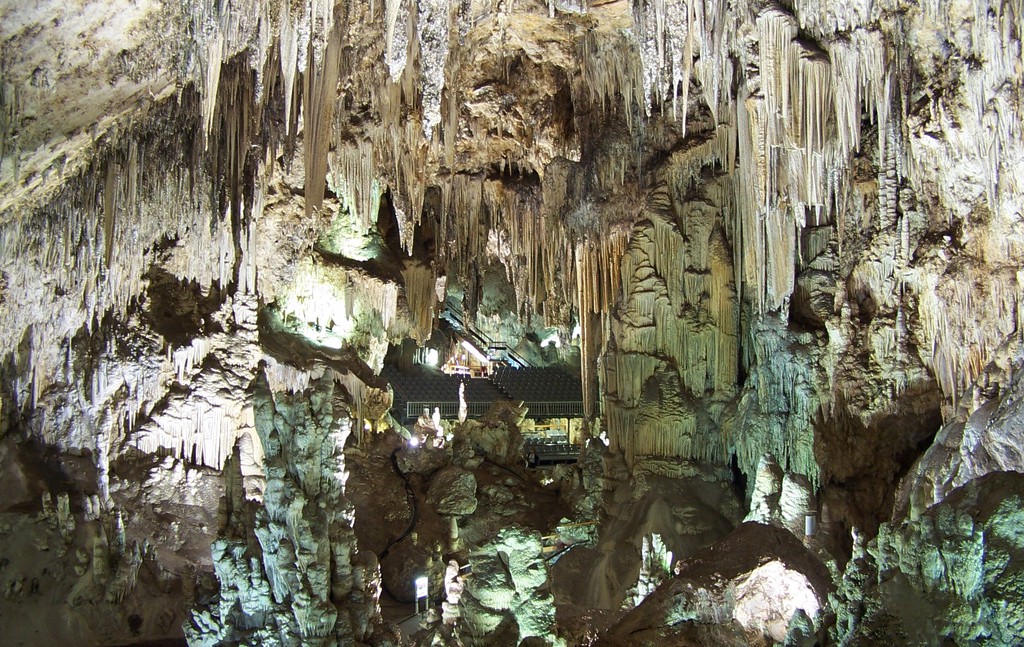
The Nerja Cave was discovered on 12 January 1959 by five boys who squeezed through a narrow opening used by bats. Work to prepare it for visitors began that September, and the cave opened on 12 June 1960 with a ballet performance in the Cascada Hall. A music and dance festival has been held every year since. The cave was declared a Site of Cultural Interest in 2006.
The cave lies 158 metres above sea level and is 4,823 metres long. Only part of it is open. The Upper Galleries, found in November 1959, and the New Galleries, found ten years later, cannot be visited for reasons of conservation and access.
The cave is also an archaeological site. Prehistoric groups visited its chambers more than 41,000 years ago. The oldest art seems to date from around 35,000 years ago, and most of it belongs to the Solutrean period, around 20,000 years ago. More than 50 figures have been identified, among them deer, horses, goats, seals and fish, painted mostly in red. Visitors do not see the paintings, because they are too fragile to be lit or approached. Recreations are shown in the Virtual Reality Room, which is included in the cave ticket.
Visiting the cave in 2026
- Opening hours: 9:15 to 16:30 for most of the year, with last entry at 15:30. From June to September, at Christmas, on long holiday weekends and in Holy Week the cave stays open until 17:30, with last entry at 16:30.
- Closed: 1 and 6 January, 15 May and 25 December.
- Length of visit: about 50 minutes, with an audio guide in 15 languages.
- Tickets: the cave advises buying online. Online tickets are cheaper, carry a fixed entry time and cannot be changed or refunded. Current prices are on the cave’s ticket page.
- Discounts: for visitors with disabilities, people aged 65 and over, large families and young people who show the European Youth Card. The card must be presented at the entrance.
- Access: the route has just over 400 steps. Pushchairs and wheelchairs are not allowed. Closed shoes with non-slip soles are recommended.
- Inside: the lighting is dim and the temperature averages 19ºC, so warm clothing is not needed. Photography is allowed only in marked areas and without flash.
According to the cave, the first slots of the morning are the least crowded. The complex also has a restaurant, a picnic area, a botanical garden and a footpath to the village of Maro.
Nerja Museum
The Nerja Museum at Plaza de España 4, in the town centre, covers the history of Nerja and shows finds from the cave. In 2026 it opens Tuesday to Sunday from 10:00 to 16:00, and every day from 1 June to 30 September. Online tickets cost €5 for visitors over 14 and €4 for children aged 3 to 13, and €1 more at the ticket office. Entry is free with a cave ticket within 10 days of the visit.
Getting there
The cave is about 50 km from the city of Málaga. By car, take the A-7 motorway towards Almería and leave at exit 295, signposted “Cueva de Nerja”. The car park holds 300 vehicles and is paid on exit. A regular coach service links Málaga with the cave; when booking, the destination to choose is “Nerja (Cuevas)”. Coaches from Granada stop at Maro, a few minutes’ walk from the entrance.
Nerja works as a day trip for students based in Málaga, and the town has its own city page on this site. For more ideas in the region, see places to visit in Andalusia.
More about: Tourism in Spain · All blog posts