Places to Visit in Andalucia
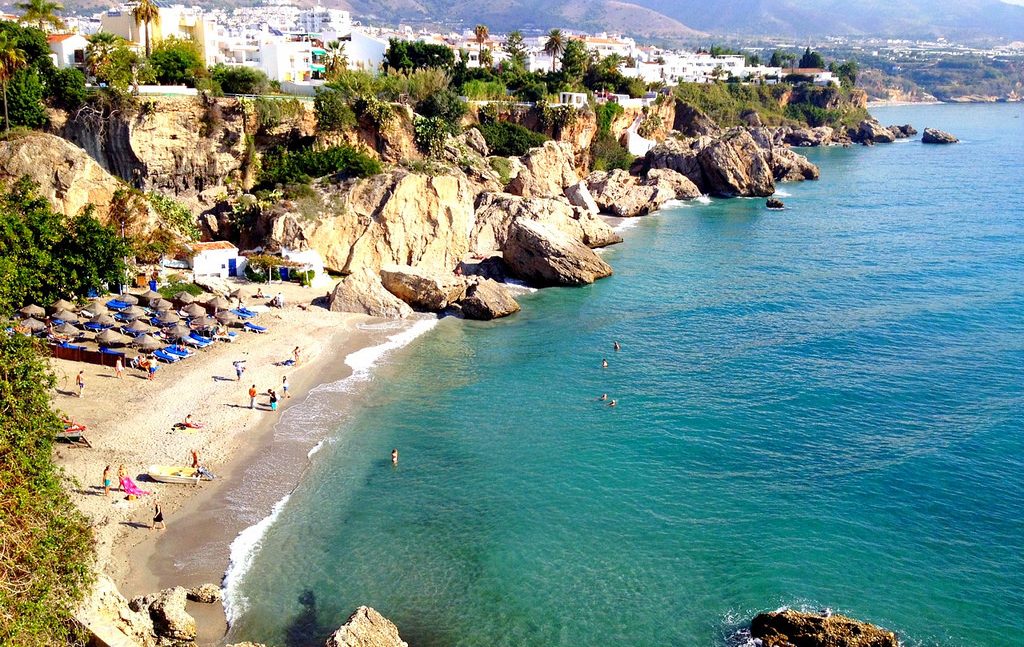
Andalusia (Andalucía in Spanish) is the southernmost region of mainland Spain. It has eight provinces, several UNESCO World Heritage sites, two national parks and a long coastline on both the Atlantic and the Mediterranean. This post covers the main monuments, the natural areas, the food and some towns worth a visit, with ticket prices and opening times checked in October 2026.
Monuments and history
The region was under Muslim rule for centuries, and its best-known monuments come from that period. Spain’s official tourism website lists the World Heritage sites: the Alhambra, the Generalife and the Albaicín quarter in Granada, the historic centre of Córdoba with its Mosque-Cathedral, the cathedral, the Alcázar and the Archive of the Indies in Seville, and the towns of Úbeda and Baeza in Jaén.
The Mosque-Cathedral of Córdoba
The mosque was begun in 785 by the emir Abd al-Rahman I and enlarged several times; the last extension dates from 987. A cathedral was later built inside it. The interior is a hall of columns with double arches.
According to the monument’s website, general admission is €15 and the reduced ticket for students aged 15 to 26 and people over 65 is €12. The bell tower is a separate visit and costs €4. Entry is free from Monday to Saturday between 8:30 and 9:30, except on days with special celebrations. Opening hours change with the date (10:00 to 19:00 in October 2026), so check the site before going. City bus lines 3 and 12 stop at Puerta del Puente.
The Alhambra in Granada
The Alhambra is a complex of palaces, courtyards and gardens above the city, with the Alcazaba citadel as its oldest part. The Patronato de la Alhambra y Generalife lists these prices and times:
- General daytime ticket for the whole complex: €22.27
- Gardens and Generalife only: €12.73
- Night visit to the Nasrid Palaces: €12.73
- Daytime hours: 8:30 to 18:00 from 15 October to 31 March, and 8:30 to 20:00 from 1 April to 14 October
- Closed on 25 December and 1 January
Children under 12 enter free but need a ticket. Holders of the Youth Card and EU citizens over 65 can get a discount if they show proof. Tickets can be bought up to three months ahead; book early through the official channels. The visit takes about three hours, and the Nasrid Palaces can only be entered at the time printed on the ticket. Bring your passport or ID card. City buses C30, C32 and C35 go up to the monument from Plaza Isabel la Católica.
Nature and the outdoors
Andalusia has two national parks. Doñana, between the provinces of Huelva and Seville, is one of Europe’s most important wetlands and covers 54,252 hectares of marsh, lagoons, pine woods and dunes. Sierra Nevada, in Granada and Almería, has the highest peaks in mainland Spain and a ski resort.
From the city of Cádiz, the White Villages Route leads inland to the natural parks of Grazalema and Los Alcornocales and to towns such as Arcos de la Frontera, Medina Sidonia and Vejer de la Frontera.
For walking or cycling without traffic there are the Vías Verdes (greenways), disused railway lines that have been turned into paths since 1993. Spain has about 3,600 km of them. One of the best known is the Vía Verde de la Sierra, which crosses the Sierra de Cádiz and the Sierra Sur de Sevilla through tunnels and over viaducts. Its foundation publishes notices about closed sections on its website.
Food and drink
Typical products include fried fish (“pescaíto frito”) from Cádiz and Málaga, cured ham from Huelva and Córdoba, olive oil, and the cold soups gazpacho and salmorejo. Jaén is known above all for its olive oil. Sherry comes from the area around Jerez de la Frontera in Cádiz. It is usually made from palomino grapes, and the dry types are manzanilla, fino, amontillado, oloroso and palo cortado. In Seville, tapas bars are concentrated in areas such as the Alameda, Macarena, Nervión, Los Remedios and Triana.
Towns and cities worth the trip
- Cádiz was founded by the Phoenicians about 3,000 years ago and is described as the oldest city in Western Europe. Its Baroque and Neoclassical cathedral faces the Atlantic, and La Caleta is the only beach in the old town.
- Granada lies at the foot of the Sierra Nevada. It was the last city taken by the Catholic Monarchs, in 1492, and its medieval Albaicín quarter is a World Heritage site.
- Córdoba is at its best in spring; its Courtyards Festival and other fiestas take place in May. The archaeological site of Medina Azahara is 10 kilometres from the city and has a direct bus.
- Carmona, a few kilometres from Seville, is a smaller and quieter alternative. It has Roman walls and gates, a Roman necropolis and a fortress that is now a Parador hotel.
For students
Both monuments above have reduced prices for young people, so carry your student or youth card. Students who want to combine a course with travel in the region can start with the Granada city page or the list of language courses in Spain.
More about: Tourism in Spain · All blog posts