Ciudad Encantada (“The Enchanted City”), Cuenca
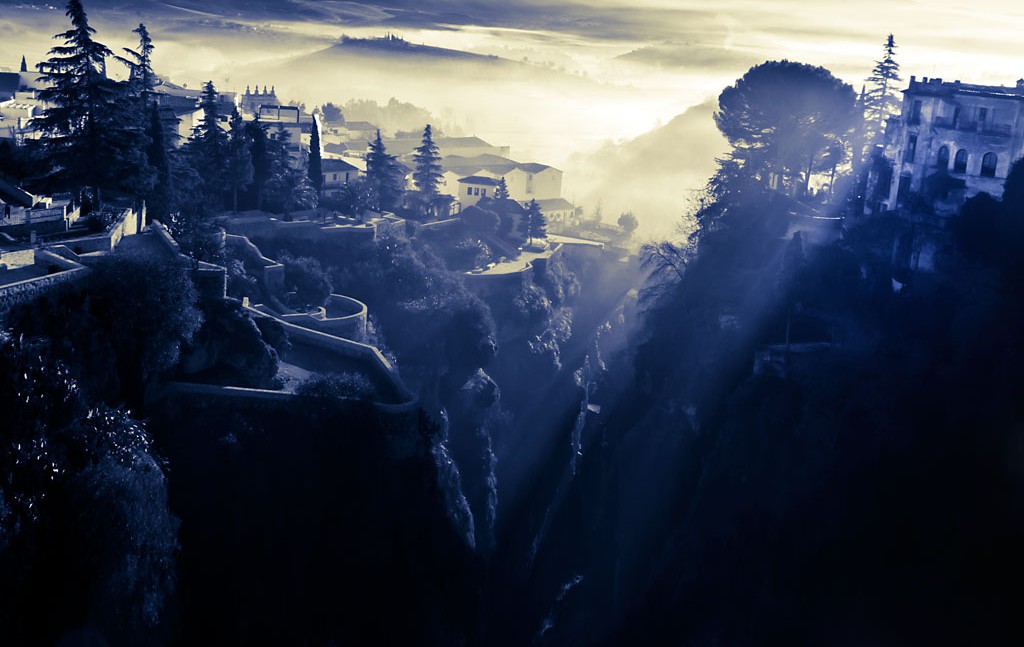
The Ciudad Encantada (“Enchanted City”) is a natural site of limestone rock formations in the mountains north of the city of Cuenca, in Castilla-La Mancha. Erosion has shaped the rocks into figures that look like animals, objects and people. This post explains how the site formed, what the marked route shows, and what a visit costs and requires in 2026.
Where it is
The site lies in Valdecabras, a village that belongs to the municipality of Cuenca, at kilometre 19 of the CM-2104 road. Spain’s official tourism website puts it 28 kilometres from the city of Cuenca. It sits inside the Parque Natural de la Serranía de Cuenca, among large pine forests, and close to the canyon that the river Júcar cuts between Uña and Villalba de la Sierra. Cuenca’s tourist board gives the altitude as almost 1,500 metres.
The Ciudad Encantada was declared a Natural Site of National Interest on 11 June 1929. It is run as a tourist park with a ticket office, and it has its own official website.
How the rocks were formed
According to the park, the story starts 90 million years ago, when the area was part of the bed of the Tethys Sea. Calm water allowed salts to settle, above all calcium carbonate. At the end of the Cretaceous the sea withdrew and the limestone seabed rose to the surface. Water, wind and ice have worn it down since then. Geologists call the process karst, and the regional government lists the Ciudad Encantada of Valdecabras among the best examples of this kind of relief in the natural park.
The shapes come from the different hardness of the rock layers. Spain.info explains that the top layer is grey magnesian limestone, which resists erosion better than the reddish rock below. The lower part wears away faster, which leaves overhangs and the mushroom-like outlines the site is known for.
What the route shows
There is one way-marked circular route of 3 kilometres. Many formations have signs with the name of the figure they resemble. The names that the official tourism sources list include:
- The Boats
- The Dog
- The Sea of Stone
- The Roman Bridge
- The Seal
- The Bears
- The Slide
- The Lovers of Teruel
- The Mushrooms
- The Convent
- The Turtle
The vegetation around the rocks includes gall oak, savin, juniper and box, and the air often smells of rosemary and thyme. Visitors must stay on the path; leaving the route or looking for other ways through is not allowed.
Tickets, time and practical details
- Prices: the park’s website lists 5 euros for adults and 4 euros for children aged 8 to 12, pensioners and large families. Children under 7 enter free. Discounts need an official document shown at the ticket office.
- Buying tickets: only at the ticket office on the day. There is no booking and no online sale.
- Time needed: about 1 hour 30 minutes, with stops for photographs and rest, when the paths are in good condition. Walking the whole circuit is not compulsory.
- Opening hours: they change with the season and with the weather forecast, and the ticket office closes 1 hour 30 minutes before the park. Check the park’s website or call before going.
- Parking: there is a large free car park.
- Access: the route is not suitable for wheelchairs, people with reduced mobility or pushchairs.
- Rules: dogs must be on a lead. Fires and smoking are forbidden.
The park recommends trekking boots all year. In winter bring warm clothes, a raincoat and gloves; in summer bring water.
Getting there from Cuenca and Madrid
Most visitors drive from Cuenca along the CM-2104. Travellers from Madrid can reach Cuenca by high-speed train from Atocha station in less than an hour, according to spain.info; the Fernando Zóbel station is about 6 kilometres from the centre of Cuenca. By road, the journey from Madrid to Cuenca takes around two hours.
The trip combines well with a day in the old town of Cuenca, a World Heritage city known for its Hanging Houses and its Museum of Spanish Abstract Art. For students based in Madrid or Valencia it works as a weekend excursion. Other student destinations are listed on the cities page.
More about: Tourism in Spain · All blog posts