Monasterio de San Juan de los Reyes, Toledo, Spain
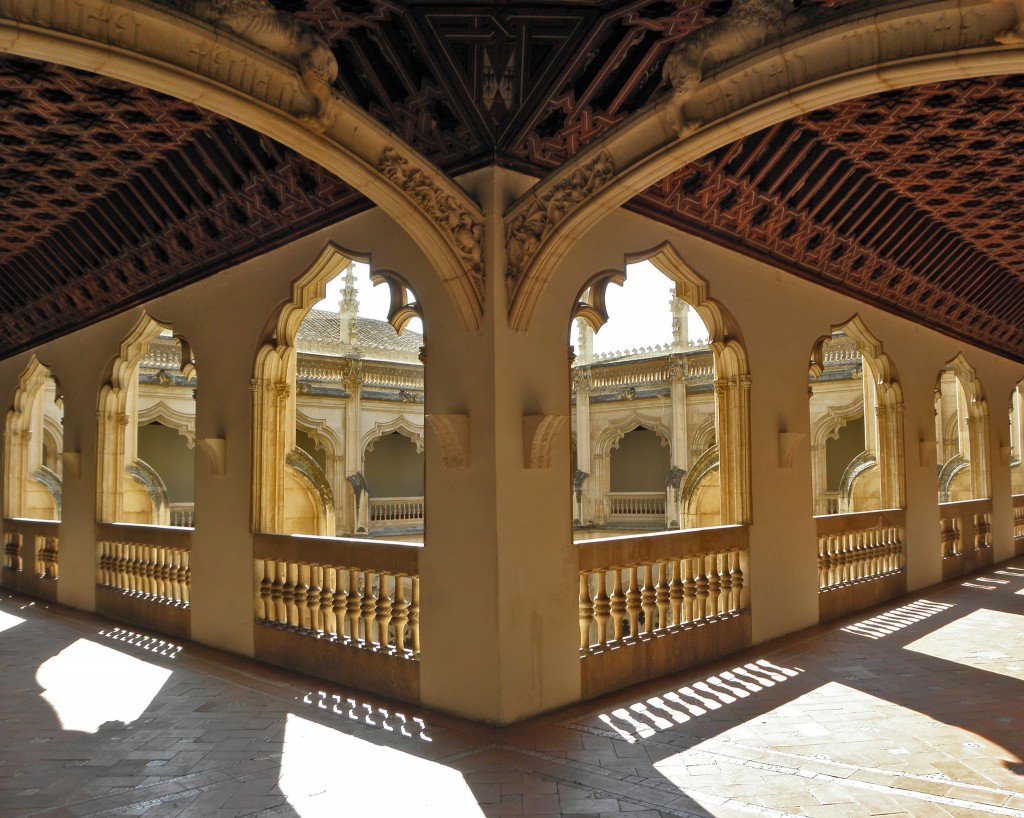
The Monasterio de San Juan de los Reyes is a Franciscan monastery in the old Jewish quarter of Toledo, built by the Catholic Monarchs, Isabella I of Castile and Ferdinand II of Aragon. It is one of the main examples of late Gothic architecture in Spain. This post covers its history, what to see inside, and opening hours and prices in 2026.
History
The monarchs ordered the monastery in thanks for their victory at the Battle of Toro in 1476. According to the site that manages visits, Isabella dedicated it to Saint John in memory of her father, Juan II, and also to mark the birth of Prince Juan in 1478. Building began in 1477 under Juan Guas, an architect of Breton origin, with Enrique Egas. The same source gives 1495 as the year the monastery was finished.
The monarchs first planned it as their burial place. In the end they were buried in the Royal Chapel of Granada.
Napoleon’s troops badly damaged the building, and the original altarpiece of the main chapel was lost in that war. The architect Arturo Mélida restored the monastery at the end of the 19th century. Franciscan friars live there again, and the church has been a parish of the Archdiocese of Toledo since 1977.
What to see
- The church. It has the plan of a Latin cross with short arms, a single nave and side chapels between the piers. The monastery gives the nave as 55 metres long, 12 metres wide and 30 metres high. A Gothic inscription that names Ferdinand and Isabella as founders runs round the walls.
- The main chapel. The walls carry the coats of arms of the Catholic Monarchs, held by large eagles. The present altarpiece came from the Hospital de Santa Cruz in Toledo and is the work of Francisco de Comontes. Its paintings show the Passion and the finding of the True Cross by Saint Helena.
- The lower cloister. Each side is 30 metres long and 8 metres high, with five windows of fine tracery. The carving mixes plants, imaginary animals and human figures.
- The staircase and upper cloister. The decoration of the staircase is attributed to Alonso de Covarrubias. The upper cloister is plainer, but it has a painted Mudejar ceiling of larch wood with the royal motto “tanto monta, monta tanto”.
- The chains. Iron chains hang on the outside walls. According to the monastery, they belonged to Christian captives freed in the campaigns of Málaga and Almería in 1485-86, who brought them to Toledo as an offering.
The main doorway on the west side is later than the rest. It follows a design by Covarrubias but was built in 1606-10.
Opening hours and prices in 2026
The monastery opens every day, without a break at midday:
- 1 March to 15 October: 10:00 to 18:45.
- 16 October to 28 February: 10:00 to 17:45 according to the monastery’s own site. The ticketing site lists 17:25 and the tourist board 16:45, so check before a late winter visit.
- The ticket office closes 20 minutes before closing time.
- Closed on 25 December and 1 January; on 24 and 31 December it closes at 13:00.
The general ticket costs €4. Students and holders of the Carnet Joven pay €3 on showing the card, as do children aged 11 to 16. Large families pay €2.50, and residents of Toledo pay €2. Children under 11 enter free. The ticket covers both cloisters, the old sacristy and the church. No booking is needed.
The Pulsera Turística, a wristband sold at €14, gives entry to seven monuments, among them this monastery, the church of Santo Tomé, the synagogue of Santa María la Blanca and the Mosque of Cristo de la Luz. It pays for itself from the fourth monument.
Visitors go round on their own. An audio guide in Spanish, English, German and French works on a mobile phone through a QR code. Wheelchair users can reach the lower cloister, the old sacristy and the church, but not the upper cloister. Allow about an hour.
Getting there
The address is Calle Reyes Católicos, 17. The entrance for visitors is on that street, not through the main church door. The synagogue of Santa María la Blanca is about 100 metres away and the San Martín bridge about 200 metres, so the three fit into one walk through the Jewish quarter.
Toledo is less than 80 kilometres from Madrid. The Avant train from Madrid-Atocha takes 25 minutes, and ALSA buses leave Plaza Elíptica every 30 minutes, with a direct journey of one hour. City buses from both stations go to Plaza de Zocodover in the centre; a ticket costs €1.40, paid in cash. The monastery is on the far, western side of the old town from there.
For students
The €3 student ticket makes this one of the cheaper major monuments in Toledo. Students of art history can follow the change from Gothic to Renaissance in one building, from the cloister of Juan Guas to the staircase of Covarrubias. For other sights see monuments in Toledo, and for study options the Toledo city page.
More about: Toledo · All blog posts