Museo del Ejército, Toledo, Spain
The Museo del Ejército (Army Museum) is the museum of the Spanish Army. Since 2010 it has been housed in the Alcázar of Toledo, the fortress-palace on the highest point of the old town. This post explains where the museum comes from, how the exhibition is organised, which pieces to look for, and the opening hours and prices published by the museum in 2026.
A museum that began in Madrid
The museum is the result of merging several military museums created during the 19th and early 20th centuries. Its oldest forerunner is the Real Museo Militar, founded in Madrid in 1803 at the request of Manuel Godoy, which makes it one of the oldest museums in Spain. In 1827 that museum was divided into an Artillery Museum and an Engineers Museum. The Museo Histórico Militar brought the collections together in 1932, and after the Civil War the museum was installed in the Palacio del Buen Retiro in Madrid. It opened in its present home in Toledo in July 2010.
The building
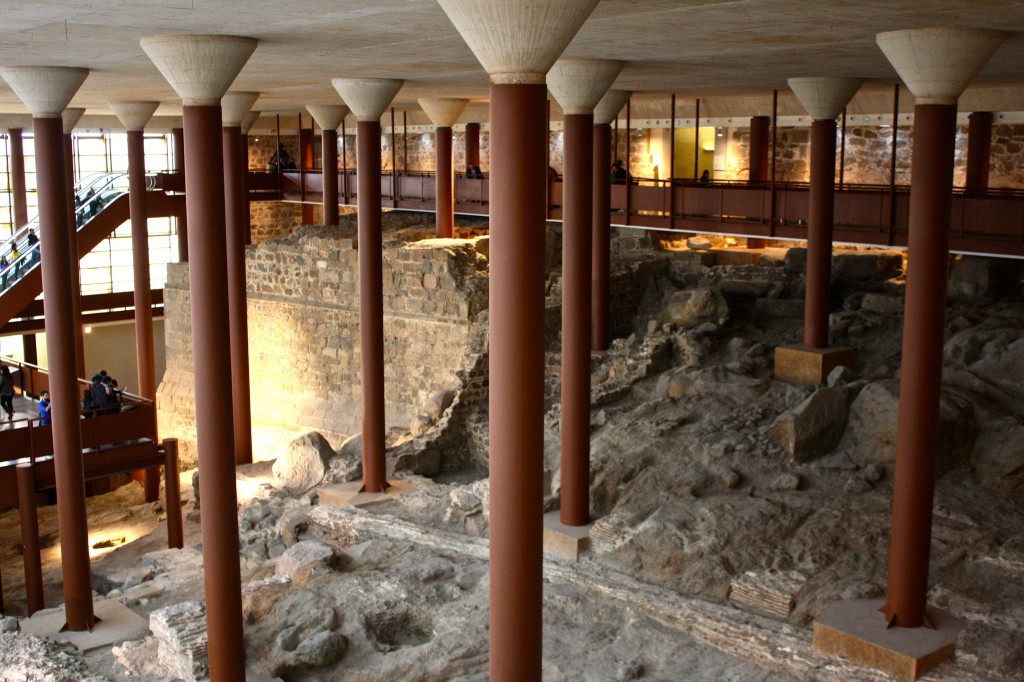
The museum is spread over two buildings that look like one from outside: the historic Alcázar and a new building that gives access to all the rooms. The permanent exhibition is inside the Alcázar. A signposted “Recorrido Alcázar” also shows the historic spaces of the palace, such as the Imperial Chapel, a horseshoe arch from the Umayyad gateway, the former stables, the cisterns and the Renaissance Imperial Staircase. Archaeological remains found on the site, including part of a Roman cistern, can be visited free of charge.
How the exhibition is organised
The permanent exhibition has thirteen thematic rooms, each devoted to one collection, and eight historical rooms that follow Spain’s military history in chronological order. The museum suggests two ways of visiting: follow the historical rooms in order, starting with the Hispanic Monarchy (1492-1700), or pick one theme, such as weapons, and follow it from room to room. Models, dioramas, audiovisuals and hands-on displays support the objects.
The thematic rooms include:
- Firearms: about 5,000 pieces, from hand culverins, arquebuses and matchlock muskets to automatic weapons
- Bladed weapons: about 4,300 items, many made by Toledo swordsmiths and by the Royal Arms Factory of Toledo, founded by Charles III in 1761
- Artillery: pieces dating from the middle of the 14th century onwards
- Flags: a collection of about 2,500 pieces that shows how the Spanish flag developed from the 18th century
- Miniatures: about 40,000 individual figures, plus dioramas of historical scenes
- Uniforms, decorations and historical photography
- The Medinaceli armoury: armour and weapons mostly from the 15th, 16th and 17th centuries, left to the museum in 1957
- The Romero Ortiz collection: a private museum formed in 1870 and left to the Alcázar in 1922
Pieces to look for
- The Indo-Portuguese tent known as the campaign tent of Charles V, in the Imperial Chapel. It is the largest object in the museum.
- The garments and weapons of Boabdil, the last Nasrid ruler of Granada, in the first historical room.
- A Japanese Do-Maru armour from the Edo period (1630-1638), in the ethnographic collection.
- The flag of Pensacola and objects linked to Bernardo de Gálvez, from Spain’s part in the American War of Independence.
- The coupé carriage in which General Prim was assassinated.
- The basket of the balloon in which Queen María Cristina made an ascent, and a German Enigma cipher machine.
The last two are in rooms H5 (Monarchical Restoration) and H6 (20th century), which the museum lists as temporarily closed for building works in October 2026. Check the museum’s website before a visit made for those rooms.
Visiting: hours, prices and how to get there
The Museo del Ejército opens from 10:00 to 17:00. Access closes at 16:30 and the rooms start to be cleared at 16:45. It is closed on Mondays, except for a few dates announced each year, and on 1 and 6 January, 1 May and 24, 25 and 31 December.
The general ticket for the permanent exhibition costs €5. Groups of 15 or more from cultural or educational institutions pay half. Entry is free every Wednesday and on a few fixed dates such as 12 October and 6 December. With proof, it is free on any day for under-18s, university students from EU countries or with an ISIC card, holders of a youth card, EU citizens over 65 and unemployed people. An annual card costs €25. Temporary exhibitions and the gardens are free for everyone.
The main entrance is on Calle de la Paz. Items larger than 40 x 40 cm must be left in the cloakroom. The museum has no stated visit length; it advises visitors short of time to choose the themes that interest them most. A virtual tour on its website helps with that choice.
From Madrid, Avant high-speed trains leave Atocha about every hour, and ALSA buses leave Plaza Elíptica every 30 minutes. City buses 5, 511, 61 and 62 run from the train station to Plaza de Zocodover, near the Alcázar, for €1.40 in cash. Other sights are described in the post on monuments in Toledo, and schools in the city are on the Toledo city page.
More about: Toledo · All blog posts