Navalcarnero, Madrid, Spain
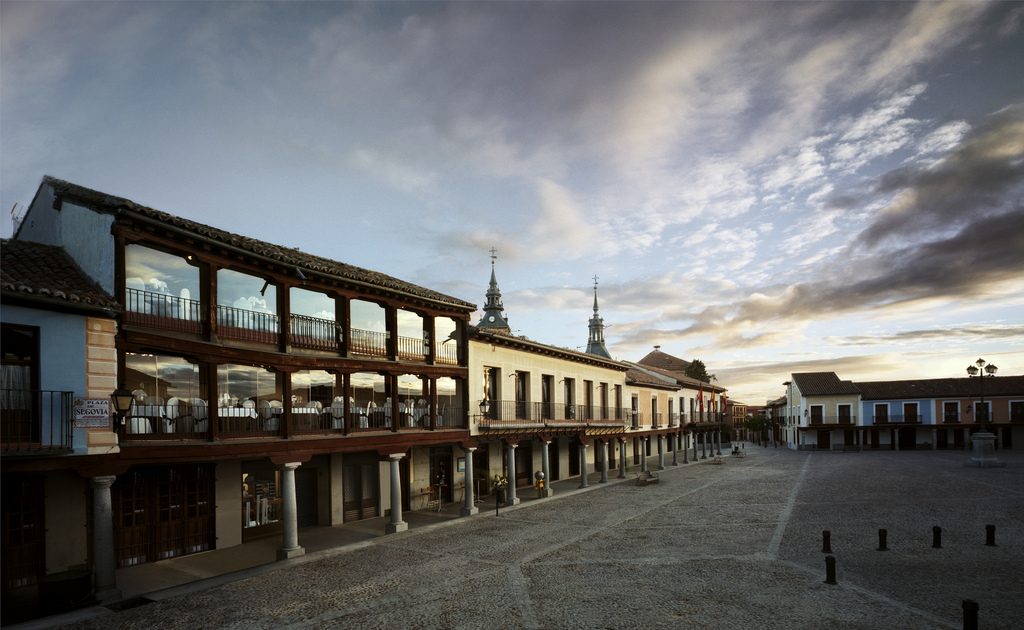
Navalcarnero is a town in the south-west of the Madrid region, about 31 km from the capital by motorway. It keeps the look of a Castilian market town, with an arcaded main square, a large parish church, wine caves dug under the houses and a small museum about local history. This post covers its history, what to see, and how to get there in 2026.
The town at a glance
According to the town’s tourism office, the municipality covers 100.2 square kilometres and lies at an average altitude of 670 metres. The land is gently rolling rather than hilly, and the river Guadarrama marks the eastern boundary. Summers are very hot and winters cold. Navalcarnero is also a wine town: its wines joined the Vinos de Madrid designation of origin in 1990, and the local grapes are white Malvar and red Garnacha.
History
Navalcarnero was founded on 10 October 1499, when six residents who had until then belonged to Perales formed the first council of the new settlement under the city of Segovia. The Catholic Monarchs gave the settlers a letter of protection against the hostility of the neighbouring lords. In 1627 the town separated from Segovia and became a jurisdiction of its own.
The best-known event in its history came on 7 October 1649, when King Philip IV and Mariana of Austria celebrated their wedding here. In gratitude, the king granted Navalcarnero the title of “villa real” (royal town) on 4 June 1651. The town still calls itself the Villa Real.
What to see
Plaza de Segovia and the parish church
The Plaza de Segovia is the main square, with arcades, wooden balconies and the old town hall. Next to it stands the parish church of Nuestra Señora de la Asunción, from the 16th century, with a Mudéjar-style bell tower. The church was declared a Historic-Artistic Monument in 1983. Inside is the chapel of the Inmaculada Concepción, whose first stone was laid on 12 May 1619, and the church is the place where the royal wedding was held. Several small chapels stand around the town, among them San Roque and Veracruz, both with frescoes.
Centro de Interpretación de Navalcarnero
The Centro de Interpretación de Navalcarnero (CINC) is at Calle San José, 4, in a restored farmhouse that keeps its living quarters, winery, courtyard, stable and cave. About 1,000 square metres of exhibition space in ten sections explain the history and culture of the town. One section, “Tierra de vinos”, uses the old winery to show how wine was made, stored and sold; another stages the royal wedding. In 2026 it opens at weekends from 11:00 to 14:00 and from 17:00 to 19:00. The ordinary ticket costs €2, with a reduced price for children aged 7 to 12 and pensioners, and the visit takes 45 to 60 minutes.
Caves, parks and art
Wine caves are the town’s “hidden” architecture. They were dug by hand in the sandy ground to keep food and, above all, wine in large clay jars; a land survey of 1753 counted 139 of them in the town centre.
The Parque Histórico de San Sebastián, near the old centre, stands where a hermitage of that name once was. Statues of figures from the town’s past line its paths, beginning with Isabella the Catholic at the entrance. The park opens from 10:00 to 23:00, closes on Mondays and closes at midday on Sundays. The town also has a Museo de Pintores, with work by painters linked to Navalcarnero from the 17th century to the present, and an open-air sculpture park dedicated to Feliciano Hernández. The municipal theatre is on the Plaza del Teatro.
Festivals and food
The main festival honours Nuestra Señora de la Concepción in the first half of September, with 8 September as the principal day. It includes a procession, fireworks, night-time bull runs and the Real Mercado del Siglo de Oro, a market set in the time of Philip IV. On 15 May the town celebrates San Isidro. Local cooking is based on roast lamb, small game and chickpeas, which go into a stew called olla del segador. More on the region’s food is in the post on the cuisine of Madrid.
Getting there and practical details
- By car: about 35 minutes from Madrid on the A-5 motorway, according to Madrid’s tourist board
- By bus: lines 528, 538 and 539 link Madrid with Navalcarnero. The tourist board gives a 45-minute ride on line 528 from Príncipe Pío, but the town’s tourism office lists Cuatro Vientos as the Madrid terminus and warns that several lines have been altered since 15 January 2025 because of tunnelling works on the A-5. Check the route with the bus company before travelling.
- Tourist office: Plaza de Segovia, 1; open Monday to Friday 9:00 to 14:00, Saturdays 11:00 to 14:30 and 17:00 to 19:00, Sundays 11:00 to 14:30
- Guided visits for groups: arranged by the tourist office and booked at least a week ahead
Current events and opening times are on the town’s tourism site, which is in Spanish.
For students
Navalcarnero is a half-day or one-day trip from the capital that costs little: a regional bus and a two-euro museum ticket. A weekend is the right time to go, since the interpretation centre opens only then. Other small towns near the capital are described in the post on villages in the Madrid area, and the Madrid page covers studying in the city.
More about: Madrid · All blog posts