Cuisine of Madrid, Madrid, Spain
Madrid’s cooking is a mix of its own dishes and those brought by people who moved to the capital from every Spanish region. This post explains where that mix comes from, describes the dishes and sweets most associated with the city, and gives practical notes on tapas, drinks and where traditional food is served.
How Madrid’s cuisine took shape
According to Madrid’s official tourism website, the city’s dishes were those of the rest of Al-Andalus until the 11th century. The turning point came in the summer of 1561, when King Philip II moved the capital to Madrid. The population soon doubled, and the local cooking split into two branches, popular and aristocratic, which stayed apart for about four centuries. In the 19th century the difference faded as eating houses, taverns and the first modern restaurants appeared.
Spain’s national tourism website describes the region as a melting pot of people, cultures and gastronomies. It adds that the two dishes most identified with the city, cocido and tripe, did not originate in Madrid, but that the city gave them their particular character.
Savoury dishes
- Cocido madrileño. A stew of chickpeas, meat, cured pork and vegetables, traditionally eaten in three stages: first the broth with noodles, then the chickpeas with the vegetables, and last the meats. Spain’s tourism website classes it as an autumn and winter dish with a cooking time of four to six hours.
- Callos a la madrileña. Tripe stew, served as a main dish or in a small earthenware dish as a tapa.
- Bocadillo de calamares. A sandwich of fried squid rings, associated above all with the bars around the Plaza Mayor.
- Soldaditos de Pavía. Battered cod fritters, a tavern classic.
- Besugo a la madrileña. Red bream with garlic and onion, which has been made in the capital for more than six centuries and is the typical Christmas dish.
- Sopa de ajo. Garlic soup, one of the city’s hearty soups.
- Gallinejas and entresijos. Fried lamb offal, eaten mainly at popular festivals.
- Oreja a la plancha. Grilled pig’s ear, a speciality of certain bars.
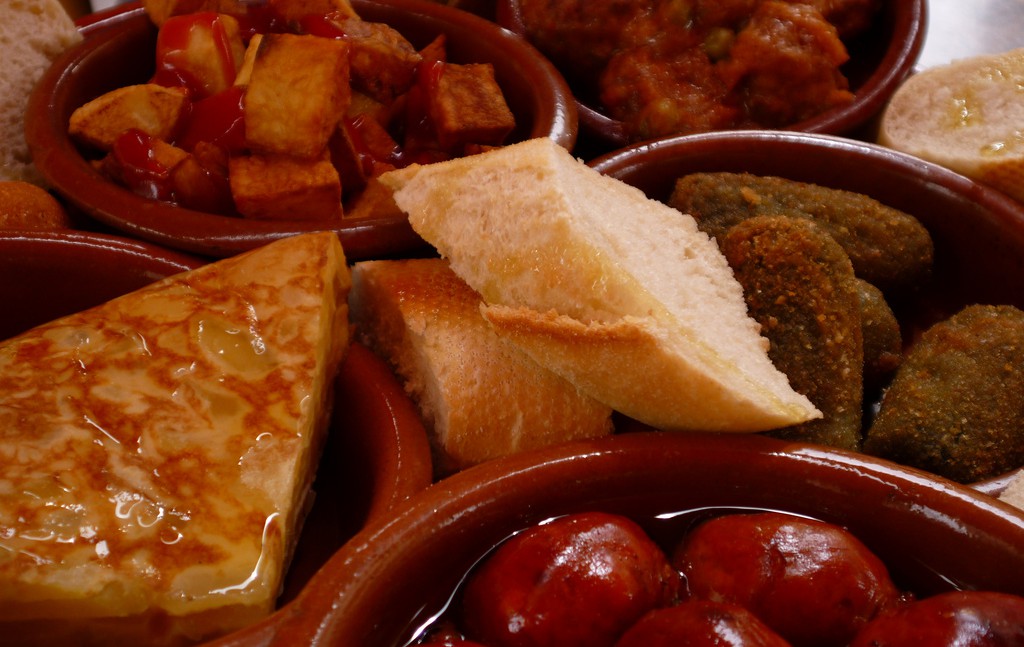
- Patatas bravas. Fried potato cubes in a spicy sauce, one of the standard shared plates.
Tapas and drinks
Going from bar to bar for small plates is called tapeo. In many Madrid bars a small snack, such as olives, crisps or a slice of bread with cold meat, comes free with a drink. Larger plates are ordered and paid for as a ración or media ración and shared.
The usual drinks are:
- Caña: draught beer in a glass of about 20 cl.
- Chato: wine in a small glass.
- Vermú: Spanish vermouth, poured from the tap in traditional bars.
The tourism website names Sol, Plaza Mayor, Plaza de Santa Ana, La Latina, Chueca, Malasaña, Conde Duque and Calle Ponzano as the main tapas areas. Several bars have served the same specialities for generations: Casa Labra, open since 1860, for cod fritters and croquettes; Bodega La Ardosa, opened in 1892; and La Casa del Abuelo, which has served prawns since 1906. More detail is in the post on tapeo and tapas in Madrid.
A typical breakfast in a Madrid bar is white coffee with toast, or churros and the thicker porras. A slice of potato omelette with a caña is the usual mid-morning snack.
Sweets and pastries
Many Madrid sweets belong to a date in the calendar:
- Roscón de Reyes: a ring-shaped cake with candied fruit for Epiphany.
- Torrijas: bread soaked in milk, egg or wine and fried, eaten in Easter Week.
- Rosquillas de San Isidro: baked doughnut rings for the patron saint’s festival around 15 May. The sugar-coated ones are called listas and the plain ones tontas.
- Huesos de santo and buñuelos de viento: marzipan rolls and cream-filled fritters for All Saints’ Day on 1 November.
- Coronas de la Almudena: created by the city’s pastry makers in the 1980s for the feast of the Virgin of La Almudena, around 9 November.
Churros with thick hot chocolate are eaten all year, at breakfast or in the afternoon.
Wines of Madrid
The region has its own designation of origin, Vinos de Madrid, with four sub-areas: Arganda in the south-east, the largest; San Martín in the south-west, where Garnacha reds are typical; Navalcarnero in the south, known for rosés; and El Molar in the north. The native white grapes are Malvar and Albillo.
Where to try it
Traditional cooking is easiest to find in the city’s long-established restaurants and taverns. The tourism website has a section on restaurants more than one hundred years old, among them Botín, known for roast suckling pig, and Malacatín, Casa Alberto and Posada de la Villa for Madrid dishes. It lists La Bola, Casa Carola and Taberna de la Daniela for local recipes such as cocido. At the other end of the range, the city has restaurants with Michelin stars, including DiverXO with three.
For students, the cheapest way into local food is the bar counter: a drink with its free snack, a shared ración, or a squid sandwich. The Mercado de San Miguel is another place to taste small portions. Those planning to study in the city can read more about Madrid as a study destination and find Spanish language courses in Spain.
More about: Madrid · All blog posts