Alcalá de Henares, Madrid
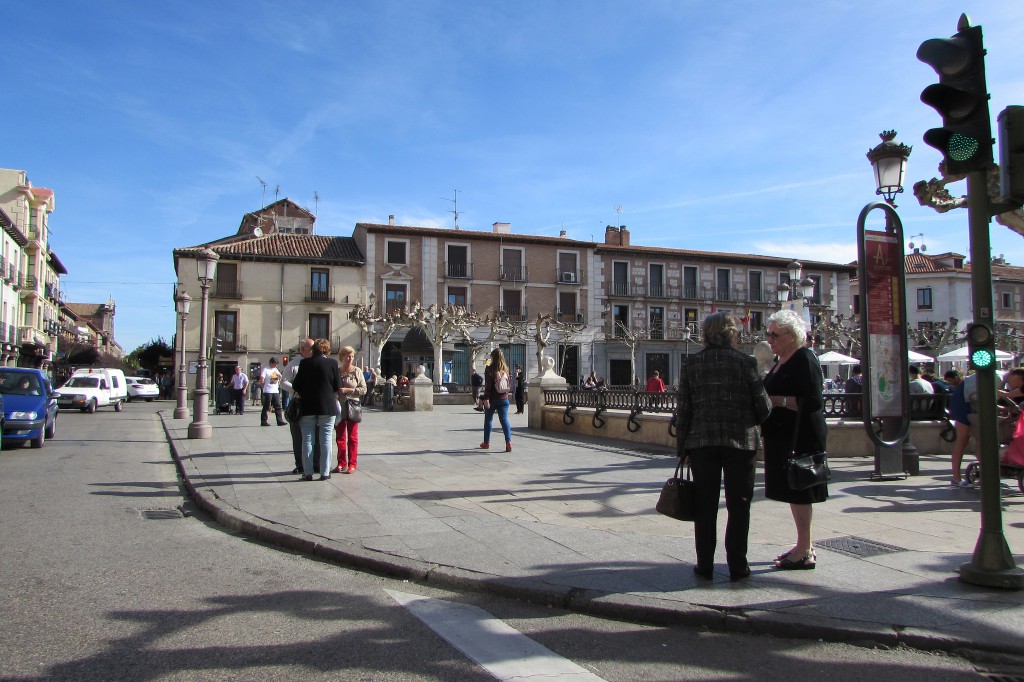
Alcalá de Henares is a university city about 30 kilometres east of Madrid, known as the birthplace of Miguel de Cervantes and for a historic centre that is on the UNESCO World Heritage List. This post covers its history, the main sights with their opening times and prices in 2026, the university, and how to get there from Madrid for a day trip.
From Roman Complutum to World Heritage Site
The city began as the Roman town of Complutum, which grew to more than 50 hectares beside the road that linked Mérida with Zaragoza. Its forum, baths, market and the Casa de los Grifos, with its Roman wall paintings, can be visited today, together with the nearby Casa de Hippolytus. The city’s tourist office describes Complutum as the only Roman city open to visitors in the Community of Madrid. The cathedral stands on the spot where, according to tradition, the child martyrs Justo and Pastor were beheaded and buried at the start of the 4th century.
Alcalá had a centre of higher studies, an Estudio General approved by King Sancho IV, from 1293. In 1499 Cardinal Cisneros founded the Universidad de Alcalá, and the town was laid out around it. UNESCO added the “University and Historic Precinct of Alcalá de Henares” to the World Heritage List on 2 December 1998. The listing rests on Alcalá being the first city designed and built as the seat of a university, and on its contribution to the Spanish language through Cervantes and Don Quixote.
Cervantes in Alcalá
Miguel de Cervantes was baptised on 9 October 1547 in what is now the Capilla del Oidor, where his baptismal font is kept. The Museo Casa Natal de Cervantes, at Calle Mayor 48, recreates a household of the 16th and 17th centuries. Admission is free. In 2026 it opens Tuesday to Friday from 10:00 to 18:00 and on Saturdays, Sundays and public holidays from 10:00 to 19:00; the last entry is 30 minutes before closing. Groups of up to eight people do not need to book.
Each October the city marks the baptism with the Semana Cervantina and its Mercado Cervantino, a market in period costume that fills the old town. In 2026 the market runs from 8 to 12 October, and 9 October is the main day, with a civic procession to the Capilla del Oidor and a public reading of Don Quixote. On 23 April the King and Queen of Spain present the Cervantes Prize for literature in the Paraninfo, the university’s ceremonial hall.
What to see
- Colegio Mayor de San Ildefonso: the heart of Cisneros’s university and now the rector’s office. Its façade was built from 1537 by Rodrigo Gil de Hontañón and finished in 1553. Guided tours run by the university include the courtyards, the Paraninfo and the chapel with the tomb of Cisneros; times and prices are on the university’s visits website.
- Catedral Magistral de los Santos Justo y Pastor: a Gothic church begun in 1497 on the orders of Cisneros. It has held the title of Magistral since 1519 and has been a cathedral since 1991. The tourist office lists visits from Tuesday to Friday from 10:30 to 14:00 and from 16:00 to 18:30, on Saturdays from 10:30 to 18:30 and on Mondays from 10:30 to 14:00. The combined ticket with the Monasterio de San Bernardo costs €8, €7 for visitors over 65 and €6 for students under 25.
- Corral de Comedias: on Plaza de Cervantes, an open-air theatre from 1601 that the city describes as the oldest documented one in Spain. It still stages plays, and guided visits (Tuesday to Sunday, booked in advance) cost €3.
- Plaza de Cervantes and Calle Mayor: the main square has a statue of the writer unveiled in 1879. The Torre de Santa María, 34 metres high and free to climb, gives a view over the old town. Calle Mayor, lined with arcades, is said to be the longest arcaded street in Spain.
- Complutum: the Roman site and its Antiquarium museum, on the edge of the city.
Alcalá also has a reputation for tapas: many bars serve a generous one with each drink, which makes lunch in the old town cheap. More on the custom is in the post on tapas in Madrid.
The university today
The historic university closed in the middle of the 19th century and reopened in 1977. The Universidad de Alcalá (UAH) is a public university which, according to its own website in 2026, has 27,846 students. Two of its four campuses are in Alcalá. The Campus Histórico, in restored 16th- and 17th-century buildings in the centre, houses Philosophy and Arts, Law, Economics, Business and Tourism and the School of Architecture, as well as Alcalingua, the university’s centre for teaching Spanish to foreigners. The Campus Científico-Tecnológico, outside the centre, has Medicine and Health Sciences, Pharmacy, Sciences and the Polytechnic School, together with the student residences, the sports facilities and the botanical garden.
Students looking at Alcalá can compare it with other universities in Spain and with Spanish language courses elsewhere in the country.
Getting there and around
- Train: Renfe Cercanías lines C2 and C7 run from Madrid’s Atocha and Chamartín stations. The trip from Chamartín takes about 25 minutes. The tourist office gives a train every 20 minutes on C2 and every 10 minutes on C7.
- Bus: routes 223, 227 and 229 and the night bus N202 leave from the Avenida de América interchange in Madrid. Route 824 links Alcalá with Madrid-Barajas airport, which is 14 kilometres away.
- Car: the A-2 motorway or the R-2 toll motorway.
- Tren de Cervantes: a tourist train from Atocha with actors on board, usually on Saturdays in spring and autumn.
The old town is compact and best seen on foot. The city also has 11 urban bus routes that run from about 6.30 am to midnight. A full day is enough for the university, the Cervantes museum, the cathedral and a walk along Calle Mayor; add half a day for Complutum.
More about: Madrid · All blog posts