Casa de Campo, Madrid, Spain
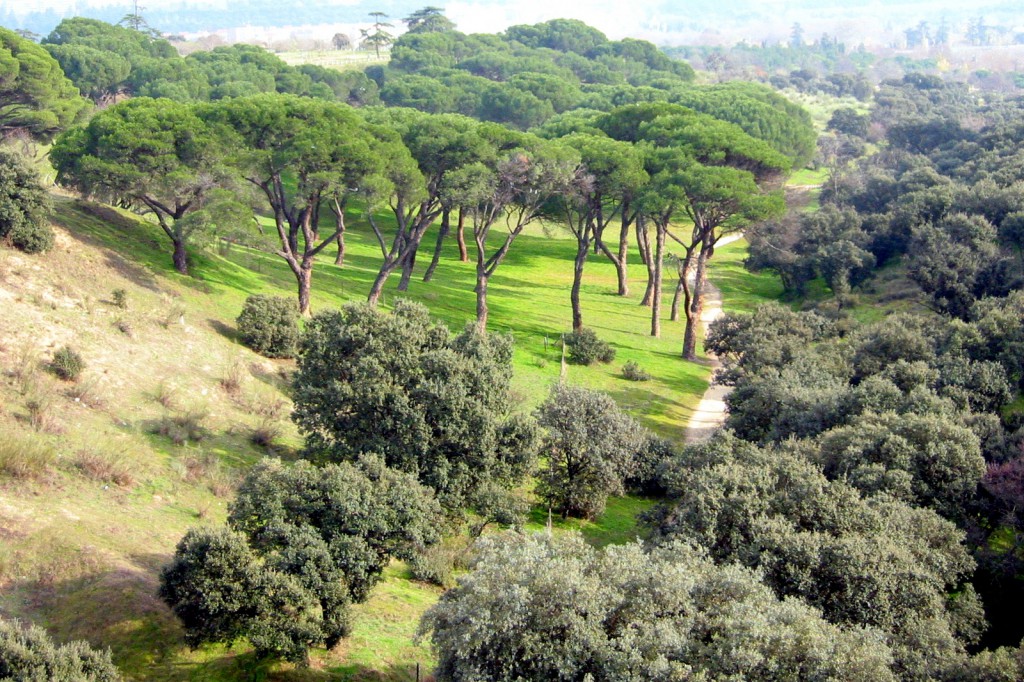
Casa de Campo is the largest public park in Madrid. It lies west of the city centre, on the far side of the River Manzanares, and combines open woodland with a lake, a zoo, an amusement park and sports facilities. This post explains where the park comes from, what there is to do in it and how to reach it.
What Casa de Campo is
According to Madrid’s official tourism website, the park covers 1,535.52 hectares. The name means “country house”. It is an urban park, but most of it has the character of a forest, with a varied flora and fauna and a wide range of bird life. In 2010 it was declared a Bien de Interés Cultural (a protected heritage asset) in the category of Historic Site.
Entry is free and the park is open all year round. It is closed to private vehicles. The accesses by the Zoo, the amusement park, Paseo de Extremadura and the area around the lake are closed from 1am to 6am.
History
The history of the park goes back to the mid-16th century, when King Philip II decided to move his court to Madrid. He created an estate that linked the royal palace with the hunting ground of El Pardo, and farms and fields bought from neighbouring owners were added to it over time. The original country house of the Vargas family was enlarged to hold royal apartments.
King Ferdinand VI declared the estate a Royal Forest. King Charles III devoted part of it to agriculture and livestock farming, a use that continued under Queen Maria Cristina. For centuries only the royal family used the land.
That changed with the Second Spanish Republic. On 1 May 1931 the new government ceded the property to Madrid City Council, and it has been open to the public since then. During the Civil War the park was a front line. Battles and bombing damaged its old buildings, and the military structures built at the time can still be seen today.
The lake
The Casa de Campo Lake is artificial and dates from the 16th century. It was part of the landscaping that Philip II ordered from the architect Juan Bautista de Toledo. The lake was completely restored in 2018. It has an area of 80,150 square metres and a perimeter of 1,370 metres, which makes a short walk around the water.
The pier has around 50 rowing boats for hire, and canoeing and kayaking are possible. The city’s tourism website says that boat hire can be booked in advance through the “Madrid Móvil” application or the municipal sports website. Bars and restaurants line the shore, and a viewpoint near them looks over the lake, the park and the city.
Zoo, amusement park and other venues
- Zoo Aquarium: more than 3,000 animals of more than 500 species, grouped by the region of the world they come from. The nearest metro station is Casa de Campo (lines 5 and 10). Prices and opening times are published on the zoo’s own website.
- Parque de Atracciones: an amusement park with 32 attractions in four themed zones. The nearest metro station is Batán (line 10). Prices and opening times are on the park’s own website.
- Madrid Arena: a multipurpose pavilion with 10,276 seats, used for sports events, shows and trade fairs.
- Teleférico: the cable car links Casa de Campo with Parque del Oeste, across the river, in an 11-minute ride. In October 2026 the tourism website lists it as temporarily closed for works, so check before planning a trip.
Sport and nature
Casa de Campo is popular with people who run, cycle, play football or play tennis, above all at weekends. The services listed for the park include a running circuit, picnic areas and information points. A flat botanical trail of 4 kilometres follows the Meaques stream from the lake to the Zarzón gate. The municipal sports centre in the park has five swimming pools, three of them open-air pools for summer.
Getting there
The park has many entrances. The metro stations that serve it are Batán (line 10), Casa de Campo (lines 5 and 10), Lago (line 10), Príncipe Pío (lines 6 and 10 and the Ramal) and Puerta del Ángel (line 6). Lago is the closest station to the lake. Cercanías suburban trains stop at Príncipe Pío, and the BiciMAD bike-share scheme has docking stations at several entrances, among them the Batán and Casa de Campo metro stations. The lake can also be reached on foot from Madrid Río along Avenida de Portugal.
For students
For students in Madrid the park is a free place to run, cycle or spend an afternoon outdoors, a few metro stops from the centre. Half a day is enough for the lake and a walk; the zoo or the amusement park take most of a day each. The gardens of Campo del Moro, behind the Royal Palace, are close to the Príncipe Pío entrance. More about the city is on the Madrid city page, and schools across the country are listed under study in Spain.
More about: Madrid · All blog posts