Talamanca de Jarama, Madrid, Spain
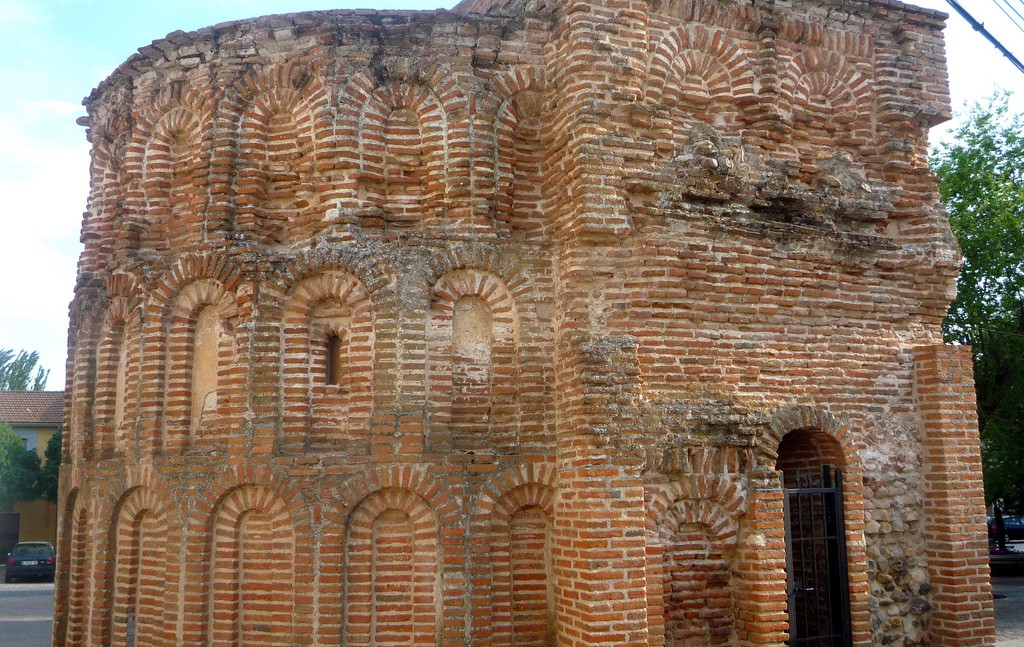
Talamanca de Jarama is a small walled town 45 km from Madrid, set in a wide valley beside the Jarama river. It keeps more medieval remains than most places in the region: stretches of wall, a Romanesque apse, a Romanesque-Mudéjar chapel and an old stone bridge, as well as a monastic farm that film crews have used for decades. This post explains the town’s history, what to see and how to organise a visit.
A short history
According to the town council, archaeologists trace the first settlement back to the Iron Age, and the Romans left the bridge on the route that linked the northern plateau with Toledo. Around the year 852 the emir of Córdoba Muhammad I, who also founded Madrid, established “Talamanka” as one of the fortress towns guarding the Jarama route.
In 1062 the town was destroyed by Ferdinand I during a raid on the kingdom of Toledo. Alfonso VI took it for Castile in 1085 and gave it to the Church of Toledo in 1091. Decline set in from the 16th century, and after the expulsion of the Moriscos in 1610 farming became the only livelihood.
The official name is Talamanca de Jarama, not “del Jarama”: a Royal Decree of 27 June 1916 fixed it in that form.
What to see
- The walls. The walled enclosure has a perimeter of about 1,300 metres and the shape of an irregular pentagon. The council dates it to the Muslim period, with many later rebuildings; the most important was carried out by Archbishop Tenorio in the 14th century. Two gates survive, the Puerta de Uceda on the east side and the Puerta de la Villa or “La Tostonera”. A stretch found six metres underground was restored in 2023, and bricks stamped with that year mark where the original masonry ends.
- Ábside de los Milagros. Also called El Morabito, it stands at the northern end of the Plaza de la Constitución. It is the only remaining part of a 13th-century Romanesque-Mudéjar church and is decorated with three bands of blind brick arches.
- Church of San Juan Bautista. The parish church is a Romanesque building from the late 12th or early 13th century. Its stone apse, in five sections divided by attached columns, is one of the few pieces of Romanesque architecture in the Madrid region. Inside are a 12th-century baptismal font and two 15th-century holy-water stoups. The church was declared a protected monument (Bien de Interés Cultural) on 3 June 1931.
- The old bridge. Known as the Puente Romano, it is a medieval bridge of Roman origin with later alterations: one large central arch and four smaller ones in limestone. It stands just outside the town centre in the La Chopera park and was declared a Bien de Interés Cultural in 1996.
- La Cartuja. This is not a monastery but a 17th-century farm complex built by the Carthusian monks of El Paular to store the grain and wine of their monastery. The buildings are set around an L-shaped courtyard on the northern edge of town, next to the wall, and are also listed as a Bien de Interés Cultural. The cellar was built in 1703.
- Bodega del Arrabal. An 18th-century wine cellar dug into the hillside, built by the same monks and linked to La Cartuja by underground passages.
- Ermita de la Soledad. A square Baroque chapel on the Camino del Puente, commissioned in the 17th century by the Avendaño family.
A film set
La Cartuja has been used as a film location since the 1960s. The council lists Alatriste, Goya’s Ghosts, Conan the Barbarian and ¡Ay, Carmela! among the films shot there, along with television series. Since 2003 the town has run a project called Talamanca de Cine, which uses this history as a visitor attraction. It includes a yearly film festival with an award for someone from cinema, theatre or television linked to the town, as well as publications, exhibitions and visits to La Cartuja.
Nature and festivals
The riverside and farmland around the town are home to the Spanish imperial eagle, a protected and endangered bird of prey. The council has belonged to a conservation network for the species run by SEO/BirdLife since April 2009.
The festival of the patroness, the Virgen de la Fuente Santa, is held on the Sunday after Easter Sunday. San Blas, the patron, is celebrated on 3 February, when blessed bread and cheese are handed out. Local farmers mark San Isidro on 15 May with a mass and a procession.
Planning a visit
Guided visits have to be requested from the town council some time in advance, by phone on 91 841 70 07 or by email; the council also hands out leaflets. Its office hours are Monday to Saturday, 9:00 to 14:00, and Thursday afternoons from 17:00 to 20:00.
Interurban bus line 197 from Madrid (Plaza de Castilla) to Torrelaguna and Uceda stops in the town; check current times with the Madrid regional transport consortium before travelling. By car the town is on the M-103 road.
For students
For students in Madrid with an interest in medieval history or film, Talamanca is a short trip. It pairs well with Rascafría, where the monastery of El Paular that built La Cartuja still stands.
More about: Madrid · All blog posts