The Majestic City of Aranjuez in its Entire Splendor
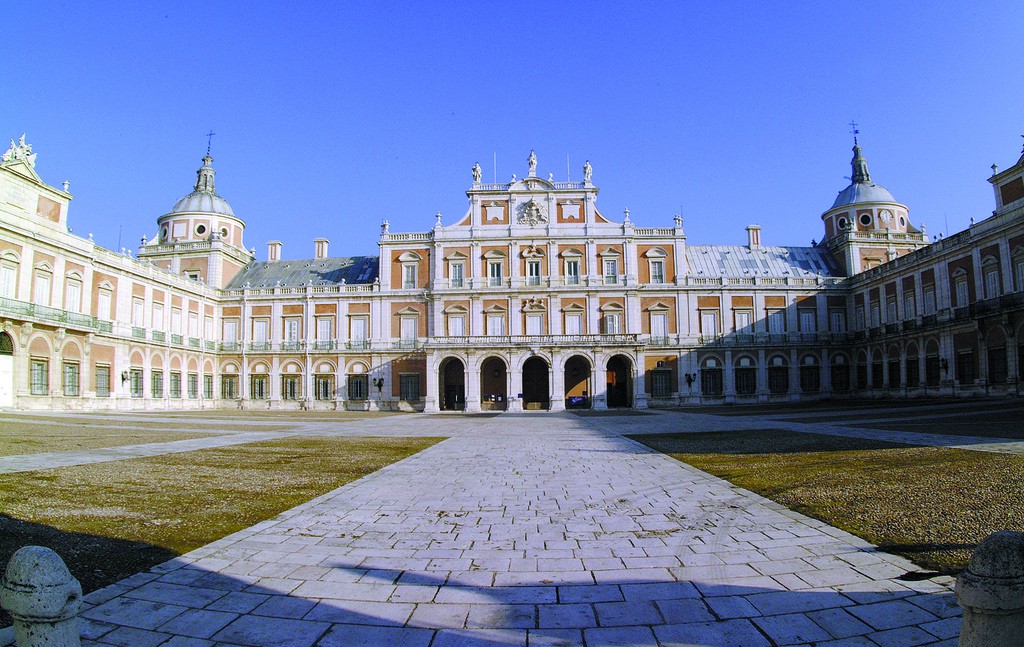
Aranjuez is a town in the south of the Madrid region, on the plain between the Tagus and Jarama rivers. Spanish kings used it for centuries as a spring residence, and the palace, the gardens and the grid of tree-lined streets they left behind are the reason to go. This post covers what to see, what the Royal Palace costs and when it opens in 2026, and how to make the trip from Madrid.
A royal site and a World Heritage landscape
The present layout goes back to Philip II, who gave the town the title of Royal Site in the 16th century. Philip V and Charles III later turned it into a seat of the court, with palace buildings, woods and gardens planned together. The straight streets of the old quarter come from the same period. UNESCO declared Aranjuez a World Heritage Site in 2001, as a cultural landscape.
The palace and the historic gardens are managed by Patrimonio Nacional, the public body that looks after the Spanish royal sites.
The Royal Palace
The Royal Palace of Aranjuez began as a recreational estate. Work on the building was started under Philip II by the architect Juan Bautista de Toledo and continued by Juan de Herrera, who also designed El Escorial. It was completed under Charles III, who added the large parade ground in front, with Francisco Sabatini as his architect. The façade is white and red and carries statues of three kings who took part in the construction. Inside, the rooms most often singled out are the Rococo staircase by Bonavía and the Porcelain Room, whose walls are lined with porcelain.
Practical details for 2026, according to Patrimonio Nacional:
- Opening hours: Tuesday to Sunday, 10:00 to 18:00 from October to March and 10:00 to 19:00 from April to September. The ticket office and the entrance close one hour earlier. The palace is closed on Mondays.
- Tickets: €9 for a self-guided visit and €4 reduced. Children under 5 go in free.
- Guided visit: a supplement of €8 per person, in Spanish only, lasting about one hour.
- Free afternoons: on Wednesdays and Sundays from 15:00, citizens and residents of the European Union and Latin American citizens enter free with proof of nationality or residence. These tickets are issued only at the ticket office.
- Closed days: the palace also closes on several public holidays and for official events.
The gardens
The gardens start at the palace walls. The Parterre is the formal garden beside the eastern façade, with fountains and mythological sculptures. A small bridge leads from it to the Jardín de la Isla (Island Garden), which lies between the Tagus and a side channel. It was laid out for Philip II and is a Spanish Renaissance garden: a long axis of small squares dedicated to Hercules, Apollo, Bacchus and other figures, set among box hedges.
The Jardín del Príncipe (Prince’s Garden) is the largest, about three kilometres long. It was commissioned by the Prince of Asturias, the future Charles IV, and created between 1772 and 1804 in the landscape style, with a pond and Chinese pavilion, an artificial mound and imitation ruins. Two buildings stand inside it. The Museum of the Royal Barges shows the pleasure boats the monarchs used on the Tagus. The Casa del Labrador is a neo-classical house built for Charles IV by Juan de Villanueva; Patrimonio Nacional sells its tickets separately from those of the palace.
The old town
The streets south of the palace follow a regular plan with uniform buildings and wide avenues. Places to look for include the Mariblanca Fountain, the church of San Antonio, the Royal Theatre, the Medinaceli Palace, the Convent of San Pascual by Sabatini and the food market (Mercado de Abastos). The 18th-century bullring has a guided tour and a bullfighting museum. Local produce is part of the visit: Aranjuez is known for its strawberries and asparagus, and restaurants along Calle de la Reina and beside the river serve game dishes such as pheasant.
Getting there from Madrid
The simplest way is the commuter train: line C-3 from Atocha station. The station in Aranjuez is about 10 minutes on foot from the palace, along Calle de la Estación and Avenida del Palacio. Buses to Aranjuez leave from Madrid’s Estación Sur at Méndez Álvaro. Between May and September a historic service known as the Strawberry Train also runs to Aranjuez, according to Spain’s official tourism website.
The palace, the Parterre and the Island Garden fill a morning. Adding the Prince’s Garden and the old town makes a full day.
For students
Aranjuez is an easy day trip for anyone studying in Madrid. Students up to 25 years of age pay the reduced price at the palace on showing a current national or international student card. Two other World Heritage Sites in the Madrid region work as day trips: Alcalá de Henares and San Lorenzo de El Escorial.
More about: Madrid · All blog posts