Engineering Science Schools and Programs in Germany
8 schools in Germany teach Engineering Science.

Albert-Ludwigs-Universität Freiburg
University Freiburg, Germany In an official register
The Albert-Ludwigs-Universität Freiburg (Universität Freiburg) is a university in Freiburg, in south-west Germany, with its visitor address at Friedrichstraße 39. Around 24,500 students are currently enrolled. The university has eleven faculties, about 240 degree programmes…

Bergische Universität Wuppertal
University Wuppertal, Germany In an official register
The University of Wuppertal is a German institution of higher education, based in Wuppertal, North Rhine-Westphalia. The school is organized into 7 faculties: Humanities and Cultural Studies; Schumpeter School of Business and Economics; Mathematics and Natural Sciences…

Christian-Albrechts-Universität zu Kiel
University Kiel, Germany In an official register
The University of Kiel is an institution of higher education, operating in the city of Kiel, Germany. It was established in 1665 to currently receive about 23,000 students. The school is organized into the following faculties: Theology, Law, Business, Economics and Social…
Rheinisch Westfalische Technische Hochschule Aachen (RWTH)
University Aachen, Germany In an official register
RWTH Aachen University (Rheinisch-Westfälische Technische Hochschule Aachen) is a technical university in the city of Aachen. It teaches students at bachelor's and master's level, and new students are welcomed with a first-semester orientation week of events and activities…

Technische Universität München (TUM)
University Munich, Germany In an official register
The Technische Universität München (TUM) was founded in 1868 is listed among the first in the world.

Universität Stuttgart
University Stuttgart, Germany In an official register
The Universität Stuttgart (University of Stuttgart) is a technically oriented university in Stuttgart, Germany, whose history goes back to 1829. Its research focuses on aerospace technologies, architecture and adaptive buildings, biomedical systems and robotics for health…

AiB International Education Bonn
Vocational school Bonn, Germany
The Akademie für Internationale Bildung (Academy for International Education), or AIB, understands that regardless of the subject of study, all students need a greater understanding of the world to help them formulate the role they will play in it. They also need to discover…

Northern Institute of Technology
Higher education centre Hamburg, Germany
The NIT Northern Institute of Technology Management is a private business school on the campus of the Hamburg University of Technology (TUHH) in Hamburg-Harburg, Germany. It was founded in 1998 by TUHH professors as a non-profit company, and it is located in Building F of the…
Engineering Science Studies in Germany
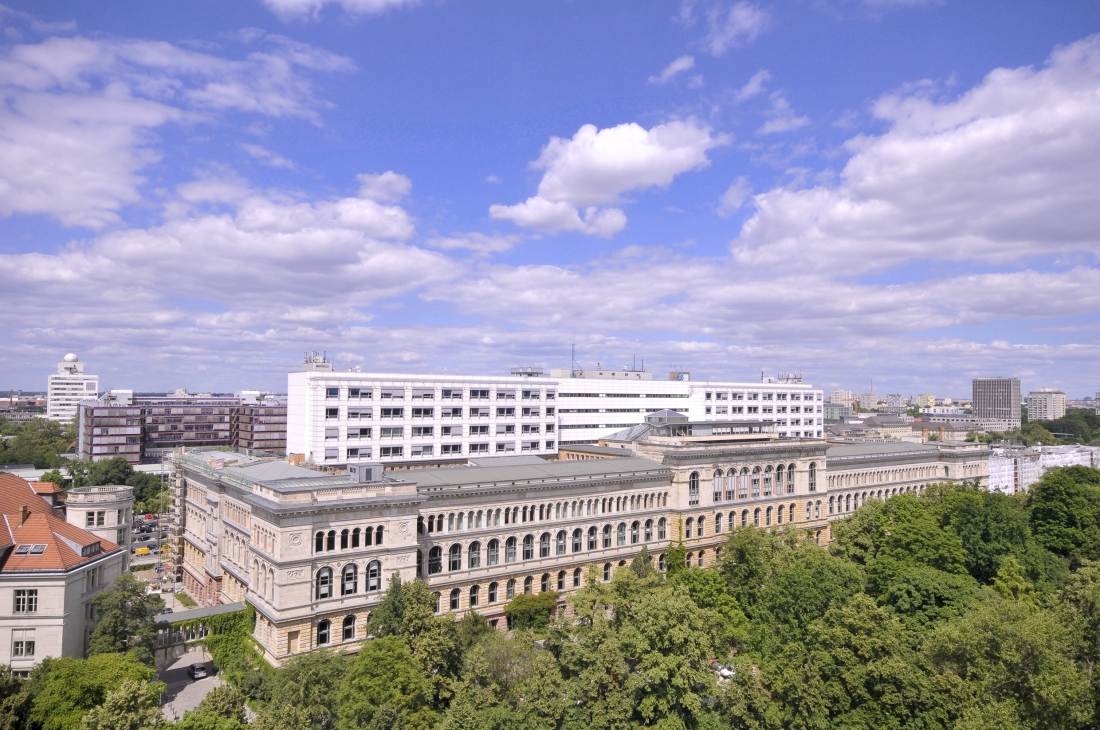 You can study engineering in Germany at Technische Universität Berlin.
Engineering is taught in Germany at two kinds of higher education institution. Universities, including the technical universities (Technische Universität, TU), combine theory and research. Universities of applied sciences (HAW/FH) take a practice-oriented approach, with work placements and practical semesters, often in companies. According to the German Academic Exchange Service (DAAD), Germany had 108 universities and 211 universities of applied sciences in the 2022-23 winter semester.
SpainExchange lists 9 schools in Germany under Engineering Science, in Aachen, Stuttgart, Munich, Hamburg, Oldenburg, Kiel, Freiburg, Wuppertal and Bonn.
How engineering degrees are organised
Engineering follows the bachelor's and master's structure. The first degree is a Bachelor of Science (B.Sc.) or a Bachelor of Engineering (B.Eng.), with a standard period of study that is usually six semesters. A master's degree takes two to four more semesters, and a doctorate can follow. Most students choose a specific branch from the start, such as mechanical, electrical, civil or aerospace engineering.
Broad programmes also exist. The B.Sc. in Engineering Science at the Technische Universität München (TUM) is aimed at students who want a broad foundation in the sciences and engineering methods without committing to one traditional branch. It has a standard duration of six semesters and 210 ECTS credits, starts in the winter semester, requires German and admits students through an aptitude assessment. TUM's B.Sc. in Mechanical Engineering has six semesters and 180 ECTS credits.
Dual study programmes combine a degree with training in a company. According to DAAD, in most cases the companies pay students for their work and cover their tuition fees.
Where it is taught
- Technical universities: RWTH Aachen, the Universität Stuttgart and TUM belong to TU9, an alliance of nine German universities of technology. The Universität Stuttgart lists bachelor's programmes in Aerospace Engineering, Automotive Engineering, Mechanical Engineering and Engineering Cybernetics, among others, all taught in German with entry in the winter semester
- Oldenburg: the University of Oldenburg runs the master's programme Sustainable Renewable Energy Technologies (SuRE), formerly the Postgraduate Programme Renewable Energy. It started in 1987 and, according to the university, has graduated more than 563 participants from about 85 countries
- Hamburg: the NIT Northern Institute of Technology Management, founded in 1998 by professors of the Hamburg University of Technology (TUHH), offers a management master's that can be combined in a double degree with an engineering or science master's at TUHH
- Other universities: the lists on this page also include the Albert-Ludwigs-Universität Freiburg, the Christian-Albrechts-Universität zu Kiel and the Bergische Universität Wuppertal
Admission and language
Applicants need a school-leaving certificate that is recognised as a higher education entrance qualification in Germany. Certificates from EU and EEA countries and Switzerland usually qualify. According to DAAD, applicants from other countries often need two or three semesters of comparable study at home, or a Studienkolleg in Germany. The Studienkolleg usually lasts two semesters and ends with an assessment test (Feststellungsprüfung); the T course prepares for technical degrees at universities and the TI course for engineering at universities of applied sciences. Admission to a Studienkolleg requires German at level B1-B2 of the CEFR and an entrance examination. Applicants from outside the EU apply through uni-assist or directly to the institution.
Most bachelor's programmes in engineering are taught in German, and most institutions require German at B2 level or above, shown with TestDaF, DSH or a comparable certificate. International degree programmes taught in English, which are more common at master's level, ask for proof of English instead.
Costs and visa
There are generally no tuition fees for bachelor's courses or most master's courses at state higher education institutions, but all students pay a semester contribution of between €70 and €430. There are two main exceptions for students from outside the EU. Baden-Württemberg, where Stuttgart and Freiburg are located, charges €1,500 per semester. In Bavaria, institutions may set their own fees: TUM states that its fees for non-EU students are usually €2,000 or €3,000 per semester for bachelor's programmes and €4,000 or €6,000 for master's programmes. Private institutions set their own fees.
Citizens of EU member states, Iceland, Liechtenstein, Norway and Switzerland do not need a visa. Students from most other countries apply for a national visa at the German embassy or consulate in their home country and, as of 1 January 2025, must show €992 per month in financial resources.
Careers
A bachelor's degree is a first professional qualification, and many engineering students continue to a master's degree. TUM names mechatronics, process engineering, biomedical engineering, materials science and software engineering among the fields open to graduates of its Engineering Science programme. Students at universities of applied sciences and on dual programmes gain company experience during the degree.
Frequently asked questions
Can I study engineering in Germany in English?
Most bachelor's programmes are taught in German and require German at B2 level or above. English-taught programmes are more common at master's level and require proof of English instead.
How long does an engineering degree take in Germany?
A bachelor's degree usually takes six semesters and a master's degree two to four more.
Is studying engineering in Germany free?
State institutions generally charge no tuition fees, only a semester contribution. Non-EU students pay €1,500 per semester in Baden-Württemberg, and some Bavarian institutions charge fees; at TUM usually €2,000 to €6,000 per semester depending on the programme.
What is a Studienkolleg?
A preparatory course, usually two semesters long, for applicants whose school-leaving certificate does not give direct access to German higher education. It ends with an assessment test that qualifies for degrees in the chosen subject area.