Soto de Viñuelas, Madrid, Spain
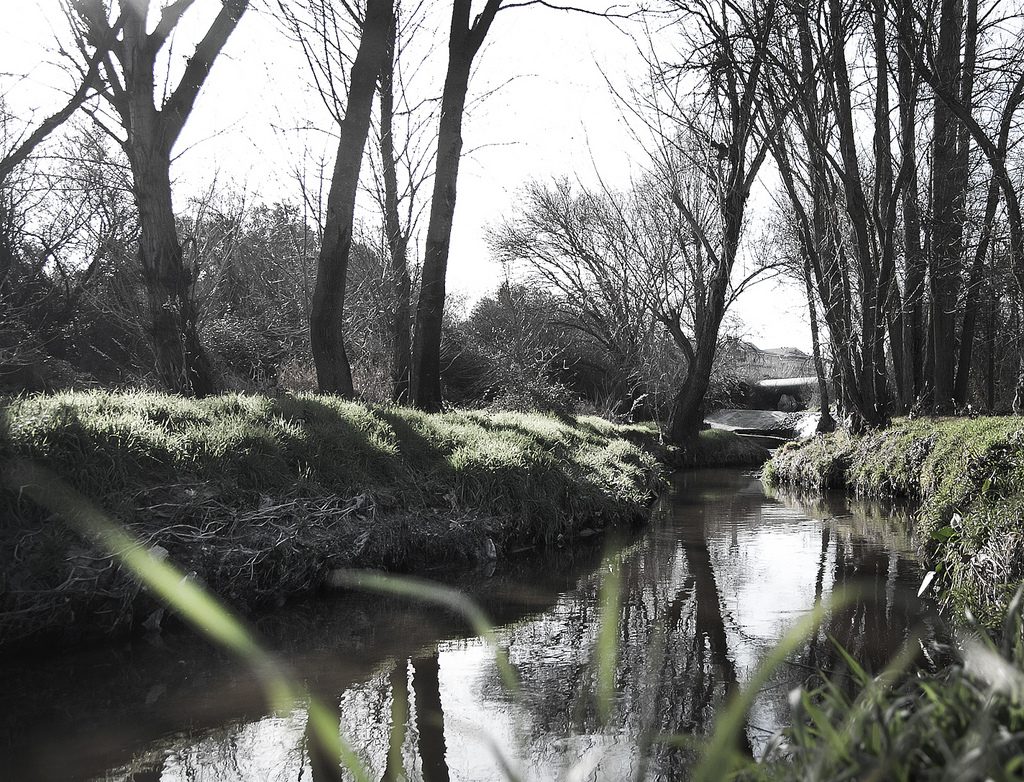
Soto de Viñuelas, also called Monte de Viñuelas, is a large holm oak forest on the northern edge of the municipality of Madrid, beside Tres Cantos. It is protected as part of a regional park and as a bird area, but it is also a private, walled estate with a castle at its centre. This post explains what the forest is, how it is protected, what the castle is used for and what a visitor can realistically see.
Where it is and what it looks like
The estate’s managers give its area as 3,028 hectares. It borders Tres Cantos and Colmenar Viejo to the north and San Sebastián de los Reyes to the east. A dry-stone perimeter wall 42 kilometres long surrounds it, built in the same way as the wall of the neighbouring Monte de El Pardo.
Three streams cross the land (Viñuelas, La Parrilla and Valdelamasa), together with many seasonal gullies and springs. Holm oak woodland covers most of the estate, with ash, juniper and rockrose. The animals the estate names are red deer, fallow deer, wild boar and partridge.
A protected area
Soto de Viñuelas has belonged to the Parque Regional de la Cuenca Alta del Manzanares since the park was created by Law 1/1985 of 23 January of the Community of Madrid. The forest does not lie in the Manzanares basin itself. The law says it was added as an “appendix” so that the park would form a single system of protected natural areas together with the upper Manzanares valley, which runs from La Pedriza down to the wall of El Pardo.
Within the park the forest is classed as Zone B, the agricultural and livestock park. The northern part is Zone B1 (“protector”), where the rules are stricter because the ecosystems are well preserved: non-native tree plantations and non-native animal species are not allowed. The southern part is Zone B2 (“productor”).
The forest is also on the Ministry for the Ecological Transition’s list of Special Protection Areas for birds (ZEPA) in the Community of Madrid, with the code ES0000012, next to Monte de El Pardo (ES0000011).
The Castillo de Viñuelas
The main building in the forest is the Castillo de Viñuelas. The old version of this post confused it with the Royal Palace of El Pardo; they are two different buildings several kilometres apart. According to the castle’s own site, the first references to it date from 1285 and the present building is from the 18th century. It has a square plan with four large round battlemented towers at the corners and three floors, four in the towers. The north front carries a coat of arms, a long balcony resting on columns and two sentry boxes. Inside, the Sala de Armas is the best-known room.
The forest was a royal hunting ground for centuries. The estate records that on 28 December 1642 Philip IV ordered the Monte de Viñuelas to be guarded in the same way as his own forest of El Pardo. In the 19th century the Valencian businessman José Campos bought the property, rebuilt the four towers and restored the interior.
Can it be visited?
Soto de Viñuelas is not a public park. It is a private estate run as a hunting reserve: the managers state that driven hunts for big game are held every year between October and February. The castle and two pavilions are hired out for weddings, congresses and company events; the hunting pavilion holds about 600 people. The estate’s site does not publish visiting hours or tickets for individual visitors, so the inside of the forest and the castle are seen only by people attending one of these activities.
What anyone can do is see the forest from outside, along its wall on the Tres Cantos side, and walk in the open parts of the same regional park further north. The posts on Manzanares el Real and the Sierra de Guadarrama describe areas with marked public paths.
Fire is a real risk here in summer. A wildfire on 11 August 2025 damaged homes and plots in Tres Cantos, and the town council later opened a round of aid for the owners affected. Never light a fire or barbecue in the countryside around the forest.
Getting there
The estate gives its address as Carretera de Colmenar, km 20.900, Tres Cantos, about 20 kilometres from Madrid. This is the M-607, the Madrid–Colmenar Viejo dual carriageway, which also marks the park boundary at this point.
By public transport, the Tres Cantos council’s transport page lists interurban bus 716 from Madrid (Plaza de Castilla) to Tres Cantos (Soto de Viñuelas), which serves the residential area of the same name beside the forest, and urban line 3 between Soto de Viñuelas and the railway station. Tres Cantos station is on Cercanías line C4. Bus 827 links Tres Cantos with the Universidad Autónoma, Alcobendas and Madrid (Canillejas).
For students
For students in Madrid, and especially those at the Universidad Autónoma, which has a direct bus to Tres Cantos, Soto de Viñuelas is mainly of interest as a case study: a large Mediterranean oak forest inside the boundary of a capital city, protected by regional and European rules while remaining in private hands. Biology, geography and environmental science students will find the 1985 law a short and readable example of how Spanish protected areas are zoned.
More about: Madrid · All blog posts