Cercedilla, Madrid, Spain
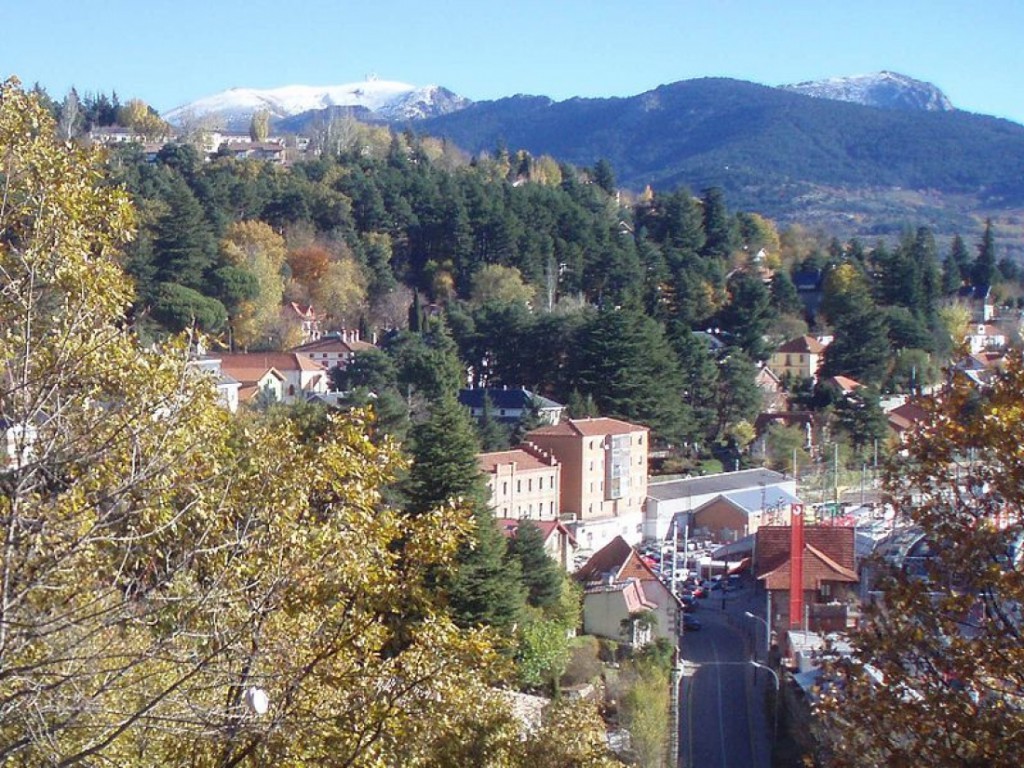
Cercedilla is a mountain town in the Sierra de Guadarrama, 56 km from Madrid. It is the gateway to the Fuenfría valley, where a Roman road crosses the range towards Segovia, and it has a long connection with skiing and with the railway. This post covers the town’s history, what to see and do, and how to get there by public transport.
The town
The municipality covers almost 40 square kilometres in the heart of the Sierra de Guadarrama National Park. According to the Community of Madrid’s municipal data it had 7,782 registered inhabitants in 2025.
The origins of Cercedilla go back to the Roman Empire, around the 1st century AD, when the road from Titulcia to Segovia was laid through the Fuenfría valley. The pass later became the usual route for royal parties travelling from Madrid to Valsaín and La Granja, and between 1728 and 1730, under Philip V, the road and its bridges were completely renewed. In 1630 Philip IV granted Cercedilla the status of a town (villa) with its own authorities.
The railway from Villalba to Segovia, opened in 1888, stopped in Cercedilla and brought visitors from Madrid, who built holiday villas here. On 12 July 1923 the electric narrow-gauge Guadarrama railway opened between Cercedilla station and the Puerto de Navacerrada. Tourism has since replaced timber as the main source of income.
The Roman road and the Fuenfría valley
The Roman road lies in the northern part of the Fuenfría valley. Most of its course is under the present M-966 road, but stretches remain visible over a length of about 2.25 km. Three of the four Roman bridges in the area can be seen in the valley: the Puente de la Venta, the Puente del Descalzo and the Puente de Enmedio. The fourth, the Puente del Molino or del Reajo, is near the railway station.
The valley is bounded by Cerro Minguete (2,023 m) and the western end of Siete Picos (2,138 m), and is covered mainly by pine forest. The national park’s Fuenfría Visitor Centre, at km 2 of the Las Dehesas road, is the place to start. It has an information desk, a permanent exhibition on the valley and a network of marked paths from the door, including the Roman road, the Bourbon road and the old Segovia road up to the Fuenfría pass. The centre is open every day: from 9:00 to 16:30 from January to March and in November and December, and from 9:00 to 19:00 from April to October.
Some rules apply in the valley:
- Cercedilla town council limits parking at the Las Dehesas recreation area to a maximum of 240 vehicles. A space has to be booked in advance and a fee paid.
- Wild camping is not allowed anywhere in the Community of Madrid, and bivouacking is not allowed in the part of the Fuenfría that lies inside the national park.
- Dogs must be kept on a lead.
- Swimming is allowed only in the natural pools of Las Berceas, which are run by the town council.
What to see in town
- Iglesia de San Sebastián (Plaza Mayor, 3). The parish church is of late Romanesque origin, with a single nave on a Latin-cross plan. Its Churrigueresque altarpiece was commissioned in 1612 from the sculptor Juan Ruiz de Castañeda and the painter Francisco Granello.
- Museo del Esquí (Plaza Mayor, 4). Skiing in Spain began on the slopes next to Cercedilla around 1903. The museum follows the history of snow sports, and its top floor is devoted to the Puerto de Navacerrada resort and to Francisco “Paquito” Fernández Ochoa, who won Olympic gold at Sapporo in 1972. His sister Blanca won bronze at Albertville in 1992. The regional tourism portal gives the opening times as weekends from 11:00 to 14:00 and from 15:00 to 17:00.
- Fábrica de la Luz (Las Dehesas road). This former hydroelectric plant, opened in 1925 on the council’s initiative, supplied the town for more than 50 years and is now an interpretation centre. Visits must be booked in advance through the tourist office.
- The railway station, built by the Compañía de Ferrocarriles del Norte at the turn of the 20th century, and the 19th-century Fuente del Bolo are other reminders of the town’s past.
Festivals
The town’s patron saint festival, San Sebastián, is on 20 January, with a procession, rural sports and dancing. The Fiesta del Aurrulaque, at the end of July, is a walk along mountain paths to the meadow of Navarrulaque, where a manifesto is read. The festivities of the Natividad de Nuestra Señora last five days at the beginning of September and include a pilgrimage on 8 September to the hermitage of Santa María.
Getting there
- Train: Cercanías line C8 (Guadalajara–Madrid–Cercedilla). Line C9, the mountain railway from Cercedilla to the Puerto de Navacerrada and Puerto de Cotos, is temporarily closed for works according to the national park’s website in 2026.
- Bus: line 684 from the Moncloa interchange in Madrid, and line 680 from Collado Villalba.
- To the visitor centre from the station: on foot along the path beside the Las Dehesas road, the Camino Puricelli or the Camino del Agua, or on the interurban bus that goes up to the Fuenfría hospital and stops opposite the centre.
For students
Students in Madrid can reach Cercedilla by commuter train or bus, which makes it a practical choice for a day’s walking without a car. The posts on the Sierra de Guadarrama and the Puerto de Navacerrada describe the rest of the range.
More about: Madrid · All blog posts