Psychology Schools and Programs in The United States, viewing 201-214 of 214 total results

NYU School of Professional Studies
University New York, The United States
The New York University (NYU) School of Continuing and Professional Studies offers its students a high-class professional education. Some of the common undergraduate degrees in professional fields include Digital Media, Real Estate, Business, Health Management, and Hotel and…
Shelton State in Tuscaloosa
Vocational school Tuscaloosa, The United States
Shelton State Community College (SSCC) is a two-year community college in Tuscaloosa, Alabama, in the United States. It belongs to Alabama's state system of public colleges and is one of six HBCU (historically Black) community colleges in the state. It has two campuses in…

University of Phoenix
Online and distance learning Phoenix, The United States
University of Phoenix (UOPX) is an online university for working adults, founded in 1976 and based in Phoenix, Arizona, in the United States. It has been accredited by the Higher Learning Commission (HLC) since 1978, and some of its programmes also hold programmatic…
Wright State University
University Dayton, The United States
Wright State University is a public university in Dayton, Ohio, named after the aviation pioneers Orville and Wilbur Wright. It has more than 11,000 students and is made up of six colleges and a medical school, with a main campus in Dayton and a branch campus in Celina, Ohio…
Common Ground Education & Travel
Study abroad program Cambridge, The United States
Common Ground is an organization, specializing in customized academic and professional programs for exchanges between Cuba and the USA. Common Ground has more than 30 years experience in the provision of such programs, for which reason it has created long lasting…

Concordia Language Villages
Language school Bemidji, The United States
Concordia Language Villages is a language and cultural immersion programme run by Concordia College, a private liberal arts college in Moorhead, Minnesota. It began in 1961 as a two-week German programme for 72 children and today offers language and cultural programmes in 14…

Grand River Academy
Primary and secondary school Austinburg, The United States
Grand River Academy (GRA) is an all-boys college preparatory boarding and day school in Austinburg, Ohio, in the United States. The school states that it has followed the same mission for 195 years. It teaches young men in grades 8 to 12 and also runs a post-graduate…

Lee Academy (Lee, Maine)
Primary and secondary school Lee, The United States
Lee Academy is an independent college-preparatory boarding and day school in the small town of Lee, in rural Maine (United States). Founded in 1845, it serves students in grades 9 to 12 and also offers a postgraduate year. Students from around the world study alongside local…

Southwestern Academy
Primary and secondary school San Marino, The United States
Southwestern Academy is a co-educational college preparatory boarding and day school in San Marino, just south of Pasadena in Southern California, United States. It teaches grades 6 to 12. The school states that it has about 100 students, around 70% of them boarders from…

SUNY, The State University of New York
University Albany, The United States
SUNY is a system of public universities in New York, USA. It was established in 1948, and represents the largest system of universities, colleges, and community colleges in the world. Overall, it has 64 campuses around the state, including four University Centers…
The Bolles School
Primary and secondary school Jacksonville, The United States
The Bolles School is an independent college-preparatory day and boarding school in Jacksonville, Florida. It enrols more than 1,800 students from pre-kindergarten to grade 12, about 85 of them boarders, and its community represents 69 countries. Teaching takes place on four…
The Ohio State University
University Columbus, The United States
Ohio State University is a public research university, and currently has the third largest university campus in the United States. Located in Columbus, Ohio, it was founded in 1870 as a land-grant university. Now the university has also established regional campuses in Lewis…

UMBC - The University of Maryland, Baltimore County
University Baltimore, The United States
The University of Maryland, Baltimore County is an American public research university, which was founded in 1966, as part of the University System of Maryland. The university has established a focus on the natural sciences and engineering, but also provides programs in the…

University of Colorado
University Denver, The United States
The University of Colorado is perceived as a leader in both research and higher education in the Rocky Mountain region in the USA. Its grounds were laid in Boulder, in 1876, since when the institution has grown to encompass four campuses, one of which includes the newest…
Psychology Studies in The United States
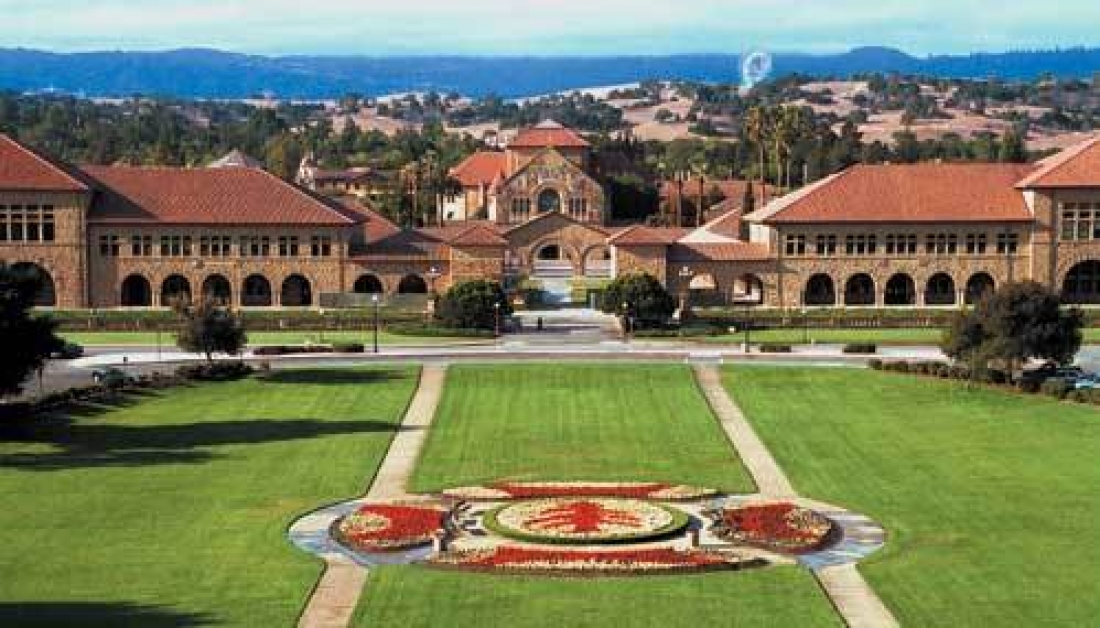 Stanford University has one of the top psychology programs in the US.
In the United States, psychology is studied first as a major within a bachelor's degree. A bachelor's degree does not qualify a graduate to practise as a psychologist: according to the U.S. Bureau of Labor Statistics (BLS), psychologists typically need at least a master's degree, clinical and counseling psychologists typically need a doctorate, and independent practice requires a state licence. Students should therefore plan the whole route, not only the first degree.
SpainExchange lists 217 colleges and universities in the United States under psychology.
How psychology degrees are organised
- Associate degree: a two-year programme, usually at a community college, that can transfer into a bachelor's degree
- Bachelor's degree: usually four years of full-time study. Students take courses in many subjects besides their major and normally declare the major by the end of the second year
- Master's degree: typically two years. Industrial-organizational psychologists typically need a master's degree, and school psychologists at least a master's degree in school psychology
- Doctorate: a Doctor of Philosophy (PhD) in psychology or a Doctor of Psychology (PsyD). PhD programmes usually emphasise research and end with a dissertation; PsyD programmes focus on applying psychology in work with clients or patients. Both typically include an internship
Stanford University shows what a major looks like. Its Psychology major requires at least 70 units of course work in psychology out of the 180 units needed to graduate. Students take an introduction to psychology and a statistics course, then core courses in areas such as perception, learning and memory, cognitive neuroscience, and developmental, social, cultural and clinical psychology, and finish with a capstone in the senior year.
Admission and language
International students apply directly to each college or university. U.S. universities require an English language proficiency test before admission. Each university reviews the subjects an applicant studied abroad and may ask for a report from a credential evaluation agency.
For graduate study, applicants typically hold a bachelor's degree in psychology, education or a social science. Requirements differ by programme. Stanford's PhD programme in Psychology, which trains students for careers in research and teaching, asks for a U.S. bachelor's degree or its foreign equivalent, a statement of purpose, three letters of recommendation, transcripts, and TOEFL or IELTS scores from non-native English speakers. An undergraduate psychology major is not required there, and the application fee for graduate study at Stanford is $125.
Once accepted by a school certified by the Student and Exchange Visitor Program (SEVP), the student receives a Form I-20 from the school's international student office and uses it to apply for the F student visa.
Costs
According to the National Center for Education Statistics (NCES), average tuition and fees at four-year institutions in 2022-23 were $9,800 at public institutions and $40,700 at private non-profit institutions. At public two-year institutions the average was $4,000. The public figures are in-district or in-state rates; international students should check which rate applies to them.
Where to study psychology
Boston has the most schools in this directory (five), followed by Philadelphia and New York (four each). Examples include public universities such as The Ohio State University, the University of Michigan, San Diego State University and the University of Washington; private universities such as Stanford University, Yale University, Duke University, Northwestern University and Vanderbilt University; and community colleges such as Community College of Rhode Island, Pasadena City College and Tacoma Community College.
Accreditation and licensing
The Commission on Accreditation of the American Psychological Association (APA-CoA) accredits master's and doctoral programmes in clinical, counseling and school psychology. It accredits programmes, not institutions or individuals, and accreditation is voluntary. APA reports 440 accredited doctoral programmes. Bachelor's degrees in psychology are not covered by this accreditation; for them, what matters is the accreditation of the institution.
All states and the District of Columbia require psychologists who practise independently to be licensed where they work. Licensure typically requires a master's or doctoral degree and supervised experience, and may require an exam. Licensing laws vary by state and by type of position, so anyone who plans to practise, including psychologists trained abroad, should contact the licensing board of the state concerned.
Careers
Psychologists work in settings such as schools, hospitals and private practice. According to BLS, psychologists held about 209,400 jobs in 2025. Employment is projected to grow 6% from 2025 to 2035, with about 11,300 openings a year. Many graduates with a bachelor's degree do not become psychologists: Stanford notes that psychology courses can also provide a background for careers in business, education, law, medicine and social work.
Frequently asked questions
Can I work as a psychologist in the United States with a bachelor's degree?
Usually not. According to BLS, psychologists typically need at least a master's degree, and clinical and counseling psychologists typically need a PhD or PsyD.
What is the difference between a PhD and a PsyD?
PhD programmes usually emphasise research and end with a dissertation. PsyD programmes focus on applying psychological principles to work with clients or patients.
Do I need a psychology degree to enter a graduate programme?
It depends on the programme. Applicants typically have a bachelor's degree in psychology, education or a social science, but Stanford's PhD programme, for example, does not require an undergraduate psychology major.
Do psychologists need a licence?
Yes, for independent practice. All states and the District of Columbia require it, and the rules vary by state.