

Architecture Schools and Programs in Argentina
Study Architecture in Argentina

Universidad Abierta Interamericana, UAI
Buenos Aires, Argentina
The Universidad Abierta Interamericana (UAI) is a university in Argentina, founded in 1995 and part of the Vaneduc network, a secular organisation working in educational advice and research since 1942. Its administrative seat is at Chacabuco 90 in central Buenos Aires. It has…

Universidad Argentina John F. Kennedy
Buenos Aires, Argentina
Universidad Argentina John F. Kennedy (Universidad Kennedy) is a university in Argentina run by the civil association of the same name, with more than 60 years of history. According to the university, it offers about 50 programmes and degrees and has some 38,000 graduates…

Universidad Católica de la Plata
La Plata, Argentina
The Universidad Católica de La Plata (UCALP) is a Catholic university in La Plata, Argentina, with its main address at Avenida 13 nº 1227. It also has a campus (sede) in Bahía Blanca. Its faculties include Health Sciences and Humanities, and it runs its own language school…

Universidad Católica de Santa Fe
Santa Fe, Argentina
The Universidad Católica de Santa Fe (UCSF) is a Catholic university based in the city of Santa Fe, Argentina. Its Grand Chancellor is the Archbishop of Santa Fe de la Vera Cruz, and students who enrol agree to respect the university's denominational character and its link…

Universidad de Belgrano
Buenos Aires, Argentina
The Universidad de Belgrano (UB) is a private university in Buenos Aires, Argentina, founded on 11 September 1964 by Dr Avelino Porto under Law 14.557, which recognises private universities in Argentina. Its main building is at Zabala 1837, and it also teaches at its…

Universidad Nacional de Córdoba
Cordoba, Argentina
The Universidad Nacional de Córdoba (UNC), traditionally known as the Casa de Trejo, is a university in Córdoba, Argentina, with roots in the Jesuit Colegio Máximo. Higher studies began there in 1613; a papal brief of 1621, confirmed by a royal decree of 1622, gave the…

Universidad Nacional de la Plata
La Plata, Argentina
The Universidad Nacional de La Plata (UNLP) is an Argentine national university based in La Plata. It was founded in August 1905 by Joaquín Víctor González. Today it has 17 faculties and offers 180 degree programmes and 237 postgraduate programmes, and it has 167 research…

Universidad Nacional del Litoral
Santa Fe, Argentina
The Universidad Nacional del Litoral (UNL) is a national university in Santa Fe, Argentina, created by national law on 17 October 1919. Today it has sites in the cities of Santa Fe, Esperanza, Gálvez, Reconquista, Avellaneda, Rafaela and Sunchales. Its Rectorate building…

Universidad Torcuato Di Tella
Buenos Aires, Argentina
The Universidad Torcuato Di Tella (UTDT) is a non-profit university in Buenos Aires, Argentina, founded in 1991 by the Instituto and the Fundación Torcuato Di Tella. It offers 13 undergraduate degrees and more than 30 postgraduate programmes in 11 academic units: schools of…
Find Schools by City
Architecture Studies in Argentina
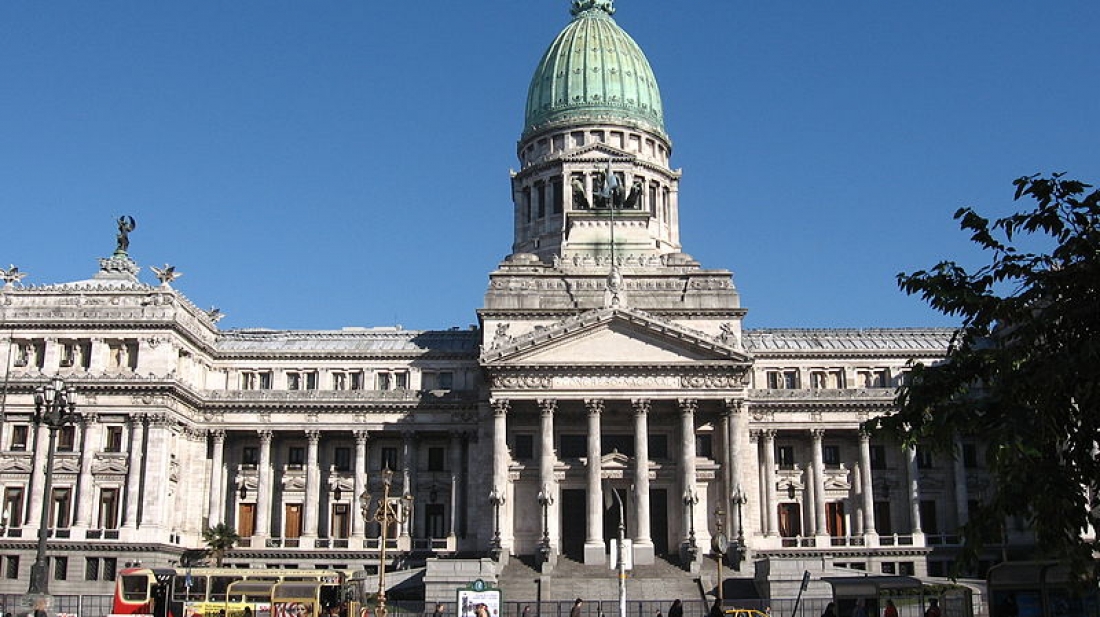 Congreso de Argentina in Buenos AiresArgentina, officially known as the Argentine Republic, is a South American country, bordered to the west and south by Chile, to the north by Bolivia and Paraguay and to the northeast by Brazil and Uruguay. The country is a federation, made up of 23 provinces and the autonomous city of Buenos Aires, its capital and largest city. With an area of nearly 2.8 million square kilometers, Argentina is the eighth-largest country in the world and the largest among Spanish-speaking nations.
Architecture in Argentina
The architecture of present day Argentina dates back to the beginning of Spanish colonization, although it was not until the 18th century that the cities of this great land reached their full magnificence. Despite unprecedented urban growth, major cities throughout Argentina, including Buenos Aires, Cordoba, Salta and Mendoza, have managed to retain and preserve their colonial architectural roots and beauty.The minimalism of the Rioplatenese baroque style is clearly reflected in many of the churches that still stand today in Buenos Aires, including the churches of San Ignacio, Nuestra Senora del Pilar, the Cathedral and the Cabildo—the work of Italian architects such as Andre Blanqui and Antonio Masella.
Following the wars for independence in Argentina, at the beginning of the 19th century, Italian and French architectural influences began to increase, characterized by an academic style that persisted until the early decades of the 20th century. Attempts to renovate the cityscapes of the country took place during the latter half of the 19th century and the beginning of the 20th century, when the European tendencies penetrated into the country, reflected in many of the structures now found throughout Buenos Aires, including the Santa Felicitam Church, by Ernesto Bunge; the Central Post Office and Palace of Justice, designed by Norbert Maillart; and the National Congress and the Colon Opera House, the work of Vittorio Meano.
In the early 20th century, several up and coming Italian architects emerged in Argentina. Names such as Virginio Colombo, Francisco Gianotti and Mario Palanti, who designed the Italian pavilion for the Exposicion Internacional del Centenario (1910), went on to establish meaningful architectural careers in the country, using a variety of styles, including Art Nouveau. The structures these architects created were some of the most important of the 20th century in Argentina, and those that remain today continue to play a very important role in defining the city’s architectural landscape.
The latter half of the 20th century saw the emergence/adaptation of the French neoclassical style of architecture in the country, represented by buildings such as the National Bank of Argentina and the NH Gran Hotel Provincial, designed by Alejandro Bustillo; and the Museo de Arte Hispano Fernandez Blanco, built by Marin Noel.
Also emerging after the 1930s were the Rationalist and Le Corbusier styles of architecture, which became the norm among many local architects, among whom Alberto Prebisch and Amancio Williams were the most notable. Skyscrapers came to dominate the skyline of Buenos Aires after the 1950s, but a new generation, which rejected the “brutality” of such monstrous structures, attempted to find a new architectural identity.
This new identity is today reflected in the Banco de Londres building, completed in 1976 by the architects Clorindo Testa, Diego Peralta Ramos, Alfred Agostini and Santiago Sanchez Elia. In the decades that followed, new legions of architects continued to incorporate the European vanguardist styles, as well as other newer techniques.
From the late 20th century and continuing to this day, architects in Argentina have become well-known for their design of pricey real estate projects throughout the country, such as the Le Parc Tower and Torre Aqualina, by Mario Roberto Alvarez; and the Torre Fortabat, by Sanchez Elia. They have also made their mark in other countries around the world, designing structures such as the Norwest Center and Petronas Towers, both designed by the Argentine architect Cesar Pelli.