

Study in Malaga, Spain
37 schools in Malaga, Spain. Universities (10), Language schools (20), Primary and secondary schools (6).
Universities in Malaga 10
- ESESA - Innovative Business School
ESESA - Innovative Business School, is a company dedicated to the training of professionals in the field of the economic development of companies in Andalusi…
- Universidad de Málaga
The Universidad de Málaga (UMA) is a university in Málaga, on the Costa del Sol in Andalusia, and part of the Andalusian university system. It has more than…
- CENEC MALAGA NUTECFOR ANDALUCÍA S.L.
Over 30 years of training the best over 24.000 students trained in the last 32 years, give an idea of the quality and commitment of our team. Experience, kno…
- Centro Privado Autorizado Superior de Música "La Convergente"
ELCAMM (El Centro de Artes y Música Moderna de Málaga) is a private music school in Málaga, founded in 2014, next to the Teatinos university campus at Calle…
- Conservatorio Superior de Danza "Ángel Pericet"
The Conservatorio Superior de Danza “Ángel Pericet” de Málaga (CSD Málaga) is a public higher education centre that depends on the Andalusian regional educat…
- Conservatorio Superior de Música de Málaga
The Conservatorio Superior de Música de Málaga is a higher music conservatory in Málaga, founded in 1880 with the support of the city's Sociedad Filarmónica;…
- Escuela de Arte y Superior de Diseño "San Telmo"
The Escuela de Arte y Superior de Diseño San Telmo (EASD San Telmo) is a public school of art and design in Málaga, founded in 1851. It offers three levels o…
- Escuela Superior de Arte Dramático de Málaga
The Escuela Superior de Arte Dramático de Málaga (ESAD Málaga) is a public drama school in Málaga, part of the Enseñanzas Artísticas Superiores and run by th…
- Universidad Alfonso X el Sabio Mare Nostrum
UAX Mare Nostrum (Universidad Alfonso X el Sabio Mare Nostrum) is a private university in Málaga, with a new campus of 27,000 m² that the university describe…
- Universidad Europea de Andalucía
The Universidad Europea de Andalucía is a private university in Málaga and part of the Universidad Europea network. It offers officially recognised bachelor'…
Language schools in Malaga 20
- Academia CILE
Academia CILE is located next to the cathedral gardens (in the centre of the lively social life of Malaga), at only a 10 minutes' walking distance from the b…
- Academia de Idiomas y de Formación Personal (AIFP)
Academia AIFP is a Spanish language school in the commercial district of central Málaga, at Calle Doña Enriqueta 4, in a building it shares with a German lan…
- Academia de inglés Learn English Fácil
Learn English Fácil is an online English academy. Classes are taught live by videoconference by native, certified tutors, and only English is spoken in class…
- Academia Instituto Picasso
Instituto Picasso is a Spanish language school in the historic centre of Málaga that has taught Spanish to international students since 1982. It is on the Pl…
- Academia Malaga Easyned
Academia Malaga is a Spanish teaching institution based in Malaga, Spain. The language center offers a variety of programs (Intensive Spanish, General Spanis…
- Babel Idioma y Cultura
Babel Idioma y Cultura (Babel Idiomas) is a private language academy in Málaga, located at C/ Valparaíso 1 in the El Palo area. It opened in 1999, first as a…
- BEM Idiomas
BEM Idiomas is a private language academy based in Vélez-Málaga, in the province of Málaga. Since 2002 it has taught English, French and Spanish for foreigne…
- Cervantes Escuela Internacional
Cervantes International School is a language school, located in Malaga, Spain – it is part of the network of Cervantes Institute Accredited Centers (a group…
- CILE, Centro Internacional de Lengua Española
CILE (Centro Internacional de Lengua Española) is a Spanish language school in Málaga, in Andalusia, that has taught Spanish since 1988. The school is in the…
- Cursos de Español para Extranjeros, Universidad de Málaga
The Málaga University Curso de Español para Extranjeros (CEE-UMA) is part of the University of Málaga, which was created in 1972; it is located in the city o…
Primary and secondary schools in Malaga 6
- C.E.S Santa María de los Ángeles
C.D.P. Santa María de los Ángeles is a state-funded private (concertado) school in Málaga, Andalusia, that offers the Bachillerato and vocational training (F…
- Sunland International School
Novaschool Sunland International is an independent, British, co-educational day school, located in the Spanish city of Malaga. It receives students of all na…
- Sunny View School
Sunny View School is a family-owned British curriculum school in Torremolinos (Málaga), on the Costa del Sol, founded in 1971. It was the first school on the…
- Centro Internacional María Montessori
The Centro Internacional María Montessori (CIMM) is a private Montessori school in Málaga (Calle Godino 3) for children from 18 months to 16 years, with fami…
- Lycée Français International de Málaga
The Lycée Français International de Málaga (LFIM) is a French school in Málaga, at Calle Flamencos 36, that teaches the French national curriculum from kinde…
- The British School of Málaga
The British School of Málaga (BSM) is a British international school in Málaga for students aged 3 to 18. It opened in 2000 as St. George Málaga, joined the…
About Malaga
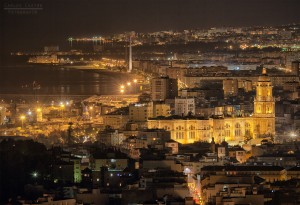
The capital of the Province of the same name, Malaga is located in the Autonomous Community of Andalusia in beautiful Spain. With a population of roughly 570,000, the city is the second most populous city of Andalusia and the sixth largest in all of Spain. The southernmost large city in Europe, it lies on the Costa del Sol (Coast of the Sun) of the Mediterranean, about 62 miles (100 km) east of the Strait of Gibraltar and roughly 81 miles (130 km) north of Africa.
Malaga’s long and interesting history spans about 2,800 years, making it one of the oldest cities in the world. It was founded by the Phoenicians as Malaka around 770 BC, and from the 6th century BC was under the hegemony of Ancient Carthage.
The city’s important cultural infrastructure and the artistic heritage of the region have culminated in the nomination of Málaga as a candidate for the 2016 European Capital of Culture. Among the many famous people who either hail from or once called Malaga home are the internationally acclaimed painter and sculptor Pablo Picasso, Hebrew poet and Jewish philosopher Solomon Ibn Gabirol and actor Antonio Banderas. Additionally, the magnum opus of Cuban composer Ernesto Lecuona, known as "Malagueña," is named for the music of this region of Spain.
The international airport in Malaga serves as the gateway to all of the other Andalusian towns. In fact, Malaga Airport is one of the largest in Spain and in a typical year can welcome up to 10 million visitors. Malaga also serves as a major port and an industrial center for Southern Spain. Entrance to and exit from Malaga is made easy by the N340 highway and the coastal rail service. There is a wonderful Three Kings Festival in Malaga each year at the beginning of January, so if you're visiting during this time, don't forget to bring the entire family.
Malaga is a city steeped in more than 3,000 years of history. Excavations have discovered evidence of the Carthaginians, the Romans and the Moors. As a result, there is a large selection of historical monuments in this city, including the Malaga Cathedral, known locally as La Manquita, which translates to “the little one armed lady.” Due to the length of time involved in building this massive temple, its architectural style demonstrates elements of the Renaissance, Baroque and Neo-classical periods.
Close to Malaga cathedral is the Alcazabar, a fifteenth century Moorish fort and one of the most important monuments in the area. The roof of the Alcazabar offers panoramic views of Malaga city and the port.
Further on from the Alcazabar is the Malaga Castle, which stands on the peak Monte de Gibralfaro. At the foot of this hill, visitors will find Malaga's Ayuntamiento (town hall), as well as the city's museum, which is housed in the very ornate Palacio de la Aduana. According to tourism experts, Malaga, as a result of its history, has so many interesting sites and attractions to offer that the best way to see it all is by open-top bus, of which there are many in the city.
Malaga is also well worth a visit during one of its many festivals. The Fiestas here are numerous and each one is celebrated with the vigor that is synonymous with the Andalusian region. The main Fiesta of the year is the Feria (Fair), which takes place each year in the middle of August.
Picasso was born in Málaga for a reason – this coastal city is the cultural and artistic heartbeat for this entire Spanish region. It even rivals other cultural metropolises like Florence, Paris and Athens. The influential presence of natural sites, artistic achievements and historic streets make Málaga a breath of fresh air in a world of cold, urbanized cities. With its own university and several additional higher education institutions, Málaga is a brilliant getaway for enthusiastic students.There is one main university in Málaga, the aptly titled University of Málaga. This institution has the largest selection of available coursework in the entire city and enrolls more students than any other Málaga-based school. Besides the university, there are a number of language-learning schools, both native and international. Some academies, which usually cater to secondary school aged children, will also offer a number of degree programs.
Other higher education schools in the areas specialize in music, fine arts or other artistic and cultural areas. Málaga also houses a business school, design academies, music conservatories and other institutes. These include the Málaga Business College and The Big Picture Design School.
There are a number of unique sights for students during their stay in Málaga. This includes gardens, galleries and a number of impressive museums. The newest museum, created to honor Pablo Picasso, is a major attraction in the city. The culturally rich city offers nightlife delights in music, theatre and clubs, as well as exciting shopping opportunities in markets and local businesses. Students can even go mountain biking, learn salsa dancing or take a day trip to Morocco.
Other considerations for students in the city of Málaga include:
- Many courses taught in Spanish.
Major Fields of Study in Málaga
Thanks to the University of Málaga, there is a wide selection of courses and majors available to students in Málaga. However, as this is the only university providing general studies, Málaga’s educational atmosphere tends to sway towards certain fields – an effect of numerous specialty schools and programs.
Taking into account the types of schools, conservatories and other higher education institutions in the area, along with student enrollment and effects from the city itself, the following fields seem to earn more popularity and attention than others in Málaga:
- Business
- Music
- Graphic Design
- Spanish language and literature
Schools of Málaga
There are several impressive schools hidden in the streets of Málaga, so future students 0 especially those focusing in artistic areas like music, design and dance – should take the time to approve the perfect institute for their learning. Listed below are a few of the essential school contributing to the city’s higher education system.
- The University of Málaga is a public institute with a diverse set of faculties and schools. Students can study tourism, philosophy, engineering, legal studies, architecture and much more at this university. The school is also responsible for many research projects in scientific and industrial areas.
- The Big Picture is a higher education school offering multiple courses in graphic design and related studies. Students can pursue degrees in animation, graphic design, illustration and more. Most of the programs are at the graduate level, and many of the schools graduates work in film and television.
- The Instituto Picasso is a Spanish language-learning school with one of the longest histories in Spain. The school offers courses throughout the year, mainly to adults, and caters to native speakers of English, German and French (as well as Spanish). The school also hosts a number of cultural activities.